


Italian-US chain restaurants are not new to Taipei, but over the years the menus at some of the long-serving joints have become rather, well, boring. After all, one can only eat the same meal a certain number of times before it becomes more of a chore than a pleasure to dine on.
While I won't name or shame here, I will happily point diners looking for something new on the Italian-American food front in the direction of Taipei's latest restaurant, Romano's Macaroni Grill. Opened in late June on the ground floor of the Neo 19 shopping mall adjacent to the Warner Village multiplex, the restaurant offers a pleasing alternative for those looking to wine and dine and enjoy on-the-ball service in a pleasant Western-style dining environment.
The menu isn't huge and the variety of meals isn't going to break any records, but what there is should suffice for anyone looking for large portions of well presented and tasty appetizers, grilled meats and pastas.
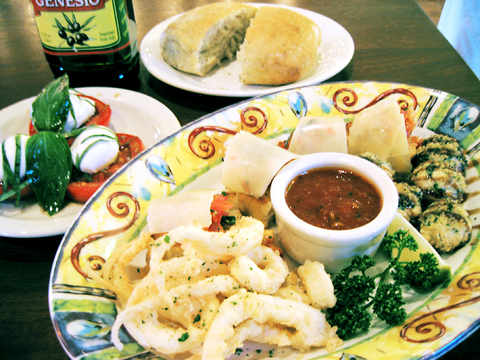
PHOTO: GAVIN PHIPPS, TAIPEI TIMES
Appetizers include the old favorite mozzarella alla caprese (NT$380) and mushroom ravioli (NT$340) as well Romano's sampler, which for NT$400 allows patrons to nibble on a selection of tasty bar-style nibbles. Although it's not a steak house the joint's grilled dishes, like the Tuscan rib-eye (NT$980) and the filet padano with truffle demi glaze (NT$930), are popular.
It's the pasta and risotto dishes, however, that really impress. Whether it's the green but wonderfully healthy and satisfying sauteed shrimp and scallop pesto and asparagus risotto (NT$580), the wholesome chicken rigatoni (NT$460) or the rich veal marsala served with mushrooms and capellini pasta (NT$680), all hit the spot.
Along with the standard menu, Macaroni's also offers family set meals. Costing NT$3,200 the meal gives diners three courses and is enough to feed five.
There are only a handful of desserts on the menu but any one of them should meet your requirements if you have a sweet tooth.
In addition to the food, Romano's Macaroni Grill also boasts a pretty good selection of North American wines and even serves live opera in the evenings, when a female singer strolls around the joint once every 15 minutes or so and belts out well-known arias from famous operas.

We lay transfixed under our blankets as the silhouettes of manta rays temporarily eclipsed the moon above us, and flickers of shadow at our feet revealed smaller fish darting in and out of the shelter of the sunken ship. Unwilling to close our eyes against this magnificent spectacle, we continued to watch, oohing and aahing, until the darkness and the exhaustion of the day’s events finally caught up with us and we fell into a deep slumber. Falling asleep under 1.5 million gallons of seawater in relative comfort was undoubtedly the highlight of the weekend, but the rest of the tour

Youngdoung Tenzin is living history of modern Tibet. The Chinese government on Dec. 22 last year sanctioned him along with 19 other Canadians who were associated with the Canada Tibet Committee and the Uighur Rights Advocacy Project. A former political chair of the Canadian Tibetan Association of Ontario and community outreach manager for the Canada Tibet Committee, he is now a lecturer and researcher in Environmental Chemistry at the University of Toronto. “I was born into a nomadic Tibetan family in Tibet,” he says. “I came to India in 1999, when I was 11. I even met [His Holiness] the 14th the Dalai
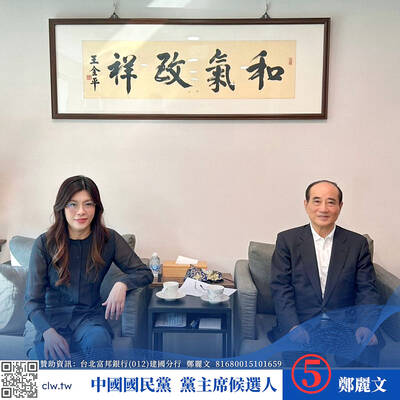
Following the rollercoaster ride of 2025, next year is already shaping up to be dramatic. The ongoing constitutional crises and the nine-in-one local elections are already dominating the landscape. The constitutional crises are the ones to lose sleep over. Though much business is still being conducted, crucial items such as next year’s budget, civil servant pensions and the proposed eight-year NT$1.25 trillion (approx US$40 billion) special defense budget are still being contested. There are, however, two glimmers of hope. One is that the legally contested move by five of the eight grand justices on the Constitutional Court’s ad hoc move
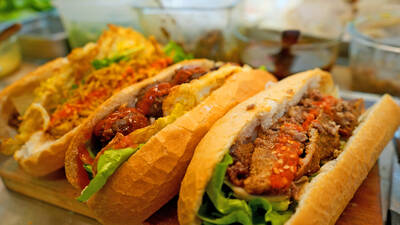
Stepping off the busy through-road at Yongan Market Station, lights flashing, horns honking, I turn down a small side street and into the warm embrace of my favorite hole-in-the-wall gem, the Hoi An Banh Mi shop (越南會安麵包), red flags and yellow lanterns waving outside. “Little sister, we were wondering where you’ve been, we haven’t seen you in ages!” the owners call out with a smile. It’s been seven days. The restaurant is run by Huang Jin-chuan (黃錦泉), who is married to a local, and her little sister Eva, who helps out on weekends, having also moved to New Taipei


 RSS
RSS