


On Oscar night last Sunday, Hollywood stars strutted down the red carpet and demonstrated the 2005 jewelry trends. Diamond drop earrings, straight-line earrings, big chandelier-like earrings and necklaces, colorful stones -- especially red and blue -- were among the sizzling goods on the red carpet.
Diamond drop earrings are definitely hot this season. On Sunday night, several actresses wore this style with their evening dresses: Charlize Theron, Drew Barrymore (sporting Neil Lane diamond earrings) and Colombian actress Catalina Sandino Moreno (in ball-shaped drop earrings).
Bigger drop earrings, of a classic Baroque style with three layers can be even more eye-cathing, as long as they fit well but are not so flamboyant that they steal the glam of the dress. Gwyneth Paltrow donned a pair of big oval-shaped earrings that come from Damiani. Beyonce Knowles, who sang two songs at the awards, wore three different pairs of big dangling earrings and the biggest diamond necklace in Oscar history. The jewelry was dazzling but the entire look was unbalanced -- "more chandelier than chic," as Hollywood fashion critics commented.
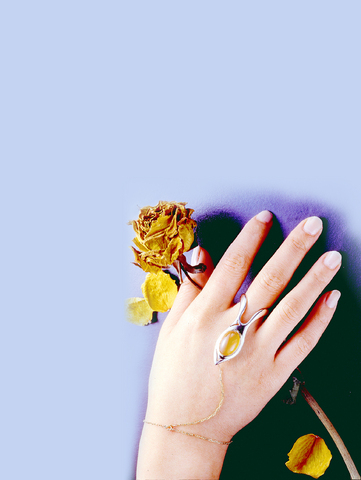
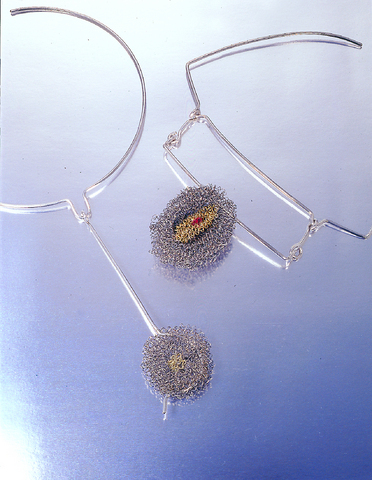
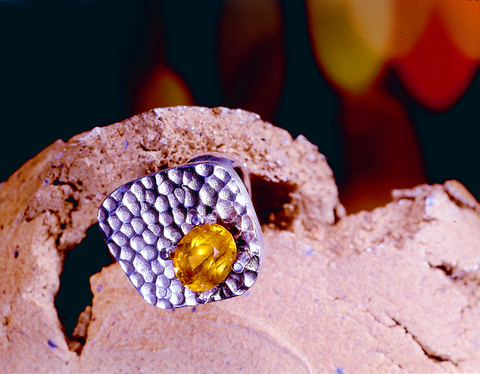
PHOTO COURTESY OF VICTOR SHTEINBERG
Straight-line earrings also have a hanging or dropping effect, which can create a graceful "waterfall-like" look from the earlobe, past the neck and toward the shoulders. On the red carpet, Halle Berry wore a pair of Lorraine Schwartz diamond earrings to go with her one-strap dress and her new long, straight hairstyle. Kate Winslet also had a pair of straight-line earrings, which were usually obscured by her hair.
The chandelier-style earrings and necklaces, according to Taipei-based jewelry designer Victor Shteinberg, is a sign of the comeback of Art Nouveau, a style of asymmetrical lines and elaborate ornamentation that took the lead in art and fashion in the last decade of the 19th century.
The brooch is also an important element on occasions like the Oscars. Cate Blanchett's flower-patterned diamond brooch was one of this year's most complimented items from the red carpet. Last year, at the 2004 Committee of Fashion Designer Association (CFDA), Beyonce Knowles also impressed her audience with an antique diamond brooch. This can also be seen as a comeback of the Art Nouveau style.
Colorful stones are still enjoying popularity. The good example was Phantom of the Opera actress Emmy Rossum's Harry Winston ruby-and-diamond necklace and her matching drop earrings. The red of the items fit elegantly with the actress's red strapless dress.
Accessory items adopting the Art Nouveau style can stretch a very wide range, from top-end diamond jewelry designs to night-market items, according to Shteinberg. But for most office ladies who have just begun their jewelry purchases for banquets, ballroom parties or simply to reward themselves, Shteinberg said finding comfortable and suitable items are the first two principles.
"Buying jewelry is like buying your first painting. It's better to start with a general and reliable jewelry store," he said. Shteinberg recommends to choose brands owned by stable and mature designers, with above-average reputations of quality, such as Georg Jensen.
The budget for your first jewelry piece should be set between one and two months of your salary, "to ensure quality but avoid risks."
After the first few items, it is time to find your own designers.
"Finding a designer is like finding a good shrink: He or she has to make you feel comfortable as a person first and then you can start talking about what suits you or what kind of diversity you should start choosing," Shteinberg said.
Like choosing a dress, hiding your weak points and showing the advantageous parts of your body are vital considerations. Shteinberg provides some tips.
Women with chubby, short fingers should not wear rings with big stones. Instead, one should find a design that can visually extend the length of the finger.
For necklaces, avoid thin, short chains with a pendant if you have a short neck. Instead try some longer necklaces with a dominant pendant to extend of the lines from neck to chest. "Remember, a good jewelry piece can always manipulate the eye of the viewers," Shteinberg said.

Just after 6am, I walked up to the ticket gate at Taipei Main Station and entered the Taiwan Railway platform without scanning any ticket; instead, I flashed the Sanrio Fun Rail pass on my phone to the gate worker and was admitted. I found my train and prepared to board. My destination? This very same station. I was embarking on a 13-hour journey on one of two round-the-island trains operated by ezTravel. They run each day, one counterclockwise around the island and one clockwise. They differ in a number of ways from an ordinary Taiwan Railway train and can make for
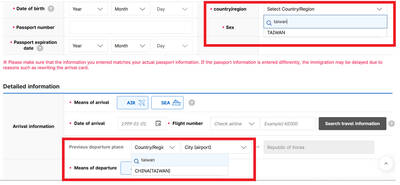
Jason Han says that the e-arrival card spat between South Korea and Taiwan shows that Seoul is signaling adherence to its “one-China” policy, while Taiwan’s response reflects a reciprocal approach. “Attempts to alter the diplomatic status quo often lead to tit-for-tat responses,” the analyst on international affairs tells the Taipei Times, adding that Taiwan may become more cautious in its dealings with South Korea going forward. Taipei has called on Seoul to correct its electronic entry system, which currently lists Taiwan as “China (Taiwan),” warning that reciprocal measures may follow if the wording is not changed before March 31. As of yesterday,
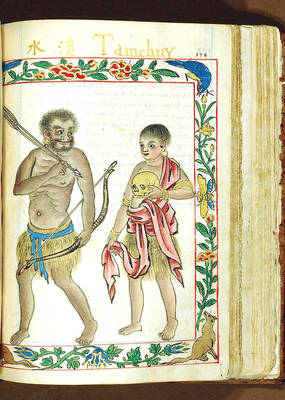
The Portuguese never established a presence on Taiwan, but they must have traded with the indigenous people because later traders reported that the locals referred to parts of deer using Portuguese words. What goods might the Portuguese have offered their indigenous trade partners? Among them must have been slaves, for the Portuguese dealt slaves across Asia. Though we often speak of “Portuguese” ships, imagining them as picturesque vessels manned by pointy-bearded Iberians, in Asia Portuguese shipping between local destinations was crewed by Asian seamen, with a handful of white or Eurasian officers. “Even the great carracks of 1,000-2,000 tons which plied

On Thursday, former Taipei mayor and founder of the Taiwan People’s Party (TPP) Ko Wen-je (柯文哲) was sentenced to 17 years in prison and had his civil rights suspended for six years over corruption, embezzlement and other charges. Seven others related to the case were also handed prison sentences, while two were found not guilty. It has been a bad week for the TPP. On Tuesday, prosecutors charged Chinese immigrant Xu Chunying (徐春鶯) with suspicion of taking part in Beijing-directed election interference. Xu has strong links to the TPP, which once offered her a party list legislator nomination. Tuesday also


 RSS
RSS