


As readers of Bruce Wagner's earlier novels well know, his Hollywood is an American Babylon: a stinking, sin-riddled cesspool, an unholy magnet for narcissists, egomaniacs, exhibitionists, climbers, stalkers, sycophants, control freaks, fame addicts, celebrity codependents, spiritual hucksters and a mad bevy of predators eager to exploit others' dreams, neuroses and vulnerabilities -- the perfect backdrop, in short, for Wagner's caustic satire and sad-funny-scabrous meditations on vanity, mortality and loss.
With the author's latest novel, The Chrysanthemum Palace, we are back in this familiar territory, but Wagner demonstrates -- as he did in his dazzling 2002 novel, I'll Let You Go -- that he can do the lyrical and tender with as much panache as the outrageous and corrosive.
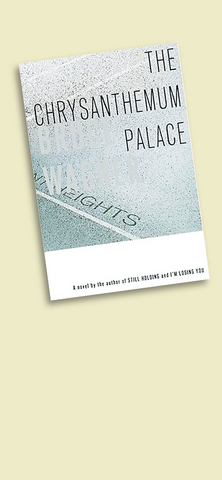
Chrysanthemum isn't a major work like that earlier novel -- it doesn't create a Wellesian family epic or aspire to give the reader a wide-angled, Dickensian look at the whole messy sprawl of Los Angeles -- but it showcases the author's kinder, gentler side while attesting to his ever wicked eye for hypocrisy and self-deception.
Certain elements of the story will remind the reader of I'll Let You Go. Once again the friendship of two guys and a girl provides an armature for the plot, and once again the relationship between fathers and sons, parents and children, is the motor that drives the book.
In this case, the novel's narrator, an actor and would-be screenwriter named Bertie Krohn, is trying to come to grips with the fact that he still lives, on the brink of middle age, in his famous father's shadow. His father, Perry, is the sensationally rich creator of a Star Trek-like series called "Starwatch," which has run for eons on television; Bertie has a recurring role on the series as Will Karp, a randy, all-American pilot aboard the good starship.
Bertie's friend Thad Michelet has an even bigger Oedipal cross to bear. Thad's father is the literary lion Jack Michelet, three-time winner of the Pulitzer Prize and perennial Nobel contender -- a novelist with Hemingway's lifestyle, Nabokov's highbrow credentials and Picasso's penchant for domestic cruelty. Thad not only harbors unfulfilled literary ambitions himself but is also haunted by the knowledge that his dead twin, Jeremy, was always the one favored by their dad.
As for Clea, the third leg of their trio -- she is Thad's current girlfriend, and one of Bertie's former flames -- she, too, dwells under a parental penumbra. Her mother, Roos Chandler, Wagner writes, was a "deathless American icon," the "self-anointed film noir nom de cine," and Clea has followed her into show business, haunted by Roos' still heralded feat of winning three consecutive Academy Awards. Clea is currently employed on Starwatch as well, playing the role of "Genius Alien Mechanic With Dangerous Sexual Undertow."
When they were children, Bertie recalls, being known as the offspring of celebrities "was a boon," conferring all sorts of "seigneurial perks," but even then, he says, he and Clea seemed to know instinctively that "such status put us at a terrifying disadvantage in the long term."
"We seemed darkly, precociously in possession of the secret knowledge that, like hemophiliacs, we would eventually pay an awful price."
It never seems to occur to Bertie that he and his friends might reinvent or surpass their parents' achievements; the potent examples of John Huston (father: Walter Huston), Jean Renoir (father: Pierre-Auguste Renoir), Martin Amis (father: Kingsley Amis) and Norah Jones (father: Ravi Shankar) elude them.
But if Wagner's generalizations about fathers and sons, mothers and daughters, are less than convincing, his portrayals of Bertie's, Clea's and Thad's day-to-day struggles to come to terms with their families' complicated legacies remain deeply felt and meticulously drawn.
He is pitch perfect when it comes to capturing the patronizing remarks dispensed by strangers who feel free to approach the three and discourse upon their parents' lives and careers, and he is equally adept at capturing their own messy stew of emotions -- from insecurity to resentment to defiance.
Almost all the people in this novel speak in the knowing, campy, self-conscious language of Hollywood -- banter that is partly a self-protective mechanism, partly a self-dramatizing display of cynical wit. They manage to name-drop artists like Beckett and I.B. Singer while trying to rationalize a decision to do a commercial blockbuster instead of a small independent film, and they merchandise their innermost secrets while bemoaning the ways in which show business commodifies everything sacred.
From the start of the novel, a nimbus of doom hangs over the romance of Clea and Thad, and sure enough, they ride off into the sunset together, like a slacker version of Bonnie and Clyde or Sid and Nancy. Wagner could have been a lot more subtle about his story's outcome, and he could have refrained from telegraphing the novel's ending to the reader from the start.
Still, this novel ratifies the achievement of I'll Let You Go, albeit in a minor key, demonstrating once again that Wagner is as gifted at making us care about his characters as making us laugh at their exploits and self-delusions.

Just after 6am, I walked up to the ticket gate at Taipei Main Station and entered the Taiwan Railway platform without scanning any ticket; instead, I flashed the Sanrio Fun Rail pass on my phone to the gate worker and was admitted. I found my train and prepared to board. My destination? This very same station. I was embarking on a 13-hour journey on one of two round-the-island trains operated by ezTravel. They run each day, one counterclockwise around the island and one clockwise. They differ in a number of ways from an ordinary Taiwan Railway train and can make for
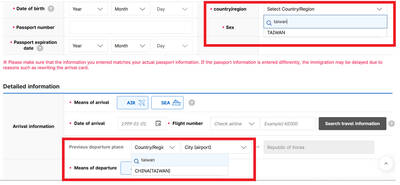
Jason Han says that the e-arrival card spat between South Korea and Taiwan shows that Seoul is signaling adherence to its “one-China” policy, while Taiwan’s response reflects a reciprocal approach. “Attempts to alter the diplomatic status quo often lead to tit-for-tat responses,” the analyst on international affairs tells the Taipei Times, adding that Taiwan may become more cautious in its dealings with South Korea going forward. Taipei has called on Seoul to correct its electronic entry system, which currently lists Taiwan as “China (Taiwan),” warning that reciprocal measures may follow if the wording is not changed before March 31. As of yesterday,
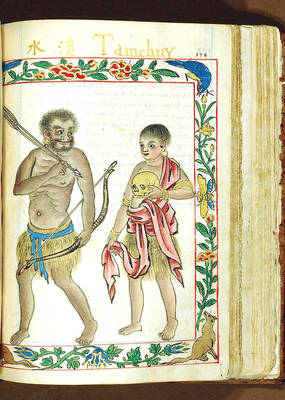
The Portuguese never established a presence on Taiwan, but they must have traded with the indigenous people because later traders reported that the locals referred to parts of deer using Portuguese words. What goods might the Portuguese have offered their indigenous trade partners? Among them must have been slaves, for the Portuguese dealt slaves across Asia. Though we often speak of “Portuguese” ships, imagining them as picturesque vessels manned by pointy-bearded Iberians, in Asia Portuguese shipping between local destinations was crewed by Asian seamen, with a handful of white or Eurasian officers. “Even the great carracks of 1,000-2,000 tons which plied

On Thursday, former Taipei mayor and founder of the Taiwan People’s Party (TPP) Ko Wen-je (柯文哲) was sentenced to 17 years in prison and had his civil rights suspended for six years over corruption, embezzlement and other charges. Seven others related to the case were also handed prison sentences, while two were found not guilty. It has been a bad week for the TPP. On Tuesday, prosecutors charged Chinese immigrant Xu Chunying (徐春鶯) with suspicion of taking part in Beijing-directed election interference. Xu has strong links to the TPP, which once offered her a party list legislator nomination. Tuesday also


 RSS
RSS