


Every morning as a new fleet of buses unloads tourists at the Shaolin temple, Li Yaojin thinks wistfully about the peaceful days two decades ago when he first arrived as a Buddhist novice.
"Now there are just too many people here," he says, as the main temple courtyard fills with visitors speaking loudly in a variety of languages. "It's hard to find a quiet place to meditate."
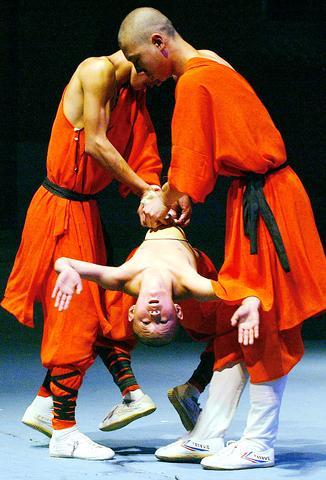
PHOTO: AFP
Shaolin, famous as the birthplace of China's martial arts, has emerged as a well-oiled money-making machine servicing hordes of tourists attracted to the scene of countless kung fu novels and movies.
They come to this remote part of central Henan province in hopes of seeing authentic monks miraculously surviving in some sort of time capsule.
But what they find instead is exploitation of the Shaolin myth on an industrial scale.
Eighty-three martial arts schools with a total enrollment of 40,000 line the road from the large town of Dengfeng to the sprawling temple complex itself, where souvenir sellers and minibus drivers stand ready to welcome the tourists.
"We're very worried about the impact of all the tourists, but there's nothing we can do," said Li Songjiang, a staff member of the monastery.
"Speaking on behalf of Shaolin, I'd say we don't even welcome one single tourist here."
The massive influx of tourists has turned the monastery's 180 monks into bewildered and unhappy strangers in their own homes, or worse, exotically dressed workers in the tourism trade.
When Sun Zhongfei's parents sent him to the monastery at the age of 10, they thought he would be trained as a monk, but three years later he spends most of his day selling souvenirs.
"My mom and dad said, `Buddhism has brought so much good to people,' and wanted me to spend my life in the service of religion," he says, taking time off amid efforts to hawk 60-yuan (US$7) Shaolin-themed T-shirts.
While the temple has sold its soul to tourism, it has got very little in return, according to the staff.
"Entrance tickets are 40 yuan (US$5), but the local government takes 30 yuan for itself," said Li, the staff member.
Many of the temple buildings greeting the tourists are of recent date -- some constructed this year -- and as artificial as much of the Shaolin martial arts antics known from Hong Kong cinema.
Constant rebuilding has been a necessity, as the monastery has been battered through its 15 centuries of meticulously recorded history.
It was destroyed and all the monks massacred, during the transition from one imperial dynasty to another in the mid-17th century, not to be re-erected until the early 1800s.
In 1928, it was embroiled in one of the civil wars that devastated China after the collapse of the empire and several priceless buildings, as well as the temple library, went up in flames.
But all previous challenges may pale in comparison with the present task of preserving an atmosphere of quiet contemplation in the face of unbridled capitalism.
In its current incarnation, Shaolin is part tourist hell, part training ground for new generations of bodyguards and martial arts performers.
Thousands of young Chinese men and a fair number of women, go to Shaolin to learn kung fu and other martial arts from the source.
It is estimated that about 10,000 foreigners, too, have taken classes since the temple area opened to tourism in 1988.
In conformity with the mercantilist spirit that has not settled over Shaolin, most of the students hope the skills can assist them in their future careers.
"Kung fu helps your body become stronger and lifts your spirit," said Kong Lingfang, a 21-year-old student. "You can use it in many kinds of jobs, even in a bank, but I personally want to become a bodyguard."
The surroundings are Spartan, with Kong in charge of 18 younger students squeezed into a tiny dormitory.
"It's my responsibility that they study well, practice well, eat well," he said. "I'm not allowed to hit the boys, but I can punish them by ordering them to do push-ups."
Push-ups do not deter 15-year-old Tao Saowei as he tries to harness the traditions of Shaolin to his dreams of a lucrative career.
"You can become a coach or go abroad to perform," he said as he was putting on gloves for an upcoming lesson in Chinese-style boxing.
Tao's father paid the equivalent of one year's tuition at the school, a huge amount for most Chinese.
None of the students seems to think it is excessive, even if it entails submitting themselves to a severe regimen of training and exertion from dawn till dusk, and frequently even later than that.
But if they think they are learning authentic Shaolin kung fu, they may be fooling themselves -- not one of the schools is run by the monastery itself.

Just after 6am, I walked up to the ticket gate at Taipei Main Station and entered the Taiwan Railway platform without scanning any ticket; instead, I flashed the Sanrio Fun Rail pass on my phone to the gate worker and was admitted. I found my train and prepared to board. My destination? This very same station. I was embarking on a 13-hour journey on one of two round-the-island trains operated by ezTravel. They run each day, one counterclockwise around the island and one clockwise. They differ in a number of ways from an ordinary Taiwan Railway train and can make for
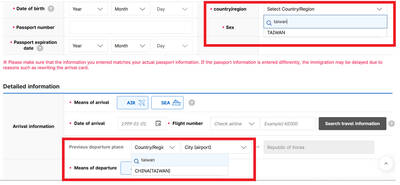
Jason Han says that the e-arrival card spat between South Korea and Taiwan shows that Seoul is signaling adherence to its “one-China” policy, while Taiwan’s response reflects a reciprocal approach. “Attempts to alter the diplomatic status quo often lead to tit-for-tat responses,” the analyst on international affairs tells the Taipei Times, adding that Taiwan may become more cautious in its dealings with South Korea going forward. Taipei has called on Seoul to correct its electronic entry system, which currently lists Taiwan as “China (Taiwan),” warning that reciprocal measures may follow if the wording is not changed before March 31. As of yesterday,
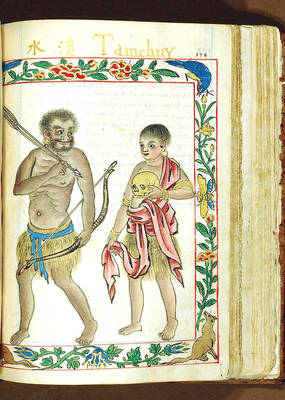
The Portuguese never established a presence on Taiwan, but they must have traded with the indigenous people because later traders reported that the locals referred to parts of deer using Portuguese words. What goods might the Portuguese have offered their indigenous trade partners? Among them must have been slaves, for the Portuguese dealt slaves across Asia. Though we often speak of “Portuguese” ships, imagining them as picturesque vessels manned by pointy-bearded Iberians, in Asia Portuguese shipping between local destinations was crewed by Asian seamen, with a handful of white or Eurasian officers. “Even the great carracks of 1,000-2,000 tons which plied

On Thursday, former Taipei mayor and founder of the Taiwan People’s Party (TPP) Ko Wen-je (柯文哲) was sentenced to 17 years in prison and had his civil rights suspended for six years over corruption, embezzlement and other charges. Seven others related to the case were also handed prison sentences, while two were found not guilty. It has been a bad week for the TPP. On Tuesday, prosecutors charged Chinese immigrant Xu Chunying (徐春鶯) with suspicion of taking part in Beijing-directed election interference. Xu has strong links to the TPP, which once offered her a party list legislator nomination. Tuesday also


 RSS
RSS