


In 1703 a man arrived in London and announced he was a native of Formosa. His name was George Psalmanazar. European missionaries, he claimed, had so named him at school. He also proclaimed that he'd decided, after examining all the world's religions, to join the Church of England. He was blond-haired, blue-eyed, and of typically European appearance. Almost everyone believed him.
He was immediately received by the Archbishop of Canterbury and dispatched to Oxford to instruct the professors in his previously unknown language. This he did, writing out the Lord's Prayer in it, listing an alphabet of 20 letters, and speaking fluently in both "Formosan" and Latin (taught to him, he said, by the Jesuits).
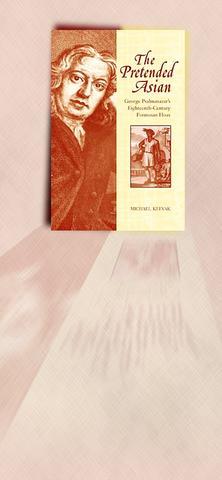
He quickly became a celebrity. He ate his meat raw, claiming this was the custom at home. Jonathan Swift mentions him in his celebrated pamphlet A Modest Proposal as "the famous Sallmanaazor, a native of the island of Formosa, who came from thence to London above 20 years ago and in conversation told my friend that in his country, when any young person happened to be put to death, the executioner sold the carcass to persons of quality as a prime delicacy" and more in similar vein.
As for his fair hair and skin, Psalmanazar explained that he was from the unexplored east coast of the island, and belonged to the aristocracy who lived underground in caves, with the result that their skin never became darkened by the sun.
The reality was that Psalmanazar was a European, possibly from Gascony or Spain, who'd never been further east than Germany. From childhood he'd had a marked flair for languages and, having invented one, decided to pass it and himself off as Formosan. (He'd earlier considered claiming it was Japanese).
Michael Keevak teaches at National Taiwan University and this is his second book. It's far better than his first, Sexual Shakespeare (reviewed in Taipei Times on Jan 27, 2002). The tone is more assured and the narrative pace swifter. The books are similar, however, in displaying an interest in forgeries, plagiarism and adopted personalities -- Sexual Shakespeare looked at faked portraits of the playwright as well as the career of the Shakespeare plagiarist William Henry Ireland.
One of Keevak's main points about Psalmanazar is that his driving force was his talent for languages. He not only invented one but made himself fluent in it, in the same way that he invented an identity and then inhabited it.
After his Formosan hoax had been largely discredited, Psalmanazar remained in London as a hack writer, laboring away on book reviews and other such menial tasks, and also made himself an authority on Hebrew. Keevak sees him as a penniless linguistic genius who needed to find a role in life, and stumbled on his Formosan hoax as a means to that end. Earlier in life he'd successfully passed himself off in continental Europe as a fugitive from Ireland.
Keevak has some interesting things to say about Psalmanazar's "regularity," his capacity for repressing his other impulses and working long hours at his penny-a-word journalism. It was this, together with the repentance for his fraud, that endeared him to Samuel Johnson who once described him as the best man he'd ever known.
He also admired the serene manner of Psalmanazar's death and despite Psalmanazar's earlier career as an impostor, he seemed to Johnson someone he'd never be able to equal.
The details of what Psalmanazar had to say about Formosa, or Taiwan, are not of great interest in themselves. Much of it was derogatory, describing mass child sacrifices and cannibalism. This gives Keevak the go-ahead to point to the prejudice among 18th-century Europeans against anything from beyond their borders, and their quickness to "construct" all non-Europeans as savages. He writes well on this, but it's hardly surprising to read that some of his Taiwanese students object to his displaying any interest at all in such a fraudulent and insulting figure as Psalmanazar, who had no first-hand knowledge of Taiwan.
In reality there was a certain amount of knowledge about Taiwan in 18th-century Europe gathered by the Dutch and others, and Psalmanazar was careful to integrate this with his own wilder fantasies (such as his claim that classical Greek was taught in the island's schools).
Keevak doesn't claim to have unearthed major new material in The Pretended Asian -- there have been books on Psalmanazar before -- but he is astute in his analysis of the limited evidence about him that remains. He's also exceptionally meticulous in following up subsidiary references -- his footnotes are mines of information in themselves.
Also, the National Taiwan University Library contains copies of 18th-century books relevant to this subject and Keevak, as someone who has long labored sorting its oldest collections, has naturally been able to use material, such as original illustrations, held there. He dedicates his book to the library's staff.

Ajay Verma, a consultant gastroenterologist at Kettering general hospital in Northamptonshire, says our gut is a “complex machine.” “It is constantly providing us with the nutrition we need, initially to grow and develop, and then for us to survive, thrive and repair from injury and illness.” How can we keep it functioning well? Put simply: “Make sure what you put into it is balanced, and that you clear out its waste products adequately,” Verma says. “In a general gastroenterology clinic, the most common conditions we see are irritable bowel syndrome (IBS), gastroesophageal reflux disease, inflammatory bowel disease and constipation,” says Nisha
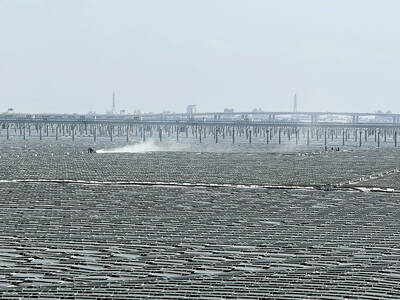
The arithmetic is straightforward and uncomfortable. By the end of 2025, Taiwan had committed itself to a 50-30-20 electricity mix — half natural gas, 30 per cent coal, 20 per cent renewables. The Ministry of Economic Affairs’s (MOEA) own monthly energy reports tell a different story. Natural gas reached 47.8 per cent of generation last year. Coal stood at 35.4 per cent, comfortably above its target ceiling. Renewables came in at 13.1 per cent, well short of the 20 per cent Taipei had pledged a decade earlier. Installed renewable capacity reached roughly half of the 12 gigawatts (GW) the government

Last week US President Donald Trump was asked by a reporter whether he would speak on the phone to the President of Taiwan. “l’ll speak to him. I speak to everybody. We have that situation very well in hand,” Trump said. This marked the second time in a couple of weeks he had said he would talk to the President of Taiwan. In 2016 he famously took a call from then-president Tsai Ing-wen (蔡英文), when he was president-elect. Despite warnings that the apocalypse was nigh because of a phone call, the world quickly forgot about the conversation between two democratically-elected presidents.
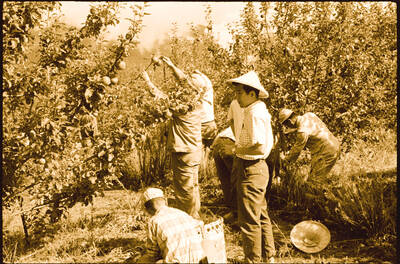
May 25 to May 31 Few believed that apples could be cultivated on a commercial scale in Taiwan’s high mountains. When horticulturalist Cheng Chao-hsiung (程兆熊) first proposed the idea in 1955, both American and Taiwanese colleagues dismissed it as implausible, arguing that temperate fruit could not be reliably grown on a subtropical island, especially on rugged terrain. However, it was this terrain in the Central Mountain Range where many Chinese Civil War veterans were resettled in the late 1950s. With limited job prospects and no family in Taiwan, they were placed on cooperative farms aimed toward self-sufficiency. Some say the conditions


 RSS
RSS