


Huahsia Paper Model Shop (華廈糊紙店), in a back alley of the bustling Shihlin Night Market, looks a world away from the fashionably furnished boutiques just two minutes away on the main drag. If you ask the peroxide blond teenagers hanging out at the night market what paper models are, few have any idea.
One of the few occasions when the shop is full of people is when teachers take children to visit the old shop on cultural history courses. Although paper modeling is one of the major traditional industries, it is one that is now in rapid decline.
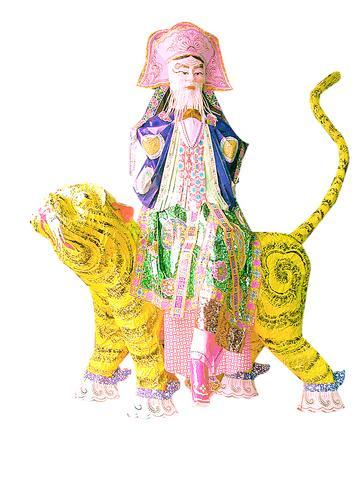
PHOTO: VICO LEE, TAIPEI TIMES
In traditional Taoist funeral ceremonies, the bereaved family burns paper houses, and models of servants, vehicles and other things to provide for the dead.
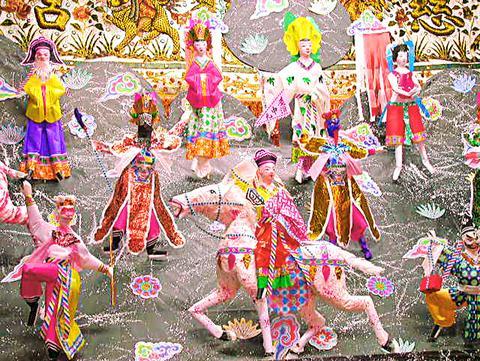
PHOTO: VICO LEE, TAIPEI TIMES
Temple festivals also require paper models. Paper temples are burned for the gods at temple anniversaries. Paper houses are burned for homeless ghosts during ghost month. The most famous kind of model in Taiwan is the "king boat" (
Making models for high-profile festivals is a special honor and a recognition of outstanding craftsmanship, but the mainstay of the paper model business is the creation of objects to be burned at funerals.
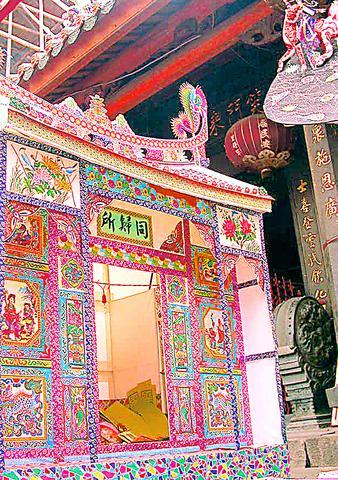
PHOTO: VICO LEE, TAIPEI TIMES
Lee Che-nan (李哲男), a craftsman at Huahsia, displays a photo catalogue of dozens of paper models, mainly houses, for customers to choose from. The photo album of Lee's work has not been updated for many years and he has seen business dwindle from seven or eight cases a month to one or two at most.
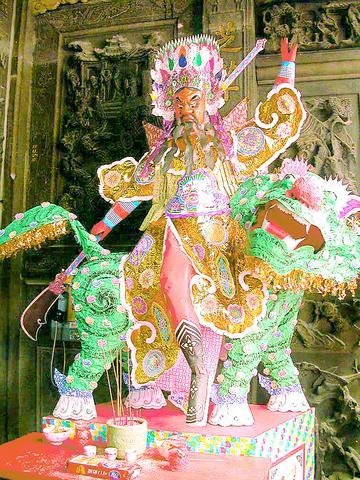
PHOTO: VICO LEE, TAIPEI TIMES
The man behind six much-admired paper models of houses and deities for ghost month at the Tzi Hsian Temple (
Although burning paper models is still part of the funeral ceremony, the government's environmental policy, which restricts the locations in which these objects can be burned, has gone some way to discourage the public from the practice. In Taipei City, the only legal location to burn paper models is at Fude Public Cemetery (富德公墓).
The trend toward simplified funeral ceremonies have dealt the heaviest blow to the industry. Large, luxuriously hand-crafted paper models are now often replaced by smaller, printed ones.
Like most other paper model workshops, Lee's shop is a family business that has been handed down through five generations. Lee's father and grandfather started training him when he was 14. After an apprenticeship of three years and four months -- in the past, this was the conventional period for an apprenticeship -- he was able to make elaborate paper houses and other paper figures.
In Lee's shop, a pile of raw bamboo sticks as tall as the ceiling stand in one corner and a variety of large-format colored papers are stacked on shelves in another. With these simple materials, and some ink and glue, Lee creates all his models. "All the house styles are here," said Lee, tapping his head.
Now in his 50s, Lee can make a traditional Chinese style paper house, with dragon and phoenix friezes, delicately carved roofs and gardens in three days. The price for a house measuring 2m by 1.2m, and 1.5m high, starts from NT$250,000.
Additional items such as TV sets, air-conditioners, washing machines and stereos, can be added on request. Custom-made houses, modeled inside and out after the former residence of the dead, are also available with a mark-up three to four times the price of off-the-rack models.
Modern living may have brought an interesting diversity to paper models, but modern ideas about funerals also mean less attention is paid to craftsmanship. Paper printed with shapes of household appliances and plastic machine-made dolls have been widely accepted, driving many skilled paper model craftsmen out of business.
Many funeral companies offer these no-frills half hand-crafted half printed houses for as little as NT$6,000, or as part of budget service packages.
"People's lives used to revolve around the Taoist religion. People followed Taoist rules of conduct. As people no longer see Taoist practices as the center of their lives, the ritual of burning paper models is observed in a more symbolic way," said Hong Hsin-fu (
Funerals have have been reduced from a series of complex rituals spread over a month to simplified ones lasting several days at most. "The size and number of paper models burned at funerals are now just enough to show respect for the dead. The children of the deceased no longer think they have to pay a lot of money for elaborate and luxurious hand-made paper houses. Ideas have changed," Hong said.
Much as Lee hoped his son would carry on the family business, he would not encourage him. "Carrying on the craft is a good thing, but this is a shop and there has to be business coming in."
Lee Ching-rong (
The Yunlin craftsman, who is in his 40s, said that as far back as his ancestry can be traced, his family has been in the paper modeling business. Being the only son, he carried on his father's business since it was an obvious career option for him. With 30 years of experience behind him, Lee thinks wholesaling simplified paper houses to funeral companies is out of the question. "That would not even cover the fee for my handiwork."
Many of the paper-craft techniques he learned are no longer in demand. "Traditional Chinese architecture is difficult to make. There are particular techniques to making carved roofs. We also have to decorate facades with calligraphy, which of course we have to write ourselves. However, people increasingly ask for simpler models. It has made work easier for us but many techniques have now been forgotten as we have not used them for a long time."
If these techniques are not handed down, Hong said, it would be a terrible loss. "Paper modeling combines many paper crafts. You can see paper cutting, paper sculpture, carving, pasting, drawing -- all techniques regarding paper are there," Hong said. "It should be appreciated as an art in its own right."
Chuang Bo-he (
Chuang believes paper modeling has the potential to develop into something that can be appreciated outside the funeral context. "Japanese paper dolls, for example, use similar techniques. This is a well-preserved handicraft. If old masters enlarge their range of products, paper modeling can turn into a widely circulated folk art," Chuang said.
But neither of the two paper modelers would probably do so in the near future. "I thought of making not-to-be-burned paper models before, but could think of no one who would buy them," said the Lee in Yunlin.
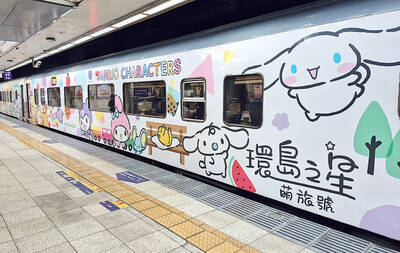
Just after 6am, I walked up to the ticket gate at Taipei Main Station and entered the Taiwan Railway platform without scanning any ticket; instead, I flashed the Sanrio Fun Rail pass on my phone to the gate worker and was admitted. I found my train and prepared to board. My destination? This very same station. I was embarking on a 13-hour journey on one of two round-the-island trains operated by ezTravel. They run each day, one counterclockwise around the island and one clockwise. They differ in a number of ways from an ordinary Taiwan Railway train and can make for
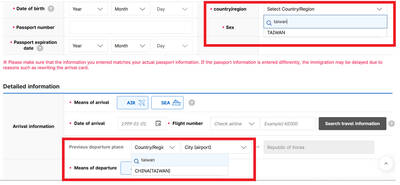
Jason Han says that the e-arrival card spat between South Korea and Taiwan shows that Seoul is signaling adherence to its “one-China” policy, while Taiwan’s response reflects a reciprocal approach. “Attempts to alter the diplomatic status quo often lead to tit-for-tat responses,” the analyst on international affairs tells the Taipei Times, adding that Taiwan may become more cautious in its dealings with South Korea going forward. Taipei has called on Seoul to correct its electronic entry system, which currently lists Taiwan as “China (Taiwan),” warning that reciprocal measures may follow if the wording is not changed before March 31. As of yesterday,
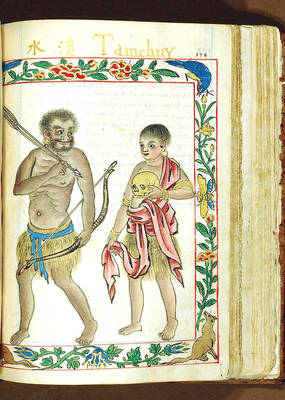
The Portuguese never established a presence on Taiwan, but they must have traded with the indigenous people because later traders reported that the locals referred to parts of deer using Portuguese words. What goods might the Portuguese have offered their indigenous trade partners? Among them must have been slaves, for the Portuguese dealt slaves across Asia. Though we often speak of “Portuguese” ships, imagining them as picturesque vessels manned by pointy-bearded Iberians, in Asia Portuguese shipping between local destinations was crewed by Asian seamen, with a handful of white or Eurasian officers. “Even the great carracks of 1,000-2,000 tons which plied
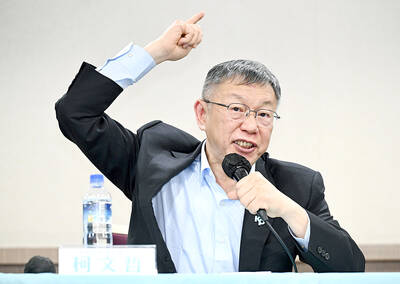
On Thursday, former Taipei mayor and founder of the Taiwan People’s Party (TPP) Ko Wen-je (柯文哲) was sentenced to 17 years in prison and had his civil rights suspended for six years over corruption, embezzlement and other charges. Seven others related to the case were also handed prison sentences, while two were found not guilty. It has been a bad week for the TPP. On Tuesday, prosecutors charged Chinese immigrant Xu Chunying (徐春鶯) with suspicion of taking part in Beijing-directed election interference. Xu has strong links to the TPP, which once offered her a party list legislator nomination. Tuesday also


 RSS
RSS