


Even if you don't follow the arts, you have probably seen some of Ju Ming's work. Rather like Henry Moore sculptures in the UK, Ju Ming's monumental work adorns many public spaces around Taiwan, his Tai Chi series being particularly ubiquitous. He is also one of the only artists to have a museum dedicated to his own work. With the publication of a new book, titled simply Ju Ming, released by the Editions Cercle D'Art and launched Wednesday in Taiwan, his reputation has received a further boost.
Editions Cercle d'Art was established in 1950 by, among others, Picasso, giving Ju Ming's selection into its publication list even greater cachet. The text, provided by Jean-Luc Chalumeau, one of France's foremost art critics, takes a look at Ju Ming's life work from the perspective of European art and attempts to break down the boundaries between Eastern and Western art.
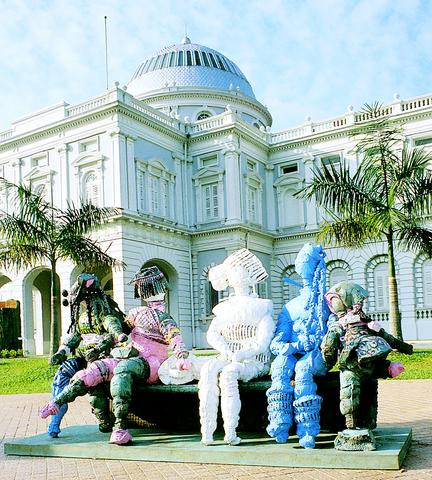
PHOTO COURTESY OF EDITIONS CERCLE D'ART
Ju's own work has developed away from the distinctive orientalism of his Tai Chi series to something much more earthy which defies easy classification in his Living World series. While touted as Taiwan's greatest living artist, his work has been criticized for being neither East nor West -- possibly why it has a real international appeal.
In a climate in which Taiwan is trying desperately to establish itself as a cultural force within Asia and have its artists represented at top venues around the world, the publication of Ju Ming by one of the most respected art publishing houses in the West is undoubtably a step in the right direction.

Just after 6am, I walked up to the ticket gate at Taipei Main Station and entered the Taiwan Railway platform without scanning any ticket; instead, I flashed the Sanrio Fun Rail pass on my phone to the gate worker and was admitted. I found my train and prepared to board. My destination? This very same station. I was embarking on a 13-hour journey on one of two round-the-island trains operated by ezTravel. They run each day, one counterclockwise around the island and one clockwise. They differ in a number of ways from an ordinary Taiwan Railway train and can make for
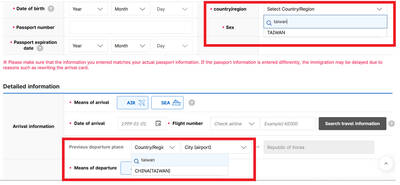
Jason Han says that the e-arrival card spat between South Korea and Taiwan shows that Seoul is signaling adherence to its “one-China” policy, while Taiwan’s response reflects a reciprocal approach. “Attempts to alter the diplomatic status quo often lead to tit-for-tat responses,” the analyst on international affairs tells the Taipei Times, adding that Taiwan may become more cautious in its dealings with South Korea going forward. Taipei has called on Seoul to correct its electronic entry system, which currently lists Taiwan as “China (Taiwan),” warning that reciprocal measures may follow if the wording is not changed before March 31. As of yesterday,
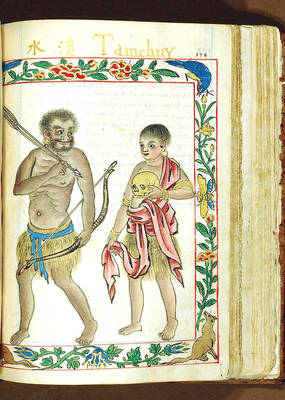
The Portuguese never established a presence on Taiwan, but they must have traded with the indigenous people because later traders reported that the locals referred to parts of deer using Portuguese words. What goods might the Portuguese have offered their indigenous trade partners? Among them must have been slaves, for the Portuguese dealt slaves across Asia. Though we often speak of “Portuguese” ships, imagining them as picturesque vessels manned by pointy-bearded Iberians, in Asia Portuguese shipping between local destinations was crewed by Asian seamen, with a handful of white or Eurasian officers. “Even the great carracks of 1,000-2,000 tons which plied
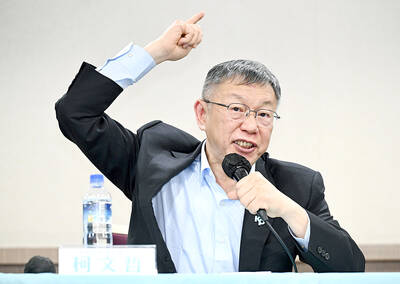
On Thursday, former Taipei mayor and founder of the Taiwan People’s Party (TPP) Ko Wen-je (柯文哲) was sentenced to 17 years in prison and had his civil rights suspended for six years over corruption, embezzlement and other charges. Seven others related to the case were also handed prison sentences, while two were found not guilty. It has been a bad week for the TPP. On Tuesday, prosecutors charged Chinese immigrant Xu Chunying (徐春鶯) with suspicion of taking part in Beijing-directed election interference. Xu has strong links to the TPP, which once offered her a party list legislator nomination. Tuesday also


 RSS
RSS