


Despite being a small film about friendship, love and coming of age, Blue Gate Crossing (
The world of teen angst is not uncommon in the Taiwanese cinema. From Hou Hsiao-hsien's Millennium Mambo to Chang Tso-chi's The Best of Times, Taiwanese teens are either involving themselves in gangs or wandering the streets of Hsimenting. Those teenagers are usually hot-blooded, disadvantaged and alienated.
Director Yee Chi-yen (易智言) has instead made a film about a different group of teenagers, who are a bit more "normal," with scenes set on their high school campus or in quiet neighborhoods, instead of dark streets. For many Taiwanese, this is finally a film they can relate to, which easily evokes their high school lives.
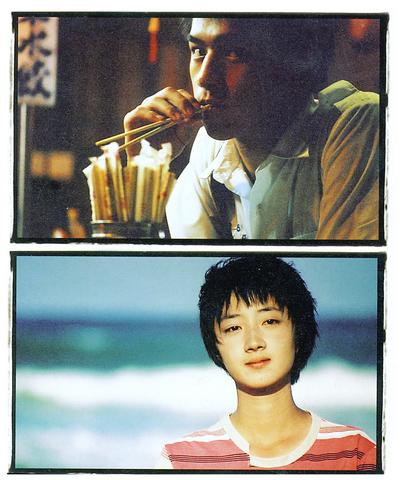
PHOTO: ARC LIGHT FILMS
Two girls, Kerou (Kwei Lun-mei,
Shihao instead becomes interested in the messenger and believes that Yuezhen doesn't exist. It was all Kerou's trick to try to talk to him, he believes, and he begins chasing her.
Yee carefully explores subtle emotions within the three characters without instilling too much of an adult's point of view. Kerou uses her mobile phone to update her best friend on Shihao. Intrigued by Kerou, the sunshine boy is nonetheless a shy adolescent. He keeps telling Kerou "I'm Shihao from the guitar club and the swim team. I'm a Scorpio and my blood type is O. I'm not bad!" Kerou, in turn, runs away from him.
These vivid scenes show genuineness and humor. In Yee Chih-yen's lens, Taipei doesn't look that gray anymore. It has instead graceful yellow and bright blue colors. Like the Italian film Cinema Paradiso, there is a sweet nostalgia about the innocence of youth.
But the film doesn't stay cute for too long. Although a mutual crush has developed between her and Shihao, Kerou still carries a secret that troubles her. Shihao, whose only goal in life is a swimming championship and becoming Kerou's boyfriend, is unaware of the secret Kerou is about to tell him. In this peculiar love triangle none of them taste romance -- for Kerou's secret is one that makes the three characters taste a melancholy they've never before tasted.
"Our lives become different when someone has a secret that cannot be told," Kerou tells Shihao.
"Everyone has a blue gate in their hearts." Yee says of the film. "It's our self-image and how we see our future."
True. And as the screen credits roll you'll find yourself wondering if you've become the person you wanted to be when you were young. Don't forget to bring a handkerchief.
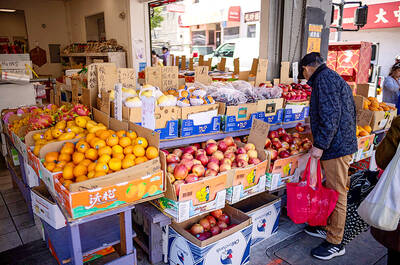
Ajay Verma, a consultant gastroenterologist at Kettering general hospital in Northamptonshire, says our gut is a “complex machine.” “It is constantly providing us with the nutrition we need, initially to grow and develop, and then for us to survive, thrive and repair from injury and illness.” How can we keep it functioning well? Put simply: “Make sure what you put into it is balanced, and that you clear out its waste products adequately,” Verma says. “In a general gastroenterology clinic, the most common conditions we see are irritable bowel syndrome (IBS), gastroesophageal reflux disease, inflammatory bowel disease and constipation,” says Nisha
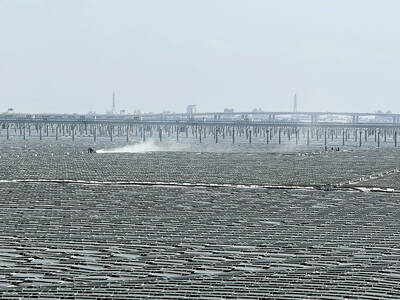
The arithmetic is straightforward and uncomfortable. By the end of 2025, Taiwan had committed itself to a 50-30-20 electricity mix — half natural gas, 30 per cent coal, 20 per cent renewables. The Ministry of Economic Affairs’s (MOEA) own monthly energy reports tell a different story. Natural gas reached 47.8 per cent of generation last year. Coal stood at 35.4 per cent, comfortably above its target ceiling. Renewables came in at 13.1 per cent, well short of the 20 per cent Taipei had pledged a decade earlier. Installed renewable capacity reached roughly half of the 12 gigawatts (GW) the government

Last week US President Donald Trump was asked by a reporter whether he would speak on the phone to the President of Taiwan. “l’ll speak to him. I speak to everybody. We have that situation very well in hand,” Trump said. This marked the second time in a couple of weeks he had said he would talk to the President of Taiwan. In 2016 he famously took a call from then-president Tsai Ing-wen (蔡英文), when he was president-elect. Despite warnings that the apocalypse was nigh because of a phone call, the world quickly forgot about the conversation between two democratically-elected presidents.
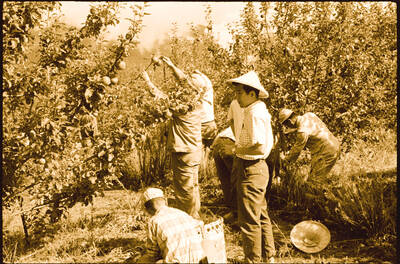
May 25 to May 31 Few believed that apples could be cultivated on a commercial scale in Taiwan’s high mountains. When horticulturalist Cheng Chao-hsiung (程兆熊) first proposed the idea in 1955, both American and Taiwanese colleagues dismissed it as implausible, arguing that temperate fruit could not be reliably grown on a subtropical island, especially on rugged terrain. However, it was this terrain in the Central Mountain Range where many Chinese Civil War veterans were resettled in the late 1950s. With limited job prospects and no family in Taiwan, they were placed on cooperative farms aimed toward self-sufficiency. Some say the conditions


 RSS
RSS