


Afficionados of Chopin began a major piano showdown yesterday that continues until Aug. 4 at the ninth Taipei International Youth Chopin Piano Competition (
The event, which is sponsored by the Frederic Chopin Foundation Taipei (
The competition is more than the average teenager's piano recital with nervous introductions and a healthy sprinkling of sour notes. These are the best young piano talents in the country and some have even come from China, Japan, Poland and the US to compete.
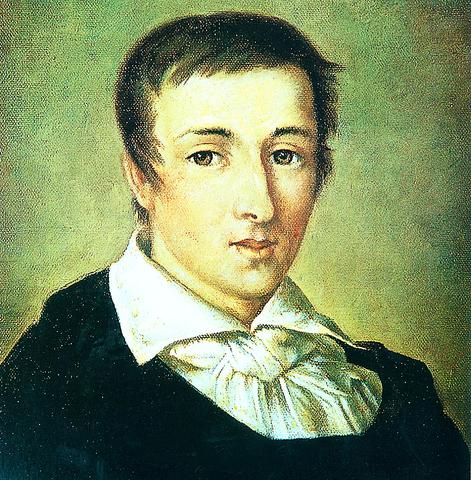
If the winners are Taiwan citizens they stand to take home the hefty NT$100,000 first prize in the child category or the NT$300,000 first prize in the youth category. In total, the Council for Cultural Affairs has put up NT$990,000 in prize money.
The Frederic Chopin Foundation will also sponsor one or more of the winners to participate in the 15th International Chopin Piano Competition in Warsaw in October 2005. The Warsaw competition is the world's foremost Chopin recital competition and is held only once every five years.
"This is a major competition in the region that helps select some of the best piano talents and gives them a chance to move on to international competitions," said Hsu Miao-ling (徐妙玲) of the Chopin foundation. "If they perform well at the Warsaw competition, players will often be selected to join major orchestras or will move into some of the top conservatories for further piano studies abroad," Hsu said.
Beginning today and lasting until Monday will be the first stage of the youth competition, which consists of musicians between 16 and 22 years old. Regulations require competitors to select four pieces -- two from Chopin's Etudes from Op. 10 and Op. 25, one from Rondos or Impromptus and one of Ballades or Barcole in F sharp major Op. 60 or F minor fantasy Op. 49. The selections become more technical as the competition moves into the second and third stages.
"The level of competitiveness of the players is extremely high and the selections quite wide, so the audience will get to hear a large portion of Chopin's repertoire played by true piano prodigies," Hsu said.
The competition has been held over the past 16 years on an irregular schedule whenever the understaffed Chopin foundation can muster the resources to organize the event and secure support from the Council for Cultural Affairs. The honorary chairperson of this year's competition is First Lady Wu Shu-jen (
Recitals take place every day until Aug. 4 in two sessions, the first starting at 1pm and the second beginning at 7pm. Admission costs between NT$200 and NT$500.
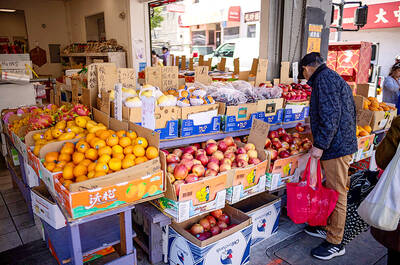
Ajay Verma, a consultant gastroenterologist at Kettering general hospital in Northamptonshire, says our gut is a “complex machine.” “It is constantly providing us with the nutrition we need, initially to grow and develop, and then for us to survive, thrive and repair from injury and illness.” How can we keep it functioning well? Put simply: “Make sure what you put into it is balanced, and that you clear out its waste products adequately,” Verma says. “In a general gastroenterology clinic, the most common conditions we see are irritable bowel syndrome (IBS), gastroesophageal reflux disease, inflammatory bowel disease and constipation,” says Nisha
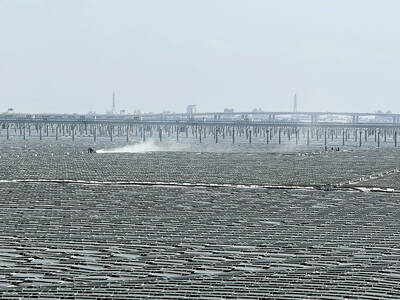
The arithmetic is straightforward and uncomfortable. By the end of 2025, Taiwan had committed itself to a 50-30-20 electricity mix — half natural gas, 30 per cent coal, 20 per cent renewables. The Ministry of Economic Affairs’s (MOEA) own monthly energy reports tell a different story. Natural gas reached 47.8 per cent of generation last year. Coal stood at 35.4 per cent, comfortably above its target ceiling. Renewables came in at 13.1 per cent, well short of the 20 per cent Taipei had pledged a decade earlier. Installed renewable capacity reached roughly half of the 12 gigawatts (GW) the government

Last week US President Donald Trump was asked by a reporter whether he would speak on the phone to the President of Taiwan. “l’ll speak to him. I speak to everybody. We have that situation very well in hand,” Trump said. This marked the second time in a couple of weeks he had said he would talk to the President of Taiwan. In 2016 he famously took a call from then-president Tsai Ing-wen (蔡英文), when he was president-elect. Despite warnings that the apocalypse was nigh because of a phone call, the world quickly forgot about the conversation between two democratically-elected presidents.
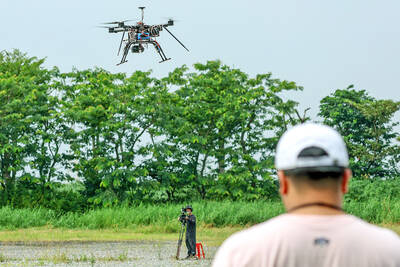
Taiwan’s drone exports are taking off, fuelled by the war in Ukraine, as Taiwanese companies seek a stake in the fast-growing global market for unmanned aerial vehicles (UAV). Low-cost drones used for reconnaissance and strikes are in high demand as governments around the world boost defense spending in the face of intensifying conflicts. A relative new player in the increasingly competitive industry, Taiwan’s pitch is to be an “Asian hub” for the production of UAVs and components free of Chinese materials, or “non-red.” That means its UAVs can be up to three times more expensive than their Chinese competitors, like the world’s biggest


 RSS
RSS