


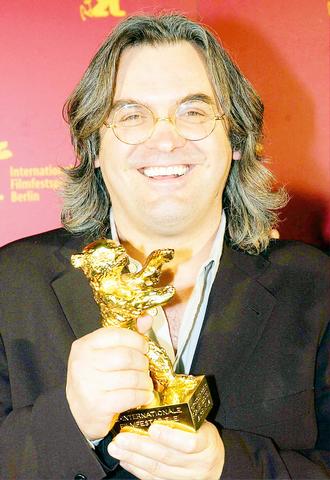
The winners of the 52th Berlinale International Film Festival, which ended Sunday, were something of a surprise. The Golden Bear Award was given for the first time to an animated film, Spirited Away, by Japanese animation master Hayao Miyazaki. A second Golden Bear went to the cine-verite style feature Bloody Sunday by Peter Greengrass, a powerful indictment of the 1972 Bloody Sunday incident in Northern Ireland.
German films, after many years in the wings, won a major prize at home, with the Jury's Grand Prix Silver Bear going to Grill Point by Andereas Dresen. The Taiwanese film The Rule of the Game (
As for the acting awards, American star Halle Berry won Best Actress for her role in Monster's Ball, the only US prize winner at the official awards, while Jacques Gamblin won Best Actor for his role in the French-German co-production Safe Conduct (Laisser-Passer).
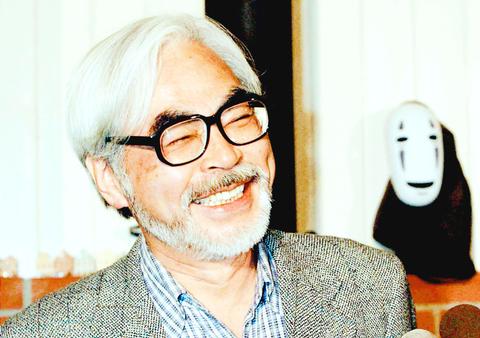
PHOTO: AP
Despite the surprises, the 2002 Berlinale has had a goodyear under the leadership of new festival director Dieter Kosslick. Hollywood stars such as Russell Crowe, Cate Blanchett, Kevin Spacey and French divas Catherine Deneuve, Virginie Ledoyen all showed up.
There are 430,000 tickets sold for the more than 2,000 screenings. Minor quarrels in front of over-packed cinemas for popular films were an everyday occurrence. But the Berlin audience was never stingy with its applause for new cinematic talent.
Diversity, which Kosslick established as a theme of this year's Berlinale, was apparent; and of the 23 films from 12 countries running for the Golden Bear, there was a "radical" result, according to jury chairperson Mira Nair. The Berlinale proved it could follow the trend as major film festivals moved to include animated features to the competition (Cannes included DreamWork's animation Shrek). But also it took a further leap to give a Golden Bear to Spirited Away, a story about a girl's adventure in search of her parents through various animated wonderlands.
The award was given to the film "for its explosive imagination," Nair said of the film. This work by Miyazaki has been a hit in the US with a box office of US$250 million since it opened.
Bloody Sunday, a hard-hitting account of the 1972 tragedy in Derry, Northern Ireland, successfully re-creates the events and emotions of the peaceful march that turned into a massacre. Greengrass said on receiving the award: "I especially like to thank the festival because it made the audience of Berlin able to reach out from Europe to the small city of Derry."
But the most emotional moment of Sunday night's award ceremony was the success of German film Grill Point. The film was well-received by critics and popular among festival audiences. In the film, director Andreas Dresen gives an intimate, poignant, yet humorous look at two married couples' living through their mid-life crises. The film has some Dogma-style influences with simple but strong cinematic effects, which have not been seen much in the German cinema recently.
Dresen's winning the Jury's Grand Prix (the second place film in the competition) made him and his film crew national heroes at the ceremony, where he received long ovations from the crowd.
"He is new German Cinema," said Nair. The new Bond girl Halle Berry also broke through the barrier of European condescension towards Hollywood and won the hearts of audience as well as the jury.
In director Marc Forster's Monster's Ball, she plays the widow of a criminal who has been sentenced to death. She later falls in love with the man who participated in the electric chair execution of her husband. It is an emotionally powerful role that she admitted could not be found in Hollywood. "You don't know how much this means to me," Berry said to her fans.
Best Actor went to Jacques Gamblin for his role in director Bertrand Tavernier's Safe Conduct, an epic drama about the difficult situation of French filmmakers during the German Occupation. The film also won in the Best Music category.
The Best Director award went to veteran filmmaker, Georgian-born Otar Iosseliani who is best-known for the award-winning Farewell, Home Sweet Home. Iosseliani's new work Monday Morning is another cinematic poem that combines humor and desperation, telling of two men who are fed up with their lives and unable to take another Monday morning. On receiving the award, Iosseliani referred to the somewhat chaotic atmosphere of the awards, saying he really enjoyed it, but that it was"very un-German."
He won against two strong contenders Marc Forest for Monster's Ball and prominent Korean director Kim Ki-duk with his fatalistic fable about the Korean underworld. Also, French talent Francois Ozon's star-studded, musical-comedy-thriller 8 Femmes, which brought together France's most sparkling actresses Catherine Deneuve, Isabelle Huppert, Emmanuelle Beart, Fanny Ardant and Virginie Ledoyen, disappointed both critics and fans, only receiving a Silver bear for Artistic Contribution.
With most of the winners coming from France, Germany and the UK, the Berlin Film Festival returns its attention to European films this year.
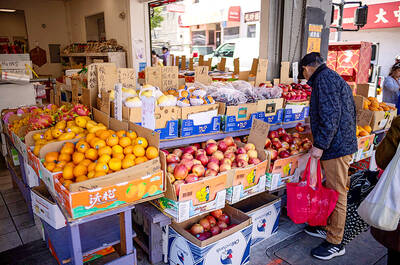
Ajay Verma, a consultant gastroenterologist at Kettering general hospital in Northamptonshire, says our gut is a “complex machine.” “It is constantly providing us with the nutrition we need, initially to grow and develop, and then for us to survive, thrive and repair from injury and illness.” How can we keep it functioning well? Put simply: “Make sure what you put into it is balanced, and that you clear out its waste products adequately,” Verma says. “In a general gastroenterology clinic, the most common conditions we see are irritable bowel syndrome (IBS), gastroesophageal reflux disease, inflammatory bowel disease and constipation,” says Nisha
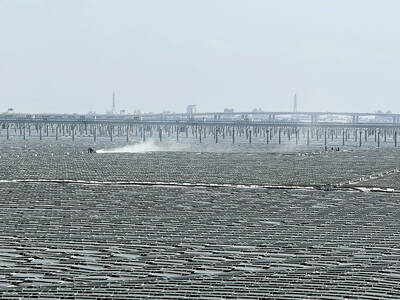
The arithmetic is straightforward and uncomfortable. By the end of 2025, Taiwan had committed itself to a 50-30-20 electricity mix — half natural gas, 30 per cent coal, 20 per cent renewables. The Ministry of Economic Affairs’s (MOEA) own monthly energy reports tell a different story. Natural gas reached 47.8 per cent of generation last year. Coal stood at 35.4 per cent, comfortably above its target ceiling. Renewables came in at 13.1 per cent, well short of the 20 per cent Taipei had pledged a decade earlier. Installed renewable capacity reached roughly half of the 12 gigawatts (GW) the government

Last week US President Donald Trump was asked by a reporter whether he would speak on the phone to the President of Taiwan. “l’ll speak to him. I speak to everybody. We have that situation very well in hand,” Trump said. This marked the second time in a couple of weeks he had said he would talk to the President of Taiwan. In 2016 he famously took a call from then-president Tsai Ing-wen (蔡英文), when he was president-elect. Despite warnings that the apocalypse was nigh because of a phone call, the world quickly forgot about the conversation between two democratically-elected presidents.

May 25 to May 31 Few believed that apples could be cultivated on a commercial scale in Taiwan’s high mountains. When horticulturalist Cheng Chao-hsiung (程兆熊) first proposed the idea in 1955, both American and Taiwanese colleagues dismissed it as implausible, arguing that temperate fruit could not be reliably grown on a subtropical island, especially on rugged terrain. However, it was this terrain in the Central Mountain Range where many Chinese Civil War veterans were resettled in the late 1950s. With limited job prospects and no family in Taiwan, they were placed on cooperative farms aimed toward self-sufficiency. Some say the conditions


 RSS
RSS