


Following two recent performances by Taipei-based English-language amateur drama groups - the Thalie Theater and the Taipei Alien Dramatic Society (TADS) - the Phoenix Theatre will hit the stage this weekend with a performance of Yasmina Reze's "refined comedy" Art.
Formed in 1998, the Phoenix Theatre has been one of Taipei's less industrious amateur theatrical groups. In face, the last time Phoenix Theatre, under the directorship of Catherine Diamond, staged a play was in March, 2000, when the trouble brought a production of Franz Kafka's Metamorphosis to the stage.
Originally written in French in 1994, Reza's Art premiered in Paris the same year and was awarded the Moliere Award for best production. The play's popularity soon spread to New York and London, where it is still playing and the piece has since been translated into 20 languages.
While the original play was written for an all-male cast, Diamond has settled on an all-female cast. As for why she chose to alter the gender of the actors, Diamond isn't saying very much. "It made more sense to me that way," was the director's only comment. Suffice it to say, if you want to discover why Art makes more sense with an all-female cast then you'll have to go see it.
Starring in the Phoenix Theatre's Art this weekend are Melanie Micco, why last trod the boards in TAD 2000 production of Ariel Dorfman's Death and the Maiden, Juile Johnson, who was last seen in the Wong Way troupe's Glengarry Glen Ross, and Kathy Yang, who is making her acting debut with the Phoenix Theatre.
The Phoenix Theatre will be performing Art at 7:30pm tomorrow and at 2:30pm and again at 7:30pm on Sunday at the Tien Cultural Center, located at B2, 24 Hsinhai Rd., Sec. 1, Taipei (臺北市辛亥路一段24號B2). Tickets for all performances cast NT$200 and are available at the door.
Ajay Verma, a consultant gastroenterologist at Kettering general hospital in Northamptonshire, says our gut is a “complex machine.” “It is constantly providing us with the nutrition we need, initially to grow and develop, and then for us to survive, thrive and repair from injury and illness.” How can we keep it functioning well? Put simply: “Make sure what you put into it is balanced, and that you clear out its waste products adequately,” Verma says. “In a general gastroenterology clinic, the most common conditions we see are irritable bowel syndrome (IBS), gastroesophageal reflux disease, inflammatory bowel disease and constipation,” says Nisha
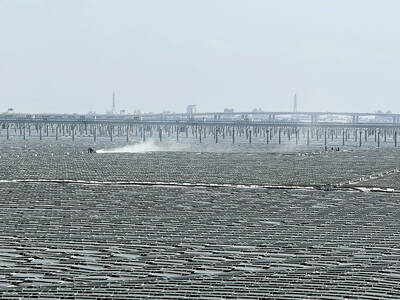
The arithmetic is straightforward and uncomfortable. By the end of 2025, Taiwan had committed itself to a 50-30-20 electricity mix — half natural gas, 30 per cent coal, 20 per cent renewables. The Ministry of Economic Affairs’s (MOEA) own monthly energy reports tell a different story. Natural gas reached 47.8 per cent of generation last year. Coal stood at 35.4 per cent, comfortably above its target ceiling. Renewables came in at 13.1 per cent, well short of the 20 per cent Taipei had pledged a decade earlier. Installed renewable capacity reached roughly half of the 12 gigawatts (GW) the government

Last week US President Donald Trump was asked by a reporter whether he would speak on the phone to the President of Taiwan. “l’ll speak to him. I speak to everybody. We have that situation very well in hand,” Trump said. This marked the second time in a couple of weeks he had said he would talk to the President of Taiwan. In 2016 he famously took a call from then-president Tsai Ing-wen (蔡英文), when he was president-elect. Despite warnings that the apocalypse was nigh because of a phone call, the world quickly forgot about the conversation between two democratically-elected presidents.
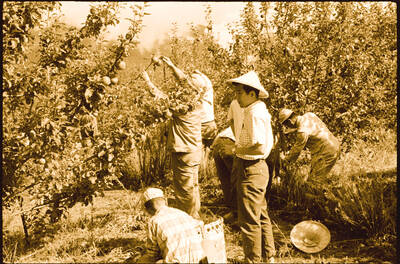
May 25 to May 31 Few believed that apples could be cultivated on a commercial scale in Taiwan’s high mountains. When horticulturalist Cheng Chao-hsiung (程兆熊) first proposed the idea in 1955, both American and Taiwanese colleagues dismissed it as implausible, arguing that temperate fruit could not be reliably grown on a subtropical island, especially on rugged terrain. However, it was this terrain in the Central Mountain Range where many Chinese Civil War veterans were resettled in the late 1950s. With limited job prospects and no family in Taiwan, they were placed on cooperative farms aimed toward self-sufficiency. Some say the conditions


 RSS
RSS