


Asia's icy pop diva may have warmed a bit. She's smiling a bit more and even holding hands with her boyfriend in public. But Faye Wong's (
Luckily, for fans who didn't or couldn't rush to the box office last week, the promoter has just released standing-room only tickets at NT$1500 each. So those without tickets should rush down there and pray.

PHOTO: COURTESY OF EMI
Even though Wong has changed a bit, she hasn't lost any of the aspects that earned her the name "queen of Asian pop." Her exquisite, pristine voice continues to draw attention the world over. Her musical trademark of exotic, poetic lyrics mixed with alternative musical arrangements, remains in her 26th album Fable (

PHOTO: COURTESY OF EMI
It is estimated that Taipei Municipal Stadium will be crammed with more than 30,000 Faye fans on Sunday. "Faye Wong's popularity has boosted the slump of the live concert market in the past year. It is perhaps the hottest sold concert," said Chen Chang-jen one of the coordinators of the concert.
But Wong, despite her superstar status, doesn't always enjoy being out in the spotlight. "I'd rather my audience didn't look at me during the concert," Wong has said. She finds being on-stage distracting to her performance because she has to care about atmosphere and the response of her fans. "In a studio I can concentrate on my singing. In fact, I prefer singing in a dark studio when recording."
At Wong's concerts, there is no choreography or group of dancers backing her. And there are no fancy props accompanying Wong's music or call-and-response sessions with the audience. Taipei audiences may remember well that five years ago when Wong gave her first massive concert in Taiwan, she asked the fervent fans to "be quiet."
The repertoire in Sunday's concert will mainly be comprised of songs from the album Fable, on which she wrote five songs. As with her last two albums released by EMI, music producer Zhang Yadong (
Her new style no longer resembles Faye's favorite band, the ethereal Scottish Cocteau Twins. Her style references more British trip-hop bands. Wong's vocal style has also shifted away from that of Sinead O'Connor, laden with humming. Instead she is making more of an effort to refine her fluidity and create more wavering sounds with her voice.
However, the music, the sound effects, the lighting and the costume design will still mesmerize the audience for 90 minutes. Wong is now concentrating on rehearsals with a Taiwan orchestra on a stage that's been rumored to cost more than NT$40 million. So this one is shaping up to be just as good as her last. And from the recent change of Wong's public attitude, it is less likely that she will call her audience "nuts" again. But even if she did, no one will probably care.
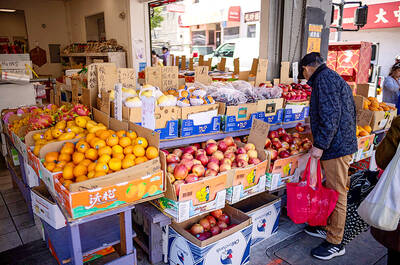
Ajay Verma, a consultant gastroenterologist at Kettering general hospital in Northamptonshire, says our gut is a “complex machine.” “It is constantly providing us with the nutrition we need, initially to grow and develop, and then for us to survive, thrive and repair from injury and illness.” How can we keep it functioning well? Put simply: “Make sure what you put into it is balanced, and that you clear out its waste products adequately,” Verma says. “In a general gastroenterology clinic, the most common conditions we see are irritable bowel syndrome (IBS), gastroesophageal reflux disease, inflammatory bowel disease and constipation,” says Nisha
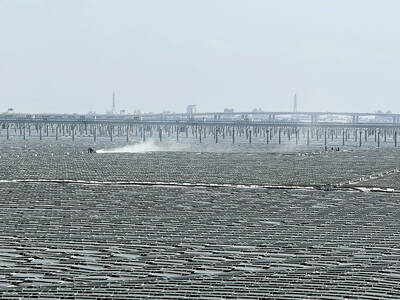
The arithmetic is straightforward and uncomfortable. By the end of 2025, Taiwan had committed itself to a 50-30-20 electricity mix — half natural gas, 30 per cent coal, 20 per cent renewables. The Ministry of Economic Affairs’s (MOEA) own monthly energy reports tell a different story. Natural gas reached 47.8 per cent of generation last year. Coal stood at 35.4 per cent, comfortably above its target ceiling. Renewables came in at 13.1 per cent, well short of the 20 per cent Taipei had pledged a decade earlier. Installed renewable capacity reached roughly half of the 12 gigawatts (GW) the government

Last week US President Donald Trump was asked by a reporter whether he would speak on the phone to the President of Taiwan. “l’ll speak to him. I speak to everybody. We have that situation very well in hand,” Trump said. This marked the second time in a couple of weeks he had said he would talk to the President of Taiwan. In 2016 he famously took a call from then-president Tsai Ing-wen (蔡英文), when he was president-elect. Despite warnings that the apocalypse was nigh because of a phone call, the world quickly forgot about the conversation between two democratically-elected presidents.
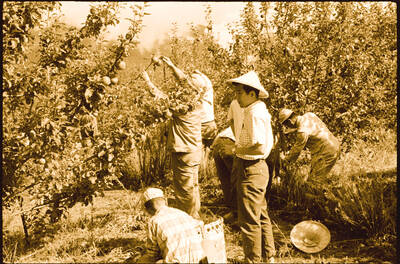
May 25 to May 31 Few believed that apples could be cultivated on a commercial scale in Taiwan’s high mountains. When horticulturalist Cheng Chao-hsiung (程兆熊) first proposed the idea in 1955, both American and Taiwanese colleagues dismissed it as implausible, arguing that temperate fruit could not be reliably grown on a subtropical island, especially on rugged terrain. However, it was this terrain in the Central Mountain Range where many Chinese Civil War veterans were resettled in the late 1950s. With limited job prospects and no family in Taiwan, they were placed on cooperative farms aimed toward self-sufficiency. Some say the conditions


 RSS
RSS