


In August 1988, millions of people took to the streets of Burma's capital Rangoon (now called Myanmar and Yangon by its military regime), and every town and major village across the country.
They demanded an end to 26 years of military-dominated dictatorship, and to a disastrous economic policy called "The Burmese Way to Socialism," which had turned what used to be Southeast Asia's most prosperous country into an economic and social wreck.
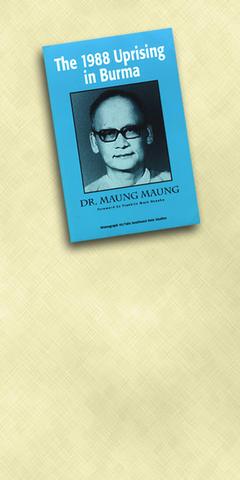
What had begun as peaceful demonstrations turned into a bloodbath when the military stepped in, first to crush the demonstrations in early August and, when that failed, again on Sept.18 to reassert power.
On both occasions, thousands of unarmed demonstrators were gunned down in massacres far bloodier than China's more publicized crackdown on its pro-democracy movement a year later.
Dr Maung Maung, who served as Burma's president for a month during the upheaval of August-September 1988, purports to chronicle these dramatic events in this book.
But it is more an attempt to rewrite history, a white-wash of one of the most brutal massacres in modern Asian history. More precisely, it is a blind eulogy to Burma's ageing strongman Ne Win, and Maung Maung's reverence for the "Old Man" is extended even to his children and grandchildren. For these reasons alone, Maung Maung's book is worth reading because it shows how far an academic sycophant is prepared to go to please his mentor.
One of the worst examples of a deliberate distortion of history is Maung Maung's version of Ne Win's infamous warning in July 1988 to the increasingly restless people of Burma, who by then had begun to protest against the old order: "As for the control of civil disturbances, I have to inform the people that when the army shoots, it shoots to hit, it doesn't fire into the air to scare. Therefore, I warn those causing disturbances that they will not be spared if in the future the army is brought in." However, Maung Maung quotes Ne Win as saying: "Soldiers are trained to shoot straight on order, not overhead into the air. Let those inclined to anarchy be duly warned: if they have to face the troops it will be no laughing matter."
But then the army didn't use violence at all. In Maung Maung's bizarre interpretation of what happened in Rangoon 12 years ago, some Buddhist monks opened fire on "looters." The president at that time and Maung Maung's predecessor as head of state, Sein Lwin, who became universally known as "the Butcher of Rangoon" for his role in the killings, was "as soft as soft could be."
The people of all ages who in 1988 risked their lives to demand political and economic change are called "hooligans, looters, arsonists, headhunters" and the only reason why the world paid any attention to the upheavals was because "sensational news was not breaking out elsewhere in the world in 1988."
But despite such far-fetched interpretations, the book contains precious little about the events of 1988. Nearly three quarters of the text is a glowing account of Ne Win and his efforts to build up Burma's armed forces to a formidable and "responsible" institution. It is even questionable whether the title of the book, "The 1988 Uprising in Burma," is Maung Maung's own. Nowhere in the text does he call the events of 1988 an "uprising." Instead, he uses "the disturbances" and similar terms to describe the events of 1988, echoing the military regime's own description of the popular uprising.
It is far more likely that the title was given by the American scholar, Franklin Mark Osanka, who met Maung Maung in Burma in the mid-1990s and then obtained the original manuscript. Osanka's foreword to the book also reveals some astonishing ignorance about Burma and Maung Maung. Osanka, for instance, believes that Maung Maung was elected President of the Union of Burma on Aug. 18, 1988. Maung Maung was appointed -- not elected -- president on Aug. 19 by the inner circle of the then besieged ruling party, the Burma Socialist Program Party (BSPP).
This is a very sad book. Under different circumstances, an obviously intelligent and well-educated person such as Maung Maung could have been an outstanding scholar. But he decided to adjust his scholarship to please one of Asia's cruelest dictators and, in the process, to become a defender of mass murder. It is perhaps even more astonishing that Yale University's Southeast Asia Program, a respectable institution, chose to publish this book without a serious and objective commentary.
Ajay Verma, a consultant gastroenterologist at Kettering general hospital in Northamptonshire, says our gut is a “complex machine.” “It is constantly providing us with the nutrition we need, initially to grow and develop, and then for us to survive, thrive and repair from injury and illness.” How can we keep it functioning well? Put simply: “Make sure what you put into it is balanced, and that you clear out its waste products adequately,” Verma says. “In a general gastroenterology clinic, the most common conditions we see are irritable bowel syndrome (IBS), gastroesophageal reflux disease, inflammatory bowel disease and constipation,” says Nisha
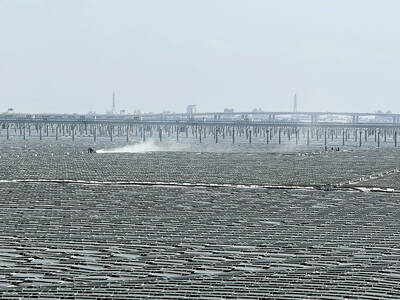
The arithmetic is straightforward and uncomfortable. By the end of 2025, Taiwan had committed itself to a 50-30-20 electricity mix — half natural gas, 30 per cent coal, 20 per cent renewables. The Ministry of Economic Affairs’s (MOEA) own monthly energy reports tell a different story. Natural gas reached 47.8 per cent of generation last year. Coal stood at 35.4 per cent, comfortably above its target ceiling. Renewables came in at 13.1 per cent, well short of the 20 per cent Taipei had pledged a decade earlier. Installed renewable capacity reached roughly half of the 12 gigawatts (GW) the government

Last week US President Donald Trump was asked by a reporter whether he would speak on the phone to the President of Taiwan. “l’ll speak to him. I speak to everybody. We have that situation very well in hand,” Trump said. This marked the second time in a couple of weeks he had said he would talk to the President of Taiwan. In 2016 he famously took a call from then-president Tsai Ing-wen (蔡英文), when he was president-elect. Despite warnings that the apocalypse was nigh because of a phone call, the world quickly forgot about the conversation between two democratically-elected presidents.
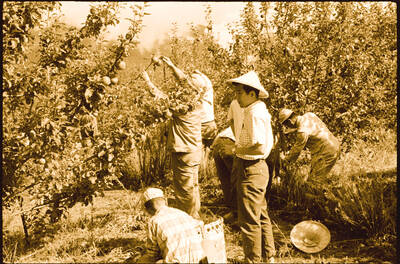
May 25 to May 31 Few believed that apples could be cultivated on a commercial scale in Taiwan’s high mountains. When horticulturalist Cheng Chao-hsiung (程兆熊) first proposed the idea in 1955, both American and Taiwanese colleagues dismissed it as implausible, arguing that temperate fruit could not be reliably grown on a subtropical island, especially on rugged terrain. However, it was this terrain in the Central Mountain Range where many Chinese Civil War veterans were resettled in the late 1950s. With limited job prospects and no family in Taiwan, they were placed on cooperative farms aimed toward self-sufficiency. Some say the conditions


 RSS
RSS