


Aboriginal performers and songs using the Taiwanese language swept away most contenders at Friday night's 11th Golden Melody Awards.
The event, similar to the Grammy Awards, drew a slew of performers from Hong Kong, Singapore and Japan to Sun Yat-sen Memorial Hall in spite of a torrent of rain that threatened to dampen the music industry's biggest party of the year.
Best Pop Album of the Year honors went to Mavis Fan (
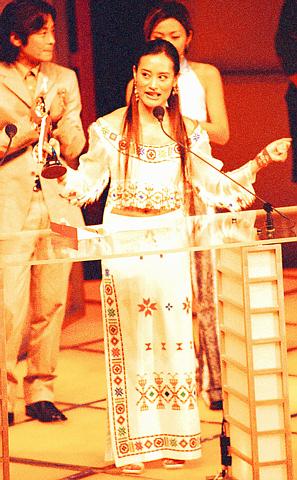
PHOTO: SHEN ZHAO-LIANG, LIBERTY TIMES
Despite all the glam and glitz, the hokey dance pieces, and the sometimes ditzy sounding hosts, the main theme of the evening was somewhat serious, focusing on Taiwan's cultural and musical identity.
The amount of sentiment invested for many of the performers was made abundantly clear when an Aboriginal -- Difang (Kuo Ying-nan,
After a moving speech given in the Ami language, he told the Taipei Times that he "would celebrate the event by drinking a loving cup with the members of his tribe."
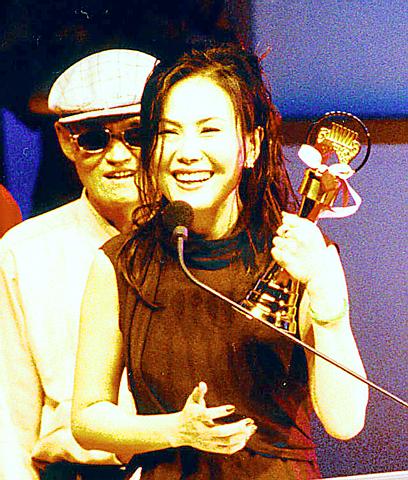
He said it was his greatest regret that "children were no longer taught to speak and sing the songs of the tribe."
Taiwan's Aboriginal heritage was given a further boost when Chen won Best Male Performer. He also won in the Best Song Writer category for "Voices of the Sun, Wind, and the Grassland", for which his niece Samingad (
Chen said his victory was an indication of the importance that Taiwan is finally putting on tribal music, and he hoped that this recognition would influence the next generation to preserve Taiwan's tradition of Aboriginal music.
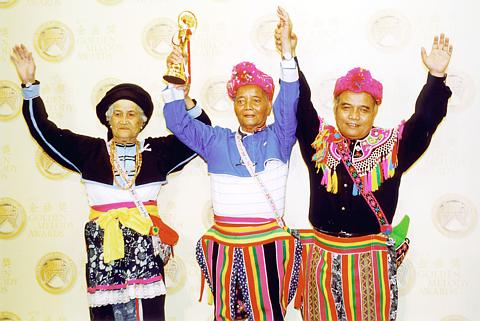
He himself can be seen as a sign of hope for the genre as his grandfather, Lu Sen-bao (
Taiwan's other ethnic groups also got a thumbs up with Labor Exchange (
Even in the smallest of the major league awards -- Best Male and Female Performance for Non-Mandarin Songs -- Taiwanese identity was clearly in the ascendant. Joy Topper (
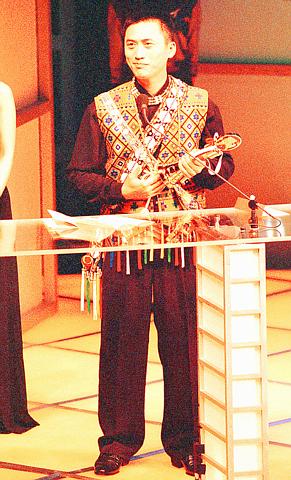
Said Topper: It was "a meaningful event for Taiwan's record industry, for it indicated a willingness to accept diverse genres of music."
For the female category there was no surprise when Chiang Hui (
"That we have a separate category means that I can now sing as a Taiwanese, that this music truly belongs to Taiwan," she said.
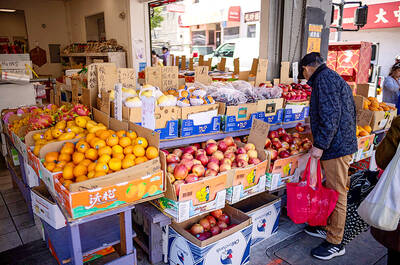
Ajay Verma, a consultant gastroenterologist at Kettering general hospital in Northamptonshire, says our gut is a “complex machine.” “It is constantly providing us with the nutrition we need, initially to grow and develop, and then for us to survive, thrive and repair from injury and illness.” How can we keep it functioning well? Put simply: “Make sure what you put into it is balanced, and that you clear out its waste products adequately,” Verma says. “In a general gastroenterology clinic, the most common conditions we see are irritable bowel syndrome (IBS), gastroesophageal reflux disease, inflammatory bowel disease and constipation,” says Nisha
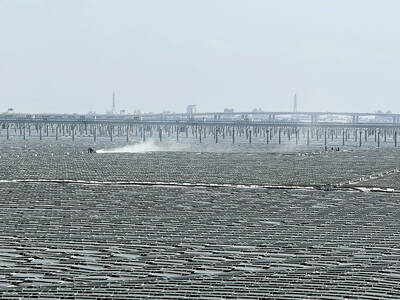
The arithmetic is straightforward and uncomfortable. By the end of 2025, Taiwan had committed itself to a 50-30-20 electricity mix — half natural gas, 30 per cent coal, 20 per cent renewables. The Ministry of Economic Affairs’s (MOEA) own monthly energy reports tell a different story. Natural gas reached 47.8 per cent of generation last year. Coal stood at 35.4 per cent, comfortably above its target ceiling. Renewables came in at 13.1 per cent, well short of the 20 per cent Taipei had pledged a decade earlier. Installed renewable capacity reached roughly half of the 12 gigawatts (GW) the government

Last week US President Donald Trump was asked by a reporter whether he would speak on the phone to the President of Taiwan. “l’ll speak to him. I speak to everybody. We have that situation very well in hand,” Trump said. This marked the second time in a couple of weeks he had said he would talk to the President of Taiwan. In 2016 he famously took a call from then-president Tsai Ing-wen (蔡英文), when he was president-elect. Despite warnings that the apocalypse was nigh because of a phone call, the world quickly forgot about the conversation between two democratically-elected presidents.
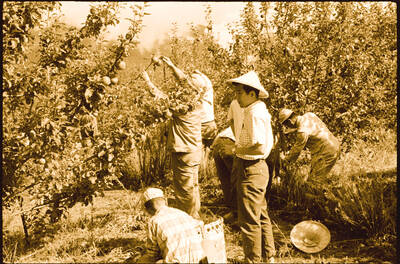
May 25 to May 31 Few believed that apples could be cultivated on a commercial scale in Taiwan’s high mountains. When horticulturalist Cheng Chao-hsiung (程兆熊) first proposed the idea in 1955, both American and Taiwanese colleagues dismissed it as implausible, arguing that temperate fruit could not be reliably grown on a subtropical island, especially on rugged terrain. However, it was this terrain in the Central Mountain Range where many Chinese Civil War veterans were resettled in the late 1950s. With limited job prospects and no family in Taiwan, they were placed on cooperative farms aimed toward self-sufficiency. Some say the conditions


 RSS
RSS