


Hsu Chia-jung is perched on a couch in her living room. She's dressed in a casual white slip. Her feet are bare. She has shoulder-length hair and a quick smile. In front of her, on a coffee table, is a pictorial.
"I'd like to show you my book," she murmurs with a smile.
The recently released Woman's Charms pictures Hsu, who until recently was a successful television reporter, in various states of undress by the sea, in a wooded grove and in a European-style cafe that is actually in Yangmingshan near Taipei. The opening spread shows her on an east coast rock platform. She's topless, her right arm draped decorously over her bosom, the sea splashing onto the rocks below. On the following page, beneath a picture of Hsu sitting in the same location with arms aloft as if in joyous appreciation of the sea and the sun, are the English words "Inspired Nature."
The words, despite their Chinglish T-shirt quality, do actually seem to say something about Hsu's book. However you might feel about its politics or aesthetics, a quick flick through Woman's Charms dispels any qualms that you may have strayed close to the borders of pornography. If anything the book is a coy celebration of the natural, a collection of pictures that an infatuated teenager with a keen interest in photography might take of his girlfriend.
But this was enough to prompt harsh criticism from lawmakers when Yin Hsin -- Ivy in English -- a National Taiwan Normal University student, was the subject of a similar pictorial published in August of this year. Bikini shots are as raunchy as Yin's A Letter for Apology gets, but it still had DPP legislator Tang Pi-o and others doubting Yin's ability to serve as a teacher and role model.
But Hsu dismisses any ideas that Yin's book or her own are unhealthy.
"I did this book," she says, "because I wanted to capture myself on film while I was still young and because I thought it could be aesthetically pleasing. I did it because I knew it wouldn't be like the kind of nude pictorials that have given these books a bad reputation. I knew it could be a healthy book."
For Hsu and Frank Lo, the publisher of Whale Productions, which released both books, "healthy" is something of a key word.
Lo, who spent 10 years working as a travel and entertainment journalist with the China Times before establishing his own publishing company, hopes that one day the kind of books he produces can be accepted by Taiwanese society as a celebration of natural beauty that gives the subjects opportunity-winning media exposure.
"In Japan," he points out, "pictorials are almost like an ID card. Everyone in the media industry nowadays has one." But it's also Japan, where nude pictorials got their start more than a decade ago, that has given the books something of a lurid reputation.
In 1991 in Japan two nude pictorials challenged a local law forbidding the depiction of pubic hair. Miyazawa Rie's Sante Fe, in which one photograph showed a glimpse of pubic hair, caused a media stir and went on to be Japan's best selling nude pictorial of all time, while Kanako Higuchi's Water Fruit was more explicit and subsequently became the second best selling nude pictorial.
When police warnings to the publishers failed to result in real legal action, the books spawned a rush of copy cat "hair nudes" that by 1994 peaked with the publication of 300 such books by media celebrities, aspiring starlets and "idol" singers.
Most of such publications were little more than exercises in packaging, disguising soft pornography as art.
Such books still make up a major slice of the pictorial market today. Take a stroll around Taipei's Kuanghua Market, where fake name-brand sports shoes rub shoulders with cut-price computer peripherals and men browse furtively through hole-in-the-wall outlets selling Japanese pornography, and you'll see pictorials with titles like Back Garden, Kingdom of Sexy Legs, Forest of Desire and Unchained & Sexy.
Even so, according to the owner of a Kuanghua basement store specializing in soft pornography who declined to be named, it's still the quality end of the pictorial market that picks up the most sales. "The top sellers are Tien Li [a stunning part aboriginal girl whose book is called A Nymph of Provence] and Yin Hsin, that university student."
Lo is adamant such books are not about sexploitation of star-struck young women dreaming of instant success. "We want our books to be as healthy and aesthetically pleasing as possible."
As for Yin Hsin, who has now retreated from the media eye after the blitz that ensued after the release of her book, he says: "Ivy is a smart girl. She knew what she was doing before she did the book. We knew it was going to challenge a lot of conventions, but that was one of the reasons we did it. The important thing was that the book was tasteful."
This shift in the business got kick-started by the success of a nude pictorial, Body Code, by a little known singer called Tien Hsin that became Taiwan's most successful in recent years, racking up sales of around 130,000.
But ironically, Tien's tasteful foray into the world of semi-nude modeling also highlights the contradictory side of the business: no matter how aesthetically the books are produced, the gossip they incite tends to be of the lurid variety.
In the case of Tien Hsin her larger breast size became a hot subject in Taiwan and Hong Kong tabloid presses. And this year's hottest pictorial, Maggie's Galleria by Yu Fang, which has so far seen sales of around 50,000, had a similar impact. A series of glamor photographs interspersed with arty detail shots of Bali, where the book was photographed, it was Yu Fang's breast size that captured imaginations in Taiwan and Hong Kong, where the tabloid press promptly gave her the moniker "Taiwan's cow woman."
Not that such media slurs seem to do the subjects any harm. Tien Hsin's career got an immediate boost after the publication of her book, landing a movie role with Hsu Chi (the Taiwanese movie actress whose much earlier and far more lurid nude pictorial launched her into a successful XXX movie career in Hong Kong and which later translated into mainstream success). She later went on to become a successful TV host here in Taiwan. Yu Fang, too, landed Hong Kong movie roles.
As Lan Tsu-wei, editor of the Liberty Times entertainment section, points out, nude pictorials can be a quick road to success if the product is done tastefully and marketed properly.
"It's not just the Taiwan and Hong Kong sales of these books that are important. The most popular books are also produced on the black market in China, and if they become popular enough the Hong Kong movie industry, which wants success in China and Taiwan, will pick up the women and make them stars."
Lo agrees. "If these books are not pornographic and have some news point -- in Yin's case it was that she was a student; in Hsu's case it was that she was a television reporter -- they can make the artist even more popular and open up a lot of opportunities to them."
Hsu Chia-jung looks proudly at her book from her living room couch. "My parents were a bit shocked at first," she muses, "but when they saw the book they realized there was nothing pornographic about it and they came around."
Would she do another one? "I don't have any plans to do another one. But, yes, I would."

Just after 6am, I walked up to the ticket gate at Taipei Main Station and entered the Taiwan Railway platform without scanning any ticket; instead, I flashed the Sanrio Fun Rail pass on my phone to the gate worker and was admitted. I found my train and prepared to board. My destination? This very same station. I was embarking on a 13-hour journey on one of two round-the-island trains operated by ezTravel. They run each day, one counterclockwise around the island and one clockwise. They differ in a number of ways from an ordinary Taiwan Railway train and can make for
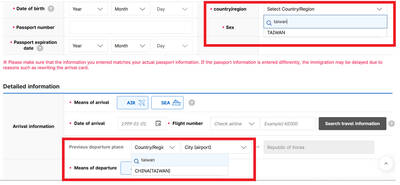
Jason Han says that the e-arrival card spat between South Korea and Taiwan shows that Seoul is signaling adherence to its “one-China” policy, while Taiwan’s response reflects a reciprocal approach. “Attempts to alter the diplomatic status quo often lead to tit-for-tat responses,” the analyst on international affairs tells the Taipei Times, adding that Taiwan may become more cautious in its dealings with South Korea going forward. Taipei has called on Seoul to correct its electronic entry system, which currently lists Taiwan as “China (Taiwan),” warning that reciprocal measures may follow if the wording is not changed before March 31. As of yesterday,
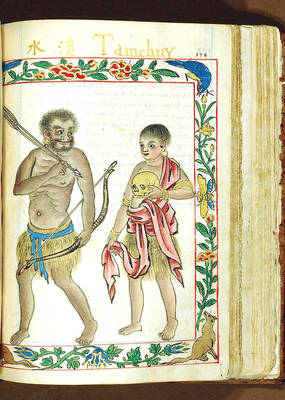
The Portuguese never established a presence on Taiwan, but they must have traded with the indigenous people because later traders reported that the locals referred to parts of deer using Portuguese words. What goods might the Portuguese have offered their indigenous trade partners? Among them must have been slaves, for the Portuguese dealt slaves across Asia. Though we often speak of “Portuguese” ships, imagining them as picturesque vessels manned by pointy-bearded Iberians, in Asia Portuguese shipping between local destinations was crewed by Asian seamen, with a handful of white or Eurasian officers. “Even the great carracks of 1,000-2,000 tons which plied

On Thursday, former Taipei mayor and founder of the Taiwan People’s Party (TPP) Ko Wen-je (柯文哲) was sentenced to 17 years in prison and had his civil rights suspended for six years over corruption, embezzlement and other charges. Seven others related to the case were also handed prison sentences, while two were found not guilty. It has been a bad week for the TPP. On Tuesday, prosecutors charged Chinese immigrant Xu Chunying (徐春鶯) with suspicion of taking part in Beijing-directed election interference. Xu has strong links to the TPP, which once offered her a party list legislator nomination. Tuesday also


 RSS
RSS