


This year marks the 79th anniversary of one of the most defining and painful moments in Taiwan’s modern history. The 228 Incident carries the weight of collective memory and the long journey toward democratic transformation. As such, President William Lai’s (賴清德) annual remarks are expected to offer reflection and a sense of shared responsibility.
The president’s statement that “silence may allow those who distort history to take advantage” warrants careful consideration. His intention to emphasize the importance of historical memory is understandable, yet the phrasing is not ideal for a head of state. Language that implies internal adversaries risks deepening social division and might unintentionally politicize a historical event that should stand as a shared moral foundation.
The question is not whether Taiwan should confront its history, but how it should do so. Historical memory gains meaning only when it facilitates understanding, reconciliation and institutional learning. When framed as a battle between “distortion” and “silence,” it can provoke defensive reactions and hinder genuine dialogue.
The significance of Feb. 28 becomes even clearer when viewed alongside the following day: Military Service Day on March 1. Although less prominent in public discourse, the juxtaposition of these two dates reveals an important insight into Taiwan’s political development.
Historical reflection and national defense are not separate concerns. Together, they form two essential dimensions of democratic maturity.
Feb. 28 warns of the dangers of unchecked state power, while Military Service Day highlights a different truth — that peace requires responsibility and collective commitment.
Yet Taiwan’s public discourse has long treated these in isolation. Feb. 28 is framed almost exclusively in terms of internal reconciliation, while defense issues are framed in terms of external threats. This separation prevents the formation of a coherent national narrative. A democracy that understands its past gains clarity in navigating external uncertainty. Conversely, a society willing to assume the responsibilities of defense creates the protected space necessary for history to be discussed freely.
This linkage becomes more urgent in light of East Asia’s rapidly shifting environment today. Strategic competition between the US and China has become structural rather than cyclical. Japan and South Korea are recalibrating their defense roles. Tensions in the South China Sea are rising. China’s domestic pressures have increased uncertainty in its external behavior.
Under such conditions, Taiwan’s internal cohesion and external predictability hold regional significance. Stability in the Taiwan Strait is no longer merely a bilateral matter — it is a key element in Indo-Pacific security. Political leaders must adopt language that reassures rather than divides.
Feb. 28 symbolizes democratic reflection, institutional humility and historical honesty.
Military Service Day symbolizes responsibility, preparedness and the safeguarding of peace.
Viewed together, these two days offer a clear insight: Peace is sustained not only through goodwill, but through the collective capacity to protect it.
As East Asia faces mounting geopolitical uncertainty, Taiwan has an opportunity to demonstrate political maturity: Confronting history without weaponizing it, and strengthening national defense without inflaming internal division.
A Taiwan that is historically honest and socially cohesive would not only enhance its democratic resilience, but also serve as a stabilizing force in the region.
Leonard Fong-sheng Wang is an honorary chair professor at National University of Kaohsiung.
A gap appears to be emerging between Washington’s foreign policy elites and the broader American public on how the United States should respond to China’s rise. From my vantage working at a think tank in Washington, DC, and through regular travel around the United States, I increasingly experience two distinct discussions. This divergence — between America’s elite hawkishness and public caution — may become one of the least appreciated and most consequential external factors influencing Taiwan’s security environment in the years ahead. Within the American policy community, the dominant view of China has grown unmistakably tough. Many members of Congress, as
The Hong Kong government on Monday gazetted sweeping amendments to the implementation rules of Article 43 of its National Security Law. There was no legislative debate, no public consultation and no transition period. By the time the ink dried on the gazette, the new powers were already in force. This move effectively bypassed Hong Kong’s Legislative Council. The rules were enacted by the Hong Kong chief executive, in conjunction with the Committee for Safeguarding National Security — a body shielded from judicial review and accountable only to Beijing. What is presented as “procedural refinement” is, in substance, a shift away from
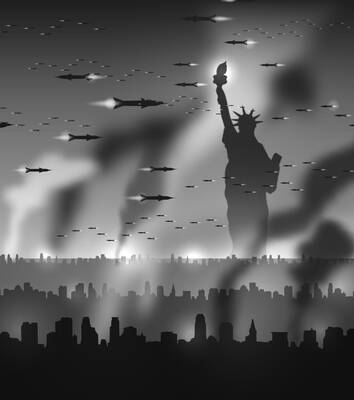
After declaring Iran’s military “gone,” US President Donald Trump appealed to the UK, France, Japan and South Korea — as well as China, Iran’s strategic partner — to send minesweepers and naval forces to reopen the Strait of Hormuz. When allies balked, the request turned into a warning: NATO would face “a very bad” future if it refused. The prevailing wisdom is that Trump faces a credibility problem: having spent years insulting allies, he finds they would not rally when he needs them. That is true, but superficial, as though a structural collapse could be caused by wounded feelings. Something
The shifting geopolitical tectonic plates of this year have placed Beijing in a profound strategic dilemma. As Chinese President Xi Jinping (習近平) prepares for a high-stakes summit with US President Donald Trump, the traditional power dynamics of the China-Japan-US triangle have been destabilized by the diplomatic success of Japanese Prime Minister Sanae Takaichi in Washington. For the Chinese leadership, the anxiety is two-fold: There is a visceral fear of being encircled by a hardened security alliance, and a secondary risk of being left in a vulnerable position by a transactional deal between Washington and Tokyo that might inadvertently empower Japan


 RSS
RSS