


On Feb. 7, the New York Times ran a column by Nicholas Kristof (“What if the valedictorians were America’s cool kids?”) that blindly and lavishly praised education in Taiwan and in Asia more broadly.
We are used to this kind of Orientalist admiration for what is, at the end of the day, paradoxically very Anglo-centered. They could have praised Europeans for valuing education, too, but one rarely sees an American praising Europe, right?
It immediately made me think of something I have observed. If Taiwanese education looks so wonderful through the eyes of the archetypal expat, gazing from an ivory tower, how is it that every Taiwanese parent I meet utterly loathes it?
I speak regularly with Taiwanese who are parents or approaching the age of having children and have strong opinions about how the next generation should be raised. All of them are vocally critical of what they perceive as a monstrously antiquated, inefficient, counterproductive and borderline abusive education system, without exception. They blame it for destroying their children’s self-confidence, preventing them from becoming creative or innovative, and failing to prepare them for a changing world. They see it as blocking their growth and shaping them into cannon fodder for large corporations.
Most wish their children could be educated abroad, not for language acquisition or prestige, but because they believe that elsewhere, children are not raised as if they were preparing for an imperial civil service examination from ancient China. They are not entirely right, but there is truth in that perception.
Their opposition to Taiwan’s education system is not always visible at first, because they comply with it, but this is largely because they believe they have no choice. Once they finish venting their frustrations, they almost always add that they feel powerless to change the system and that there is no viable alternative, unless their children are to have no future.
The final note of these conversations is always the same. They end with: “I am the only one who thinks this” — even when they are the third person in a month to share exactly the same criticism with me.
What does this mean?
I have often reported on activism in Taiwan and on many grassroots movements that seek to take full advantage of the freedoms afforded by the country’s democracy. This, in itself, challenges another false cliche: That of Taiwanese being shy and meek, when they are active and upfront when needed. I have seen Taiwanese organize around causes large and small, and I have seen them succeed on many occasions.
For that reason, I believe the only thing standing between Taiwan’s education system and meaningful reform is the lack of awareness among frustrated parents that they are not alone. It is entirely possible that, at some point, the desire for reform would become widely recognized. The moment disgruntled parents realize they are far from isolated and that there are enough of them to shake the system, education in Taiwan would have to change.
That might disappoint those who prefer Taiwan to conform to their fantasies of a neat, obedient Confucian culture populated by clean-cut, robotic students, but it would be nothing short of a revolution for this country.
Julien Oeuillet is an independent reporter in Kaohsiung and hosts the weekly program Taiwan vs the World on Radio Taiwan International.
KMT Chairwoman Cheng Li-wun’s (鄭麗文) recent visit to Beijing and her upcoming visit to Washington will serve as a high-level test of her diplomatic mettle. In Beijing, Cheng was received with symbolic gestures, a warm reception, and high-level access. In Washington, she will receive far less pomp and far sharper questions about the KMT’s vision for the future of Taiwan. Her challenge will be to persuade Washington that the KMT’s engagement with China can coexist with strong deterrence. Cheng’s April 7-12 visit to mainland China coincided with an intense period of conflict in Iran. Despite the strategic significance of Cheng’s trip,
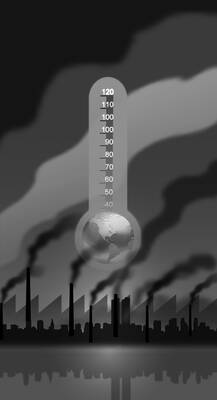
The closure of the Strait of Hormuz has sent the vast Asian chemicals industry into a tailspin. Deprived of the likes of Qatari natural gas and Saudi Arabian oil, the region’s fertilizer and plastics plants are slowing production or even shutting down. Everywhere except China, that is. In petrochemicals, China is unique. As well as a traditional industry that uses oil and gas as feedstock, it has parallel output that relies on its abundant domestic coal. Unsurprisingly, India and other regional powers want to copy and paste the Chinese method. This would not be easy — or climate friendly. The
Indonesian President Prabowo Subianto says he knows how to fix the problems facing Indonesia. Yet his economic mismanagement and authoritarian tendencies are steering the nation toward a familiar mix of currency instability and political chaos. The world’s fourth-most populous nation risks reversing the hard-won democratic and business reforms that came after the Asian Financial Crisis in 1997. At that time, the rupiah collapsed and the political upheaval that followed forced former president Haji Mohamed Suharto from power. Prabowo’s administration is ignoring similar warning signs. That disconnect was apparent in a national address on Wednesday, when Prabowo projected the swagger that has
“Of course you can choose not to be Taiwanese, just do not stay here,” chairwoman of Taipei 101 operator Taipei Financial Center Corp Janet Chia (賈永婕) said in an online interview with local entertainer Tai Chih-yuan (邰智源), triggering intense discussion on social media, with politicians across party lines weighing in. In the interview, which was aired on May 14, Chia and Tai’s discussion over a meal in Taipei 101 covered Chia’s career change from entertainer to chairwoman and US climber Alex Honnold’s free solo climb up the Taipei 101 building. During the interview, Chia said, “Being on this land, we


 RSS
RSS