


As red lanterns adorn street corners and social media feeds teem with zodiac divinations, the Year of the Horse has arrived. In our hyper-accelerated age, the horse is almost exclusively synonymous with the idiom ma dao cheng gong (馬到成功) — “instant success upon arrival.” It is a linguistic shot of adrenaline, fueling the thrilling illusion that once the bell tolls, our lives would screech off into a cloud of dust, leaving all troubles behind.
Yet, when examining the millennia-long partnership between humans and this magnificent “biological machine,” a different truth emerges. The true essence of the horse is not merely speed; it is rhythm. As we enter this new lunar cycle, it is time to loosen the tension of KPIs and mortgages. Beyond the feng shui (風水) and lucky charms, the horse offers a deeper wisdom for our survival in an uncertain future.
In the past, the horse was a symbol of immense prestige. From the thundering chariots of the First Emperor of China Qin Shihuangdi (秦始皇帝) to the “fine steeds and furs worth a fortune” celebrated by the Tang Dynasty poet Li Bai (李白), the horse represented the explosive power to conquer.
Today, the cultural lexicon has shifted. A popular term among today’s youth is niu ma (牛馬) literally meaning “oxen and horses” — a self-deprecating label for those who feel like mere “beasts of burden.” It captures a modern dilemma with painful accuracy: running at breakneck speed without knowing the destination; carrying heavy loads without ever pausing to graze.
Whether coding in a skyscraper or delivering meals through a storm, many have felt the sting of an invisible rider shouting “Faster! Harder!” This “run first, ask directions later” radicalism might have once yielded survival dividends, but in an era of burnout, it is a recipe for collapse.
The first wisdom of the Year of the Horse is to refuse the blind gallop. Like the White Dragon Horse from the Ming Dynasty Chinese classic Journey to the West (西遊記), we must maintain an inner compass. He finished the long haul to Buddhahood because he knew his purpose, refusing to be led astray by faulty navigation or distractions.
In our current tech-driven landscape, the horse might seem awkwardly obsolete. When ChatGPT can draft proposals in seconds and drones can outmaneuver any animal, what use do we have for a horse?
This is where the ancient idiom lao ma shi tu (老馬識途) becomes critical: “The old horse knows the way.”
The classic of ancient Chinese philosophy the Han Feizi (韓非子) tells of the statesman Guan Zhong (管仲), whose army was lost in a foggy winter maze. While panic set in, Guan Zhong simply let the old horses lead. Relying on deep-seated instinct, they guided the troops to safety. Today, we are lost in a different kind of fog — big data and algorithms. An algorithm can dictate the fastest route, but it cannot say which path has the most beautiful scenery, nor can it point towards one’s true desire.
As everyone chases the latest artificial intelligence model, the Year of the Horse reminds us: Do not undervalue past experience. The hard-won lessons, the stumbles and earned judgment are beyond any machine. You do not need to be the fastest; you need to know the path the best.
There is a traditional phrase praising diligence: ma bu jie an (馬不解鞍) which translates to “the horse never unsaddles.” While relentless effort is respectable, if a horse never sheds its saddle, its back would eventually fester. The first step in caring for the human condition is allowing people to rest.
Modern workplace culture suffers from a “saddle compulsion,” where pausing is equated with failing. We must champion a new equine philosophy: Run with joyful abandon when it is time to run, but rest with unapologetic boldness when it is time to graze. Consider the horses in the
masterpieces of the 20th Century Chinese painter Xu Beihong (徐悲鴻) — they are icons of indomitable spirit, yet their power is balanced by quiet stillness.
Acknowledging your limits is not shameful; it is advanced wisdom. Just as land needs fallow periods to remain fertile, our minds need space to stay inspired.
Perhaps the most poignant horse parable is Qianlima changyou, er Bo le bu changyou (千里馬常有,而伯樂不常有) the lament that “swift steeds are common, but a Bo Le (伯樂) — a master judge of talent — is rare.” Many spend their lives waiting for that “rider” to discover them. This year, I suggest something more untamed: Stop waiting for a Bo Le. Learn to be your own rider.
For too long, we have handed the reins of our lives to external forces — parents, bosses or societal expectations, living like blinkered horses, plodding in circles around a millstone. This year, remove the blinders. Your value does not require external validation to be real; your joy does not require permission to be felt.
This is the true “freedom in the saddle” — the confidence to refuse what you do not want to do, and the magnanimity to slog through life with your spirit intact.
May you, in this Year of the Horse, possess the speed of a swift steed to chase your dreams and the wisdom of an old horse to navigate life’s pitfalls. Above all, may you have the soul of a wild horse — to let out your own whinny on the vast plains and run with exhilarating joy, entirely in your own rhythm.
Hugo Tseng holds a doctorate in linguistics, and is a lexicographer and former chair of the Soochow University Department of English.
KMT Chairwoman Cheng Li-wun’s (鄭麗文) recent visit to Beijing and her upcoming visit to Washington will serve as a high-level test of her diplomatic mettle. In Beijing, Cheng was received with symbolic gestures, a warm reception, and high-level access. In Washington, she will receive far less pomp and far sharper questions about the KMT’s vision for the future of Taiwan. Her challenge will be to persuade Washington that the KMT’s engagement with China can coexist with strong deterrence. Cheng’s April 7-12 visit to mainland China coincided with an intense period of conflict in Iran. Despite the strategic significance of Cheng’s trip,
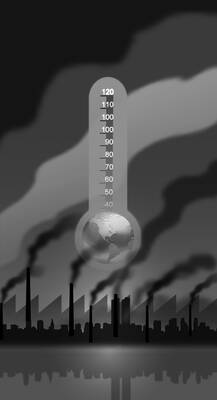
The closure of the Strait of Hormuz has sent the vast Asian chemicals industry into a tailspin. Deprived of the likes of Qatari natural gas and Saudi Arabian oil, the region’s fertilizer and plastics plants are slowing production or even shutting down. Everywhere except China, that is. In petrochemicals, China is unique. As well as a traditional industry that uses oil and gas as feedstock, it has parallel output that relies on its abundant domestic coal. Unsurprisingly, India and other regional powers want to copy and paste the Chinese method. This would not be easy — or climate friendly. The
Indonesian President Prabowo Subianto says he knows how to fix the problems facing Indonesia. Yet his economic mismanagement and authoritarian tendencies are steering the nation toward a familiar mix of currency instability and political chaos. The world’s fourth-most populous nation risks reversing the hard-won democratic and business reforms that came after the Asian Financial Crisis in 1997. At that time, the rupiah collapsed and the political upheaval that followed forced former president Haji Mohamed Suharto from power. Prabowo’s administration is ignoring similar warning signs. That disconnect was apparent in a national address on Wednesday, when Prabowo projected the swagger that has
“Of course you can choose not to be Taiwanese, just do not stay here,” chairwoman of Taipei 101 operator Taipei Financial Center Corp Janet Chia (賈永婕) said in an online interview with local entertainer Tai Chih-yuan (邰智源), triggering intense discussion on social media, with politicians across party lines weighing in. In the interview, which was aired on May 14, Chia and Tai’s discussion over a meal in Taipei 101 covered Chia’s career change from entertainer to chairwoman and US climber Alex Honnold’s free solo climb up the Taipei 101 building. During the interview, Chia said, “Being on this land, we


 RSS
RSS