


China has apparently emerged as one of the clearest and most predictable beneficiaries of US President Donald Trump’s “America First” and “Make America Great Again” approach. Many countries are scrambling to defend their interests and reputation regarding an increasingly unpredictable and self-seeking US. There is a growing consensus among foreign policy pundits that the world has already entered the beginning of the end of Pax Americana, the US-led international order.
Consequently, a number of countries are reversing their foreign policy preferences. The result has been an accelerating turn toward China as an alternative economic partner, with Beijing hosting Western leaders, albeit not with a red carpet and on its own terms.
The shift is already visible. European and other Western leaders are lining up to engage Beijing, signaling a consequential recalibration of foreign policy. The once-prominent rhetoric of “decoupling” and “de-risking” from China has largely disappeared, replaced by an implicit acceptance that engagement is unavoidable.
Last month alone, Irish Prime Minister Micheal Martin, Finnish Prime Minister Petteri Orpo and British Prime Minister Keir Starmer visited China. The visits underscore a broader trend, in which Western powers are prioritizing economic and diplomatic engagement over ideological positioning. For Europe, at least in practice, economic expediency is taking precedence over strategic caution and normative concerns.
Yet this does not amount to a formal overhaul of Europe’s China policy, nor does it represent an explicit geopolitical realignment. European leaders are not so much choosing China as yielding to circumstance. The underlying calculation seems to be that, as relations with Washington grow more uncertain, workable ties with Beijing must be preserved, almost at any cost.
Starmer’s four-day visit to China illustrates that logic. While he returned with substantial economic agreements and secured the lifting of Chinese sanctions on six British lawmakers, the outcomes, presented as diplomatic successes, also reveal how readily political principles are being subordinated to short-term gains.
The UK is allowing China to open a grand consulate, despite concerns and protests. Notably absent from the visit was any public reference to China’s human rights violations or to the sentencing of Hong Kong media tycoon Jimmy Lai (黎智英), a British citizen, underscoring the clear limits of engagement and how firmly it remains on China’s terms.
What is also overlooked in Europe is that China is Russia’s biggest supporter and indirectly enables the war in Ukraine, a conflict that Europe collectively opposes. Focusing solely on Russia as a threat, while ignoring China’s role, would not address the root problem.
Many European countries appear to be framing the choice as binary — China or the US. That is flawed. The challenge China poses is distinct from Europe’s ties with Washington, yet leaders are increasingly viewing Beijing only through the lens of US-China competition. In doing so, they overlook the costs of deeper engagement with Beijing.
China’s behavior and ground realities have not changed; what has changed is Europe’s relationship with the US. Altering China policy in reaction to US unpredictability is neither coherent nor sustainable. Equally striking is the near-total absence of democratic values in this recalibration, despite their centrality to Europe’s declared foreign policy identity. Cooperation is being pursued, but with little clarity about its limits or costs.
While high-level visits are unlikely to reshape the global order in China’s favor, they are a telling sign of fleeting interests. They confirm that China is increasingly seen as a viable alternative to the US, which is problematic in itself. The flurry of engagement exposes the incoherence of Europe’s China policy and its lack of a consistent strategy for managing Beijing while navigating deteriorating US-China relations.
China is also achieving its objectives. With the EU’s engagement fragmented and multilateral frameworks weakening, individual countries’ eagerness to court Beijing plays straight into its hands. This enables China to portray itself as a reliable partner while Washington retreats inward, weakening Europe’s leverage. At the same time, such an approach undermines Europe’s moral authority, failing to uphold the very values it claims to defend.
In the process, Europe risks eroding its normative influence and weakening its position with China, which increasingly relies on coercive measures to secure political advantage. European leaders must ask whether China can genuinely serve as a counterbalance to Trump-style unpredictability. Greater economic dependence on Beijing is far more likely to generate new vulnerabilities than to resolve existing ones.
This is the moment for Europe to consider what matters most: short-term economic gains from China that would deepen dependency, or building a coherent, principled approach to foreign policy that strengthens long-term strategic resilience.
Rahul Mishra is an associate professor at the Centre for Indo-Pacific Studies at Jawaharlal Nehru University and a senior research fellow at Thammasat University.
Minister of Labor Hung Sun-han (洪申翰) on April 9 said that the first group of Indian workers could arrive as early as this year as part of a memorandum of understanding (MOU) between the Taipei Economic and Cultural Center in India and the India Taipei Association. Signed in February 2024, the MOU stipulates that Taipei would decide the number of migrant workers and which industries would employ them, while New Delhi would manage recruitment and training. Employment would be governed by the laws of both countries. Months after its signing, the two sides agreed that 1,000 migrant workers from India would
On March 31, the South Korean Ministry of Foreign Affairs released declassified diplomatic records from 1995 that drew wide domestic media attention. One revelation stood out: North Korea had once raised the possibility of diplomatic relations with Taiwan. In a meeting with visiting Chinese officials in May 1995, as then-Chinese president Jiang Zemin (江澤民) prepared for a visit to South Korea, North Korean officials objected to Beijing’s growing ties with Seoul and raised Taiwan directly. According to the newly released records, North Korean officials asked why Pyongyang should refrain from developing relations with Taiwan while China and South Korea were expanding high-level
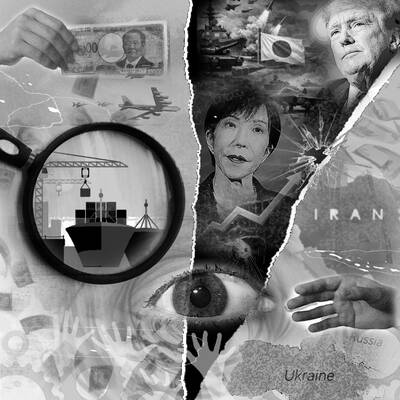
Japan’s imminent easing of arms export rules has sparked strong interest from Warsaw to Manila, Reuters reporting found, as US President Donald Trump wavers on security commitments to allies, and the wars in Iran and Ukraine strain US weapons supplies. Japanese Prime Minister Sanae Takaichi’s ruling party approved the changes this week as she tries to invigorate the pacifist country’s military industrial base. Her government would formally adopt the new rules as soon as this month, three Japanese government officials told Reuters. Despite largely isolating itself from global arms markets since World War II, Japan spends enough on its own
When 17,000 troops from the US, the Philippines, Australia, Japan, Canada, France and New Zealand spread across the Philippine archipelago for the Balikatan military exercise, running from tomorrow through May 8, the official language would be about interoperability, readiness and regional peace. However, the strategic subtext is becoming harder to ignore: The exercises are increasingly about the military geography around Taiwan. Balikatan has always carried political weight. This year, however, the exercise looks different in ways that matter not only to Manila and Washington, but also to Taipei. What began in 2023 as a shift toward a more serious deterrence posture


 RSS
RSS