


Taiwan’s economy took off in the 1970s and 1980s, transforming it from a developing nation into a beautiful, developed country. National income rose and people lived and worked in peace. The poor believed that so long as you “work hard like an ox, you have nothing to fear” — that you could get a loan to buy a small home without having to worry about being unable to afford the mortgage.
Today, prices and housing costs continue to climb and salaries cannot keep up. For the past half-century, housing prices have only increased. Although the volume of transactions has decreased, prices have not fallen. In just a few decades, Taiwan’s title as one of the Asian Tigers has quietly disappeared.
Although the Directorate-General of Budget, Accounting and Statistics has said that Taiwan’s GDP per capita would surpass US$40,000 this year, most Taiwanese feel absolutely no change. The reason for this lies in Taiwan’s uneven employment structure — of the roughly 11 million people employed, more than 7 million work in the service sector, which has little connection to exports. Semiconductor exporters, whose related employment involves only about 300,000 people, are the main beneficiaries. Even if the wider electronics industry were included, the number of employees would only be about 1 million people — a small proportion of the workforce. Other industries hardly share in these benefits.
A booming tech sector alongside stagnated traditional industries has fueled Taiwan’s economic prosperity and contributed to widening income disparities across sectors. If this were to continue, how could the gap between rich and poor not grow ever wider? Different social classes and industry trends diverge in a “K” shape, with some moving upward and others downward, creating an image of stark polarization. While the government touts a significant increase in GDP per capita, the real challenge — ensuring all citizens can share in the economic benefits — is an important issue that the government must carefully consider.
Taiwan’s GDP per capita surpassing US$40,000 can be partly attributed to negative population growth. Before 2000, Taiwan’s population grew by about 2 million people every 10 years. In the past decade, there has been no growth. Since GDP per capita is calculated by dividing GDP by the population, negative or zero population growth naturally pushes the figure higher. That Taiwan’s GDP per capita has risen from stabilizing at US$30,000 to surpassing US$40,000 in just five years highlights the strength of its economic growth.
Looking at Taiwan’s GDP per capita last year, average annual income reached about NT$1.1 million, while the median total salary was just NT$525,000. This indicates that the high average figure is largely driven by salaries in high-tech industries, such as semiconductor manufacturing, suggesting that Taiwan is experiencing industrial polarization — a phenomenon that warrants government attention and review.
As GDP growth primarily benefits the tech sector, traditional industries continue to struggle and economic gains are not being shared broadly among the population. The government must find ways to ensure that high-tech and traditional sectors share these economic benefits, so that the majority of citizens do not come to resent the government for failing to deliver on its promises.
Wang Chin-ho is retired.
Translated by Kyra Gustavsen
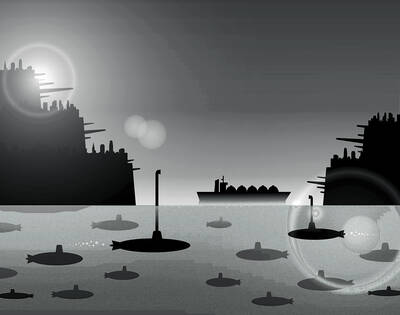
In the event of a war with China, Taiwan has some surprisingly tough defenses that could make it as difficult to tackle as a porcupine: A shoreline dotted with swamps, rocks and concrete barriers; conscription for all adult men; highways and airports that are built to double as hardened combat facilities. This porcupine has a soft underbelly, though, and the war in Iran is exposing it: energy. About 39,000 ships dock at Taiwan’s ports each year, more than the 30,000 that transit the Strait of Hormuz. About one-fifth of their inbound tonnage is coal, oil, refined fuels and liquefied natural gas (LNG),
To counter the CCP’s escalating threats, Taiwan must build a national consensus and demonstrate the capability and the will to fight. The Chinese Communist Party (CCP) often leans on a seductive mantra to soften its threats, such as “Chinese do not kill Chinese.” The slogan is designed to frame territorial conquest (annexation) as a domestic family matter. A look at the historical ledger reveals a different truth. For the CCP, being labeled “family” has never been a guarantee of safety; it has been the primary prerequisite for state-sanctioned slaughter. From the forced starvation of 150,000 civilians at the Siege of Changchun
The two major opposition parties, the Chinese Nationalist Party (KMT) and the Taiwan People’s Party (TPP), jointly announced on Tuesday last week that former TPP lawmaker Chang Chi-kai (張啟楷) would be their joint candidate for Chiayi mayor, following polling conducted earlier this month. It is the first case of blue-white (KMT-TPP) cooperation in selecting a joint candidate under an agreement signed by their chairpersons last month. KMT and TPP supporters have blamed their 2024 presidential election loss on failing to decide on a joint candidate, which ended in a dramatic breakdown with participants pointing fingers, calling polls unfair, sobbing and walking
In the opening remarks of her meeting with Chinese President Xi Jinping (習近平) in the Great Hall of the People in Beijing on Friday, Chinese Nationalist Party (KMT) Chairwoman Cheng Li-wun (鄭麗文) framed her visit as a historic occasion. In his own remarks, Xi had also emphasized the history of the relationship between the KMT and the Chinese Communist Party (CCP). Where they differed was that Cheng’s account, while flawed by its omissions, at least partially corresponded to reality. The meeting was certainly historic, albeit not in the way that Cheng and Xi were signaling, and not from the perspective


 RSS
RSS