


Taiwan People’s Party (TPP) Chairman Huang Kuo-chang (黃國昌) is facing allegations of operating a “paparazzi” group to surveil his political adversaries.
The accusations stem from a lawsuit filed by Democratic Progressive Party (DPP) Legislator Wang Yi-chuan (王義川) after Chinese Nationalist Party (KMT) Legislator Hsu Chiao-hsin (徐巧芯) in June last year publicly released a video showing Wang’s car making an illegal left turn.
Wang said he suspected the video was recorded by paparazzi.
After months of investigation, prosecutors said the people who shot the video were staff members of Kai Ssu International Co, a company with no known news publication.
The investigation found that one of the four people who followed Wang was a former aide of Huang. It also said that Kai Ssu International had invested in a TPP-friendly polling company and a media outlet headed by a man who cofounded the Anti-Corruption and Whistleblower Protection Association (TAWPA) with Huang.
The Chinese-language Mirror Media on Sept. 26 alleged that Huang had established the paparazzi group in 2021, led by Hsieh Hsing-en (謝幸恩) of the state-run Central News Agency (CNA). It said that Hsieh used a pseudonym and forwarded photographs or content made by the paparazzi group to other media outlets, including RW News (菱傳媒), and to politicians and media with close ties to Huang.
Huang allegedly directed the activities of the paparazzi group, which targeted mostly DPP members, but also a few of his allies. Content provided by the group led to the false accusations by Hsu in 2022 against then-DPP Taipei mayoral candidate Chen Shih-chung (陳時中) and by KMT Legislator Wang Hung-wei (王鴻薇) against Presidential Office Secretary-General Pan Meng-an (潘孟安). The latter is appealing a ruling that found her guilty of defamation.
Hsieh on Monday last week resigned from CNA, which has filed a criminal complaint against her for breach of trust and damage to its reputation. She has denied the charges and insisted she is upholding “freedom of the press.”
RW News on Tuesday last week ceased operations.
The media is referred to as the “fourth estate” in a democracy, because it provides checks and balances on the three branches of government — legislative, executive and judicial — by informing the public and holding the government accountable.
If the accusations about Huang are true, then that would mean that the leader of Taiwan’s third-largest political party has abused his power to use the press to surveil and intimidate his political adversaries and allies alike.
Huang’s alleged actions go beyond the definitions of a “whistle-blower” in the Public Interest Whistleblower Protection Act (公益揭弊者保護法), which he had vigorously promoted and took effect this year. If true, his actions have overstepped the boundaries of political ethics and could be illegal.
If the TPP and the KMT — which has said that the allegations against Huang would not affect the two parties’ cooperation — prioritize party or personal gains over democratic values, they might lose people’s trust in their capability to protect the public interest.

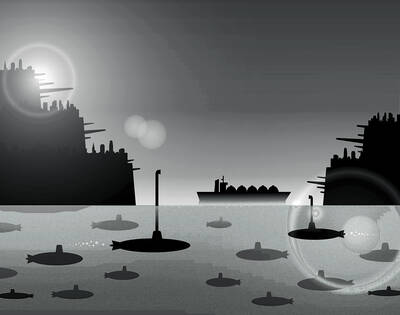
In the event of a war with China, Taiwan has some surprisingly tough defenses that could make it as difficult to tackle as a porcupine: A shoreline dotted with swamps, rocks and concrete barriers; conscription for all adult men; highways and airports that are built to double as hardened combat facilities. This porcupine has a soft underbelly, though, and the war in Iran is exposing it: energy. About 39,000 ships dock at Taiwan’s ports each year, more than the 30,000 that transit the Strait of Hormuz. About one-fifth of their inbound tonnage is coal, oil, refined fuels and liquefied natural gas (LNG),
On Monday, the day before Chinese Nationalist Party (KMT) Chairwoman Cheng Li-wun (鄭麗文) departed on her visit to China, the party released a promotional video titled “Only with peace can we ‘lie flat’” to highlight its desire to have peace across the Taiwan Strait. However, its use of the expression “lie flat” (tang ping, 躺平) drew sarcastic comments, with critics saying it sounded as if the party was “bowing down” to the Chinese Communist Party (CCP). Amid the controversy over the opposition parties blocking proposed defense budgets, Cheng departed for China after receiving an invitation from the CCP, with a meeting with
Chinese Nationalist Party (KMT) Chairwoman Cheng Li-wun (鄭麗文) is leading a delegation to China through Sunday. She is expected to meet with Chinese President Xi Jinping (習近平) in Beijing tomorrow. That date coincides with the anniversary of the signing of the Taiwan Relations Act (TRA), which marked a cornerstone of Taiwan-US relations. Staging their meeting on this date makes it clear that the Chinese Communist Party (CCP) intends to challenge the US and demonstrate its “authority” over Taiwan. Since the US severed official diplomatic relations with Taiwan in 1979, it has relied on the TRA as a legal basis for all
To counter the CCP’s escalating threats, Taiwan must build a national consensus and demonstrate the capability and the will to fight. The Chinese Communist Party (CCP) often leans on a seductive mantra to soften its threats, such as “Chinese do not kill Chinese.” The slogan is designed to frame territorial conquest (annexation) as a domestic family matter. A look at the historical ledger reveals a different truth. For the CCP, being labeled “family” has never been a guarantee of safety; it has been the primary prerequisite for state-sanctioned slaughter. From the forced starvation of 150,000 civilians at the Siege of Changchun


 RSS
RSS