


Celebrations last weekend of the 50th anniversary of the San Francisco Treaty of Peace, which established the postwar relationship between Japan and the world, focuses on Japan's emergence as a pacifist market economy under the tutelage of its conqueror and later ally, the US. Little attention will be paid to questions of historical memory or of liability for Japan's behavior during the war. The 1951 treaty, largely through the efforts of America's principal negotiator, John Foster Dulles, sought to eliminate any possibility of war reparations. This undoubtedly cemented Japan's alliance with the US and helped its economic rebirth. But Dulles's and Japan's strategy also fostered a deliberate forgetfulness whose consequences haunt us today. Dulles had been a US counsellor at the Paris Peace Conference in 1919, with special responsibility for reparations. He had opposed, without much success, the heavy penalties imposed by the Allies on Germany. These payments were widely seen as responsible for the later collapse of Germany's economy and if, obliquely, for the rise of Nazism.
After World War II, Dulles feared that heavy reparations burdens would similarly cripple Japan, make it vulnerable to Communist domination and prevent it from rebuilding. It was crucial to Dulles that Japan not face claims arising from its wartime conduct. The San Francisco Treaty has been used to this day, by Japan and the US, as a shield against any such claims.
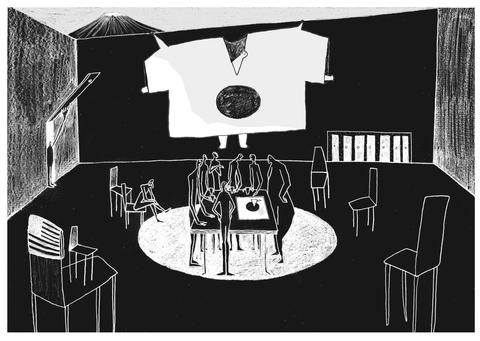
ILLUSTRATION: MOUNTAIN PEOPLE
Nonetheless, when he had to, Dulles allowed an exception, one that has remained largely hidden. The signatories to the San Francisco Treaty waived "all reparations claims of the Allied Powers, other claims of the Allied Powers and their nationals arising out of any actions taken by Japan and its nationals in the course of the prosecution of the War." But recently declassified documents show that Dulles, in negotiating this clause, also negotiated a way out of it.
Dulles had persuaded most of the Allied powers to accept the treaty. One major nation that refused to sign was Korea, because of its enmity against Japan for colonizing the Korean Peninsula. India, China and the Soviet Union also declined to sign.
For a brief while it appeared that the Netherlands would do likewise. Only days before the treaty was to be signed, the Dutch government threatened to walk out of the convention because it feared that the treaty "expropriated the private claims of its individuals" to pursue war-related compensation from Japanese private interests. Tens of thousands of Dutch civilians in the East Indies had lost their property to Japanese companies, which had followed Japan's armies to the Indies. They wanted compensation, and they had political power in Holland.
European opinion mattered to Dulles, who feared that a Dutch exodus might lead the United Kingdom, Australia and New Zealand to drop out as well. On the day before and the morning of the signing ceremony, Dulles orchestrated a confidential exchange of letters between the minister of foreign affairs of the Netherlands, Dirk Stikker, and Prime Minister Shigeru Yoshida of Japan. Yoshida pledged that "the Government of Japan does not consider that the Government of the Netherlands by signing the Treaty has itself expropriated the private claims of its nationals so that, as a consequence thereof, after the Treaty comes into force these claims would be non-existent."
Article 26 of the treaty states that, "should Japan make a peace settlement or war claims settlement with any State granting that State greater advantages than those provided by the present Treaty, those same advantages shall be extended to the parties to the present Treaty." This is why the letters had to be confidential: they preserved the rights of some Allied private citizens, in this case Dutch citizens, to pursue reparations.
Such an agreement, if publicized, could have opened the way for other claims -- reparations was a huge and emotional issue after the war. These letters were not declassified until April 2000, by which time most potential claimants were probably dead. In 1956, the Dutch did successfully pursue a claim against Japan on behalf of private citizens. Japan paid US$10 million as a way of "expressing sympathy and regret." Japan had been slow about making its deal with the Netherlands, and the US had to remind the Japanese that, as a declassified State Department document puts it, the US had "exerted considerable pressure on the Netherlands representatives with a view to their signing the Peace Treaty," and "one of the arrangements was assurance that the terms of the Yoshida-Stikker letters would be honored." A year before, the UK noted two other instances in which governments had made deals with Japan for reparations: a settlement with Burma that provided reparations, services and investments amounting, over 10 years, to US$250 million; and an agreement with Switzerland that provide "compensation for maltreatment, personal injury and loss arising from acts illegal under the rules of war."
The British Foreign Ministry elected not to take any action on behalf of British nationals -- and chose not to publicize the information. The US concurred, with one official commenting, "Further pressure would be likely to cause the maximum of resentment for the minimum of advantage." Nonetheless, the Stikki-Yoshida letters and the Burmese and Swiss agreements could all be used to make Japan, under Article 26 of the San Francisco Treaty, offer similar terms to the treaty's 47 signatories. The price Japan might have paid, in 1951 or later, as atonement for its crimes would, presumably, have been high. Perhaps Dulles's public policy was best. But it may also be that Japan, and even the US, are paying a different sort of price for the amnesia and secrecy that both countries chose after the war. A US group of former prisoners of war, for example, has pledged to protest the conferences and commemorative galas. These veterans are pursuing financial relief for having been enslaved in wartime by Japanese corporations, notably Mitsui and Mitsubishi.
The POW's have already lost one case in California. The judge, Vaughn Walker, decided that because of the success of the San Francisco Peace Treaty and of Japan in becoming a strong ally and partner of the US, the waiver of individual rights to pursue private parties in Japan was justified. This has been the argument in the dozens of suits brought in Japan and a smaller number of cases in US courts. And the argument has so far prevailed. Judge Walker did recognize that Japan's reparations deals with some countries might present the opportunity for the signatory nations of 1951 to bring their own claims, as provided for in Article 26 of the treaty.
However, "the question of enforcing Article 26," he wrote, is "for the US, not the plaintiffs, to decide." The failure to support war claims is one of the reasons Japan is still struggling with other nations over its history. The Germans -- at least, West Germans -- have engaged in five decades of public debate about Hitler and the Holocaust. And Germany and other European countries have accepted the need, for their governments or their corporations, to pay reparations for crimes very similar to those committed by Japan and Japanese companies in the same period.
The Japanese, however, have not witnessed the court cases and public debates that would help shape a shared understanding of history among Japanese and their neighbors. Prime Minister Junichiro Koizumi's visit last month to the Yasukuni shrine -- which honors the souls of Japan's war dead, including the souls of war criminals -- and the relentless efforts of some Japanese textbook writers to minimize Japan's wartime aggression against Korea and China have further aggravated regional tension over Japan's official history. Because Japan is so ill at ease with debate about its past, other nations understandably distrust a more powerful Japan.
What we know only today is that the State Department arranged a deal that arguably allows Americans and others to pursue personal claims against Japan or Japanese firms -- tried to keep the agreement quiet.
The State Department even filed briefs in the California court against the former American prisoners of war. Of course, it was the State Department that once advanced the claims of Dutch citizens. Japan clearly deserves criticism for its inability to debate its past openly.
However, the US, as evidenced by the emerging controversy about the terms of the San Francisco Treaty, has also played a role in Japan's historical amnesia. By withholding documents on US foreign policy, the US has contributed to a failure of memory that will continue to have consequences for all of us.
Steven C. Clemons is executive vice president of the the New America Foundation.
The White House’s decision to take a 9.9 percent stake in Intel Corp is looking like very shrewd business indeed. Since the government bought in at US$20.47 a share last August, the US chipmaker’s surging stock price has delivered the US a US$43 billion return. One of the reasons the investment has so far proved so sound is that the White House has made sure of it. According to The Wall Street Journal, Howard personally pushed deals on Intel’s behalf with some of the most lucrative clients imaginable. They include Nvidia Corp, the company at the heart of the AI
In a Taiwanese university classroom, a lecturer asks in English: “Can anyone give me an example from Taiwan?” Students look down. No one answers. After class, one student writes on the course platform in Mandarin: “I understood the concept, but I didn’t know how to answer in English.” That moment highlights a key issue in Taiwan’s English-medium instruction (EMI) reform: It is not just about more English-taught courses, but whether students can learn, participate and belong. EMI expansion is part of the Bilingual 2030 policy and the Ministry of Education’s BEST Program, aiming to improve English ability, support EMI teaching
A single photograph can cut through a lot of noise, but it can also be used to misrepresent the truth. At the very least, it can concentrate the mind on something that requires further investigation. On Monday last week, Ma Ying-jeou Foundation CEO Tai Hsia-ling (戴遐齡) and former National Security Council secretary-general King Pu-tsung (金溥聰) held a news conference in which they showed a photograph of former foundation CEO Hsiao Hsu-tsen (蕭旭岑), now Chinese Nationalist Party (KMT) deputy chairman. In the image Hsiao is seated next to Xiamen Taiwan Businessmen Association chairman Han Ying-huan (韓螢煥). The two men were holding
The Ministry of the Interior, working with the navy and coast guard, is organizing Taiwan’s first joint exercise simulating escort tankers carrying liquefied natural gas (LNG) and oil through a Chinese blockade. The drills simulate fuel transport along three maritime corridors leading toward Japan, the Philippines and the US. Deputy Minister of the Interior Sawyer Mars (馬士元) said that a blockade of the Taiwan Strait would amount to “almost a 100 percent blockade of the regional energy supply.” Minister of National Defense Wellington Koo said planning to counter a blockade is standard practice in Taipei. While the exercise is limited in


 RSS
RSS