


Eclat Textile Co (儒鴻) yesterday said it has an order visibility of about six months, with the next quarter relatively clear, despite rising uncertainty over conflicts in the Middle East.
Geopolitical tensions have triggered fluctuations in raw material prices, a situation the company continues to monitor closely, Eclat president Hung Jui-ting (洪瑞廷) told an earnings conference in Taipei.
The company has yet to see any risk related to material shortages, as it has already secured most of its raw materials in advance and employs a multisource supply chain strategy, the Chinese-language Liberty Times (the Taipei Times’ sister paper) quoted Hung as saying.

Photo: Fang Wei-chieh, Taipei Times
Instead, as many textile factories in the Middle East have suspended operations, some customers are reviewing their inventory and looking for alternative suppliers, which could benefit Eclat, he said.
Overall operations in the first half of this year are still progressing as expected and shipments are projected to remain stable, Eclat said.
In addition, demand for large-scale orders related to the FIFA World Cup remains stable, while shipment demand driven by reduced tariffs in Southeast Asia is emerging, the company said.
Eclat — which counts global brands such as Nike Inc, Gap Inc, Target Corp, Lululemon Athletica Inc and Under Armour Inc among its top customers — reported that revenue last year rose 3.15 percent year-on-year to NT$37.99 billion (US$1.19 billion).
Net profit last year fell 16.95 percent to NT$5.51 billion from NT$6.64 billion in 2024, and earnings per share dropped to NT$20.1 from NT$24.2, the New Taipei City-based garment and fabrics supplier said.
Combined revenue in the first two months of this year totaled NT$6.02 billion, up 0.97 percent year-on-year.
Eclat aims to maintain monthly revenue above NT$3 billion this year and is “cautiously optimistic” about achieving full-year revenue of NT$39.74 billion, a record set in 2022, Hung said.
Benefiting from the introduction of new products, the average selling price (ASP) of Eclat’s products is expected to increase this year, with fabrics’ ASP expected to undergo low single-digit percentage growth and garments’ ASP likely to see a high single-digit percentage to low double-digit percentage increase, he said.
With revenue and profit projected to return to positive growth this year, the company guided its gross margin to between 28 and 32 percent in the year, compared with 28.64 percent last year.
However, through the introduction of new products and the improvement in product mix, the company expects an upward adjustment in gross margin later this year, it said.

Elon Musk’s lieutenants have reached out to chip industry suppliers, including Applied Materials Inc, Tokyo Electron Ltd and Lam Research Corp, for his envisioned Terafab, early steps in an audacious and likely arduous attempt to break into the production of cutting-edge chips. Staff working for the joint venture between Tesla Inc and Space Exploration Technologies Corp (SpaceX) have sought price quotes and delivery times for an array of chipmaking gear, people familiar with the matter said. In past weeks, they’ve contacted makers of photomasks, substrates, etchers, depositors, cleaning devices, testers and other tools, according to the people, who asked not to

JET JUICE: The war on Iran’s secondary effects have seen fuel prices skyrocket, knocking flight schedules down to earth in return as airlines struggle with costs Airline passengers should brace for more irritation in the next few months as carriers worldwide cancel flights and ground planes to cope with stratospheric increases in jet-fuel prices. Dutch flag carrier KLM is the latest company to cut its schedule, saying on Thursday that it would scrap 80 return flights at Amsterdam’s Schiphol Airport in the coming month. That puts it in the same league as United Airlines Holdings Inc, Deutsche Lufthansa AG and Cathay Pacific Airways Ltd, which have all pruned itineraries to mitigate costs. Global capacity for next month has been reduced by about 3 percentage points, with all
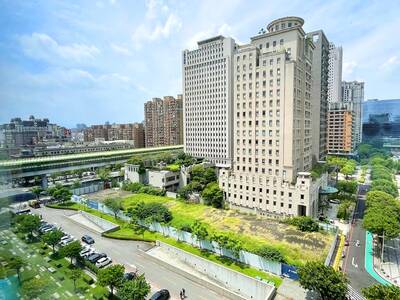
Taichung reported the steepest fall in completed home prices among the six special municipalities in the first quarter of this year, data compiled by Taiwan Realty Co (台灣房屋) showed yesterday. From January through last month, the average transaction price for completed homes in Taichung fell 8 percent from a year earlier to NT$299,000 (US$9,483) per ping (3.3m²), said Taiwan Realty, which compiled the data based on the government’s price registration platform. The decline could be attributed to many home buyers choosing relatively affordable used homes to live in themselves, instead of newly built homes in the city’s prime property market, Taiwan Realty

Taiwan is attracting a growing number of foreign jobseekers as companies increasingly recruit overseas talent to ease labor shortages and expand global reach, recruitment platform 104 Job Bank (104人力銀行) said yesterday. More than 40,000 foreign nationals searched for jobs in Taiwan through the platform last year, a 28 percent increase from a year earlier, the company said. Malaysians accounted for the largest share of overseas jobseekers at 12.2 percent, followed by Indonesians at 11.9 percent and Vietnamese at 10.8 percent. Indonesian applicants surged more than 50 percent year-on-year, while Vietnamese jobseekers rose by more than 30 percent. Applicants from the


 RSS
RSS