


Taiwan is attracting a growing number of foreign jobseekers as companies increasingly recruit overseas talent to ease labor shortages and expand global reach, recruitment platform 104 Job Bank (104人力銀行) said yesterday.
More than 40,000 foreign nationals searched for jobs in Taiwan through the platform last year, a 28 percent increase from a year earlier, the company said.
Malaysians accounted for the largest share of overseas jobseekers at 12.2 percent, followed by Indonesians at 11.9 percent and Vietnamese at 10.8 percent. Indonesian applicants surged more than 50 percent year-on-year, while Vietnamese jobseekers rose by more than 30 percent.
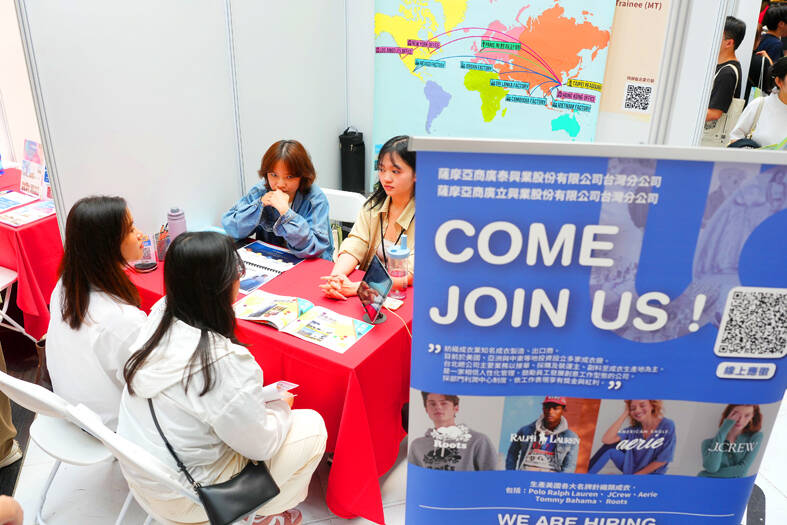
Photo: CNA
Applicants from the Philippines, India and the US also recorded notable growth, highlighting Taiwan’s rising appeal as a destination for international talent, it said.
Foreign applicants are generally well educated, it said.
About 62 percent hold bachelor’s degrees, while 25 percent have master’s or doctoral degrees, 104 Job Bank senior manager Yang Kai-wei (楊鎧維) said.
More than half of the applicants studied in Taiwan, forming a pool of international professionals already familiar with the local environment and workplace culture.
“These internationally trained professionals tend to integrate more easily into the local workplace and often have stronger communication advantages,” Yang said.
Demand for overseas talent among local employers is also rising, with about 40 percent of companies indicating they welcome foreign applicants.
Restaurant and hospitality positions accounted for the largest share of jobs where employers actively invite foreign candidates for interviews, followed by sales roles and financial professionals.
Yang said the restaurant sector’s demand partly reflects efforts to address labor shortages.
International chains such as Kura Sushi have recruited foreign staff to provide multilingual services, helping attract international visitors and expand into overseas markets.
Foreign professionals also play an important role in sales and financial positions. Their language skills and cultural familiarity help Taiwanese companies better understand overseas regulations and business practices while building trust with international partners, the job bank said.
Government policy changes also support international recruitment. Starting this year, international student graduates are allowed to work during their extended stay without having to apply for a work permit and without restrictions on job positions.
The change gives companies greater flexibility in hiring, enabling them to fill vacancies more quickly and strengthen workforce capacity.

Shares of contract chipmaker Taiwan Semiconductor Manufacturing Co (TSMC, 台積電) came under pressure yesterday after a report that Apple Inc is looking to shift some orders from the Taiwanese company to Intel Corp. TSMC shares fell NT$55, or 2.4 percent, to close at NT$2,235 on the local main board, Taiwan Stock Exchange data showed. Despite the losses, TSMC is expected to continue to benefit from sound fundamentals, as it maintains a lead over its peers in high-end process development, analysts said. “The selling was a knee-jerk reaction to an Intel-Apple report over the weekend,” Mega International Investment Services Corp (兆豐國際投顧) analyst Alex Huang
Taiwan Semiconductor Manufacturing Co (TSMC, 台積電) is expected to remain Apple Inc’s primary chip manufacturing partner despite reports that Apple could shift some orders to Intel Corp, industry experts said yesterday. The comments came after The Wall Street Journal reported on Friday that Apple and Intel had reached a preliminary agreement following more than a year of negotiations for Intel to manufacture some chips for Apple devices. Taiwan Institute of Economic Research (台灣經濟研究院) economist Arisa Liu (劉佩真) said TSMC’s advanced packaging technologies, including integrated fan-out and chip-on-wafer-on-substrate, remain critical to the performance of Apple’s A-series and M-series chips. She said Intel and Samsung
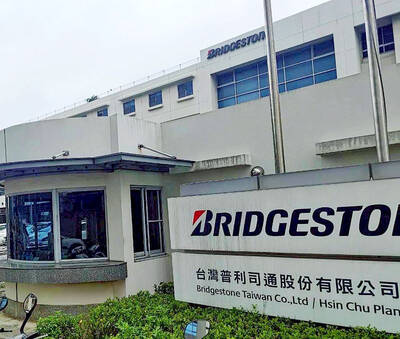
TRANSITION: With the closure, the company would reorganize its Taiwanese unit to a sales and service-focused model, Bridgestone said Bridgestone Corp yesterday announced it would cease manufacturing operations at its tire plant in Hsinchu County’s Hukou Township (湖口), affecting more than 500 workers. Bridgestone Taiwan Co (台灣普利司通) said in a statement that the decision was based on the Tokyo-based tire maker’s adjustments to its global operational strategy and long-term market development considerations. The Taiwanese unit would be reorganized as part of the closure, effective yesterday, and all related production activities would be concluded, the statement said. Under the plan, Bridgestone would continue to deepen its presence in the Taiwanese market, while transitioning to a sales and service-focused business model, it added. The Hsinchu

Taiwan Semiconductor Manufacturing Co (TSMC, 台積電) has approved a capital budget of US$31.28 billion for production expansion to meet long-term development needs during the artificial intelligence (AI) boom. The company’s board meeting yesterday approved the capital appropriation plan for purposes such as the installation of advanced technology capacity and fab construction, the world’s largest contract chipmaker said in a statement. At an earnings conference last month, TSMC forecast that its capital expenditure for this year would be at the higher end of the US$52 billion to US$56 billion range it forecast in January in response to robust demand for 5G, AI and


 RSS
RSS