


Taiwan Semiconductor Manufacturing Co (TSMC, 台積電) is expected to remain Apple Inc’s primary chip manufacturing partner despite reports that Apple could shift some orders to Intel Corp, industry experts said yesterday.
The comments came after The Wall Street Journal reported on Friday that Apple and Intel had reached a preliminary agreement following more than a year of negotiations for Intel to manufacture some chips for Apple devices.
Taiwan Institute of Economic Research (台灣經濟研究院) economist Arisa Liu (劉佩真) said TSMC’s advanced packaging technologies, including integrated fan-out and chip-on-wafer-on-substrate, remain critical to the performance of Apple’s A-series and M-series chips.
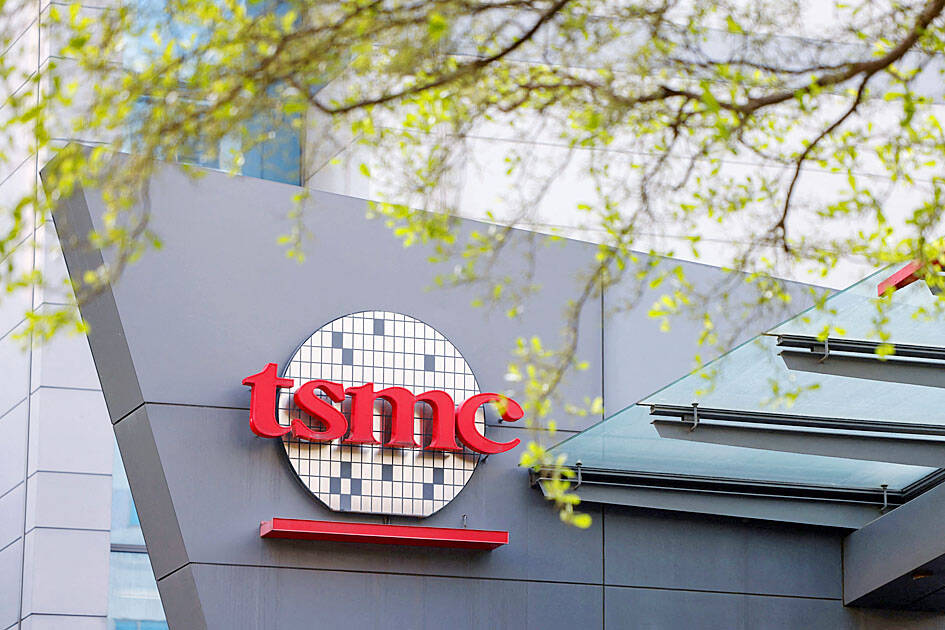
Photo: Ann Wang, Reuters
She said Intel and Samsung Electronics Co still lag behind TSMC in areas such as chip yields and power efficiency, making it difficult for Apple to move flagship chip orders away from the Taiwanese foundry in the near term.
Liu added that Apple and TSMC have built deep technological ties over the years, creating a high barrier for competitors. Unless rivals achieve major breakthroughs in 2-nanometer or gate-all-around (GAA) technologies, TSMC is expected to remain Apple’s preferred manufacturing partner.
While Intel is pushing its Intel 18A process and Samsung is seeking opportunities through its 2nm GAA technology, both companies have previously struggled with issues such as unstable yields and excessive power consumption during large-scale production, Liu said.
She said TSMC’s leading position remains difficult to challenge due to its stable delivery record and extensive research and development capabilities. For Apple, shifting core chip orders too early could pose significant supply chain risks.
President Capital Management Co (統一投顧) chairman Park Li (黎方國) also told CNA that Apple’s reported move was not due to problems with TSMC’s technology, but rather because strong demand for advanced processes from artificial intelligence chip customers such as Nvidia Corp has tightened TSMC’s production capacity.
Li said the situation reflects TSMC’s dominant position in advanced chip manufacturing, with demand currently exceeding supply across the industry.

The Fair Trade Commission’s (FTC) ongoing review of Grab Holdings Ltd’s US$600 million acquisition of Foodpanda Taiwan’s operations, announced on March 23, has taken on fresh urgency as industry experts warn that the transaction could embed significant Chinese cybersecurity vulnerabilities into Taiwan’s digital infrastructure through Grab’s deep ties to autonomous-driving firm WeRide (文遠知行). Less than 16 months after the FTC blocked Uber Eats’ direct attempt to acquire Foodpanda Taiwan — citing potential combined market shares of 80 to 90 percent — the emergence of Grab as the buyer has prompted questions about whether the same competitive harm is simply being rerouted
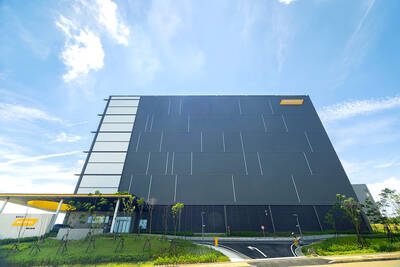
POWER BUILDUP: Powered by Nvidia’s B200 Blackwell chips, the data center would support MediaTek’s computing power demand and business growth, the company said Smartphone chip designer MediaTek Inc (聯發科) yesterday launched a new artificial intelligence (AI) data center with a maximum capacity of 45 megawatts to meet its rising demand for computing power required to develop new advanced chips for AI applications. The company has completed the first-phase computing power buildup at the data center in Miaoli County’s Tongluo Township (銅鑼), providing 15 megawatts of capacity to support its research and development (R&D) capabilities, despite an industrywide shortage of key components, MediaTek said. Supply constraints have plagued a wide range of key components, including memory chips, solid-state drives, power supply units and central
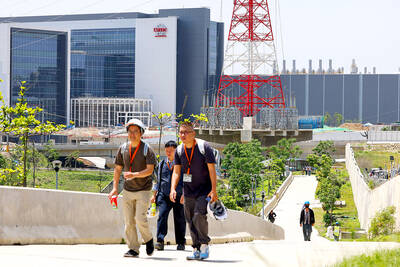
IMAGE SENSORS: The Japanese company would be the controlling shareholder of the venture, with development and production lines to be set up in Kumamoto Taiwan Semiconductor Manufacturing Co (TSMC, 台積電) yesterday said it has signed a non-binding memorandum of understanding (MOU) with Sony Semiconductor Solutions Corp to create a joint venture to develop and produce next-generation images sensors. The partnership seeks to explore and address emerging opportunities in physical artificial intelligence (AI) applications, such as automotive and robotics, paving the way for innovations and expanded technological advancements, TSMC said in a statement. Sony would be the majority and controlling shareholder of the joint venture, the statement said, adding that the company would set up development and production lines in its newly constructed fab in Kumamoto Prefecture’s
The nation’s foreign exchange reserves climbed back above US$600 billion at the end of last month, as investment gains, currency valuation effects and renewed foreign inflows offset volatility seen earlier in the month, the central bank said yesterday. Reserves stood at US$602.49 billion, up US$5.6 billion from the previous month, the central bank said. The rebound reflected returns on reserve assets, fluctuations in major currencies against the US dollar and the central bank’s market operations aimed at maintaining orderly trading conditions, Department of Foreign Exchange Director-General Eugene Tsai (蔡炯民) said. Financial markets were volatile early last month, with foreign investors recording net purchases


 RSS
RSS