


Apple Inc is to move some production of its Mac Mini desktop computer to the US from Asia, with a new manufacturing effort set to begin later this year at a Hon Hai Precision Industry Co (鴻海精密) facility in Houston, Texas, the Wall Street Journal (WSJ) reported on Monday.
The site comprises two main buildings, one currently used by Hon Hai, also known as Foxconn Technology Group (富士康科技集團), for assembling Apple’s artificial intelligence servers and the other, a large warehouse, which would be converted into a 20,438.68m2 Mac Mini production area, the WSJ reported.
The plan is the iPhone maker’s most recent US investment, following its commitment announced in August last year to invest US$600 billion in the country over the next four years.
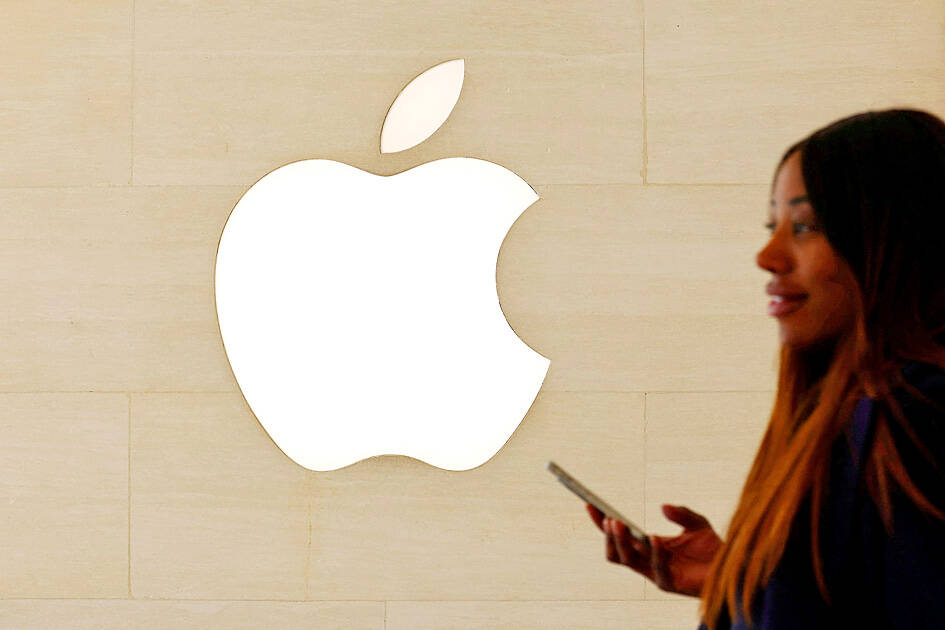
Photo: Reuters
In May last year, US President Donald Trump had threatened Apple with a 25 percent tariff on products manufactured overseas, a sharp reversal from earlier policy when his administration had exempted smartphones, computers and other electronics from rounds of tariffs on Chinese imports.
The production of Mac Minis would continue in Asia, Apple chief operating officer Sabih Khan told WSJ, adding that the facility would meet local demand as the US assembly line ramps up.
The company feels more confident projecting long-term demand for the Mac Mini, which is more popular than the Mac Pro, Khan added.
Apple is also expanding the Houston facility to include a new training center for advanced manufacturing, the report said.
It was not immediately clear whether Apple plans to scale down production in its Asia facilities.
Apple has a mixed track record when it comes to following through on investment promises.
In 2019, Apple chief executive officer Tim Cook toured a Texas factory with Trump that was promoted as a new manufacturing site. However, the facility had been producing Apple computers since 2013, and Apple has since moved that production to Thailand.
Apple continues to manufacture most of its products, including iPhones and iPads, in Asia, primarily in China, although it has shifted some production to Vietnam, Thailand and India in the past few years.


ENERGY ISSUES: The TSIA urged the government to increase natural gas and helium reserves to reduce the impact of the Middle East war on semiconductor supply stability Chip testing and packaging service provider ASE Technology Holding Co (日月光投控) yesterday said it planned to invest more than NT$100 billion (US$3.15 billion) in building a new advanced chip testing facility in Kaohsiung to keep up with customer demand driven by the artificial intelligence (AI) boom. That would be included in the company’s capital expenditure budget next year, ASE said. There is also room to raise this year’s capital spending budget from a record-high US$7 billion estimated three months ago, it added. ASE would have six factories under construction this year, another record-breaking number, ASE chief operating officer Tien Wu

The EU and US are nearing an agreement to coordinate on producing and securing critical minerals, part of a push to break reliance on Chinese supplies. The potential deal would create incentives, such as minimum prices, that could advantage non-Chinese suppliers, according to a draft of an “action plan” seen by Bloomberg. The EU and US would also cooperate on standards, investments and joint projects, as well as coordinate on any supply disruptions by countries like China. The two sides are additionally seeking other “like-minded partners” to join a multicountry accord to help create these new critical mineral supply chains, which feed into

For weeks now, the global tech industry has been waiting for a major artificial intelligence (AI) launch from DeepSeek (深度求索), seen as a benchmark for China’s progress in the fast-moving field. More than a year has passed since the start-up put Chinese AI on the map in early last year with a low-cost chatbot that performed at a similar level to US rivals. However, despite reports and rumors about its imminent release, DeepSeek’s next-generation “V4” model is nowhere in sight. Speculation is also swirling over the geopolitical implications of which computer chips were chosen to train and power the new
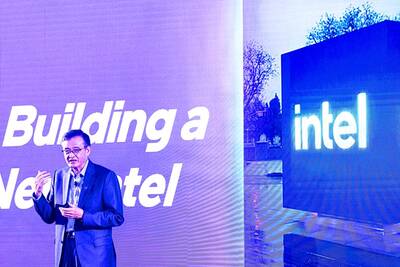
Intel Corp is joining Elon Musk’s long-shot effort to develop semiconductors for Tesla Inc, Space Exploration Technologies Corp and xAI, marking a surprising twist in the chipmaker’s comeback bid. Intel would help the Terafab project “refactor” the technology in a chip factory, the company said on Tuesday in a post on X, Musk’s social media platform. That is a stage in the development process that typically helps make chips more powerful or reliable. The chipmaker’s shares jumped 4.2 percent to US$52.91 in New York trading on Tuesday. The Terafab project is a grand plan by Musk to eventually manufacture his own chips for


 RSS
RSS