


Chip testing and packaging service provider ASE Technology Holding Co (日月光投控) yesterday said it planned to invest more than NT$100 billion (US$3.15 billion) in building a new advanced chip testing facility in Kaohsiung to keep up with customer demand driven by the artificial intelligence (AI) boom.
That would be included in the company’s capital expenditure budget next year, ASE said.
There is also room to raise this year’s capital spending budget from a record-high US$7 billion estimated three months ago, it added.
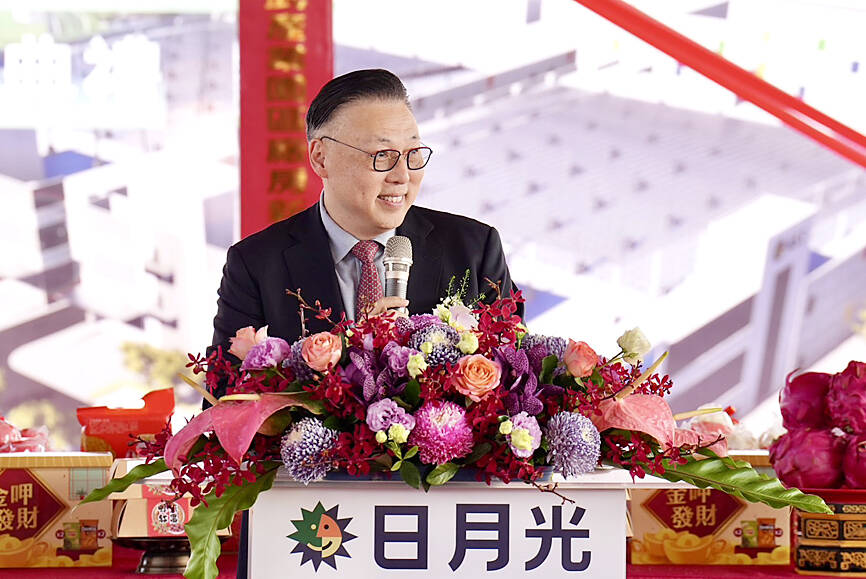
Photo courtesy of ASE Technology Holding Co
ASE would have six factories under construction this year, another record-breaking number, ASE chief operating officer Tien Wu (吳田玉) told reporters on the sidelines of the groundbreaking ceremony for the new chip testing site.
“This year would be a very busy year for ASE,” Wu said. “The current AI trend is just in its infancy.”
Hardware has become a new supply chain bottleneck, replacing software, he said.
Taiwanese companies play a vital role in the global AI supply chain due to their strong hardware manufacturing capabilities and are therefore facing enormous pressure from customers to resolve hardware supply choke points, Wu said. ASE and Taiwan Semiconductor Manufacturing Co (台積電) are just part of it, he said.
In response to the support and trust of our customers, ASE has to make an all-out effort to meet their demand, Wu added.
The new investment is expected to create NT$177.3 billion in annual production value once the factory is fully utilized, ASE said.
The facility is scheduled to start operations in April next year for first-phase production, with second-phase manufacturing to begin operation in October that year, it said.
To cope with the expansion, ASE plans to recruit 3,000 new technical workers this year and 1,000 more next year, Wu said.
The company currently employs 64,000 workers in Taiwan.
ASE plans to invest NT$108.3 billion in the new advanced testing site, the Kaohsiung City Government said.
Chip testing interface supplier WinWay Technology Co (穎崴) and chip packaging equipment supplier Horng Terng Automation Co (竑騰科技) would set up operations at the site, bringing total investment to NT$114.5 billion, it said.
The project is expected to create 2,200 jobs.
ASE yesterday posted better-than-expected quarterly revenue of NT$173.66 billion last quarter.
That represented a sequential decline of 2.4 percent from NT$177.92 billion, beating the company’s estimate of a 5 percent to 7 percent quarterly reduction.
On an annual basis, revenue expanded 17.2 percent from NT$148.15 billion.
Core chip testing and packaging revenue rose 2.5 percent quarter-on-quarter and 29.7 percent year-on-year to NT$112.43 billion. That was better than ASE’s expectation of a quarterly decline of 3 percent to 5 percent.
ASE did not directly comment on questions about the impact of the Middle East conflict.
The Taiwan Semiconductor Industry Association (TSIA) said the Middle East war has indirectly affected the semiconductor supply chain, particularly the supply of helium and hydrogen, which are critical materials in semiconductor manufacturing processes.
It also urged the government to increase strategic reserves of helium and natural gas, and to diversify sourcing to reduce the impact of external factors on supply stability.
The TSIA said it supports the government’s proposal to restart nuclear power plants, subject to completion of safety assessments and compliance with regulations, to address increasing energy demand.
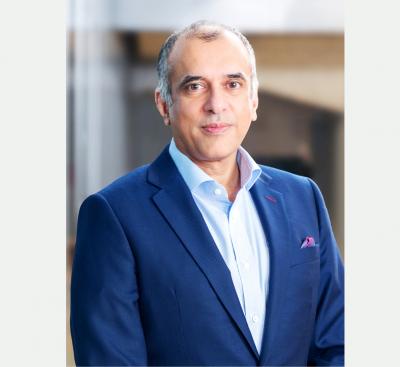
HSBC Holdings PLC is deepening its commitment to Taiwan as the economy emerges as one of the bank’s fastest-growing markets globally, driven by an artificial intelligence (AI) investment boom, expanding cross-border trade, and rising wealth creation. “The advantage that Taiwan has is a growth story linked to the semiconductor and broader AI industries, strong underlying corporate performance, and wealth creation,” said Surendra Rosha, HSBC’s co-chief executive for Asia and the Middle East, in an exclusive interview with the Taipei Times on June 2, during this year’s HSBC Taiwan Conference. That combination has helped HSBC cement its position as the most profitable international
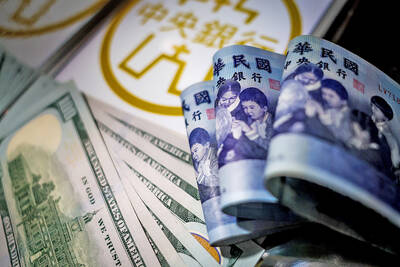
The New Taiwan dollar yesterday fell sharply against the US dollar to close at its lowest level since May 22 amid a massive outflow of funds from the country because of investors panicking over global equity markets. The NT dollar ended at NT$31.580 against the US dollar, slightly lower than its close of NT$31.568 on May 22, after moving between NT$31.5 and NT$31.648 on combined turnover of US$3.062 billion on the Taipei Foreign Exchange and the Cosmos Foreign Exchange. The NT dollar received a significant hit in the morning session, slumping as much as NT$0.173 at a time when other Asian currencies
Taiwan Semiconductor Manufacturing Co (TSMC, 台積電) is now ranked ninth among the world’s 100 most valuable companies after its market capitalization more than doubled over the past year, PricewaterhouseCoopers (PwC) Taiwan said in a report last month. TSMC’s market capitalization surged 101 percent year-on-year to US$1.427 trillion as of March 31, the accounting and consulting firm’s 2026 Global Top 100 Companies by Market Capitalization report said. The gain catapulted the world’s largest contract chipmaker from 12th place to ninth in the rankings, and it was the fastest-growing among the global top 10, it said. TSMC was the only Taiwanese company among the top
Taiwan Semiconductor Manufacturing Co (TSMC, 台積電) yesterday reported record revenue of NT$416.975 billion (US$13.17 billion) for last month, putting the world’s largest contract chipmaker on track to set a record for quarterly revenue. Last month’s figure surpassed March’s record NT$415.19 billion and represented increases of 1.5 percent from April and 30.1 percent from a year earlier. For the first five months of the year, TSMC generated NT$1.96 trillion in revenue, up 30 percent year-on-year, it said in a statement. TSMC has forecast second-quarter revenue of between US$39 billion and US$40.2 billion, representing sequential growth of about 10 percent and year-on-year growth of about


 RSS
RSS