


Intel Corp is joining Elon Musk’s long-shot effort to develop semiconductors for Tesla Inc, Space Exploration Technologies Corp and xAI, marking a surprising twist in the chipmaker’s comeback bid.
Intel would help the Terafab project “refactor” the technology in a chip factory, the company said on Tuesday in a post on X, Musk’s social media platform. That is a stage in the development process that typically helps make chips more powerful or reliable.
The chipmaker’s shares jumped 4.2 percent to US$52.91 in New York trading on Tuesday.
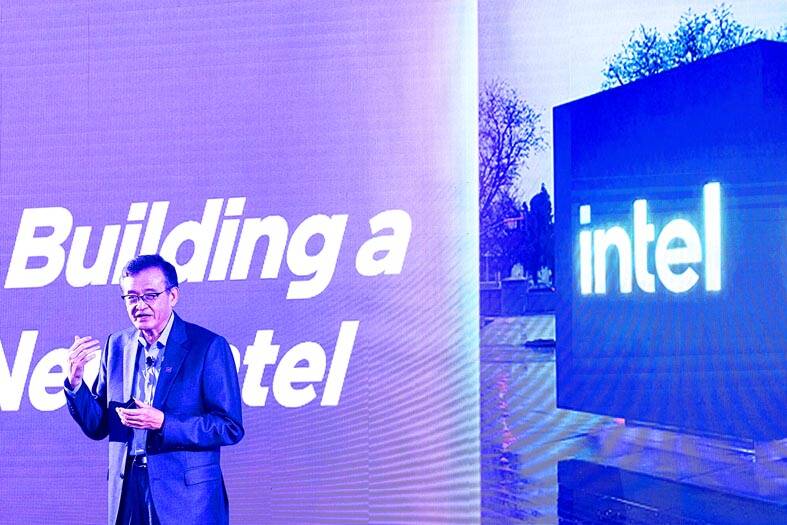
Photo: Annabelle Chih, Bloomberg
The Terafab project is a grand plan by Musk to eventually manufacture his own chips for robotics, artificial intelligence (AI) and space data centers. The endeavor aims to produce a huge amount of computing power each year — about 1 terawatt of capacity annually.
Tesla already designs its own chips, but Musk’s companies have never made them. Now, he is envisioning doing that at a scale to rival the leading chip manufacturer, Taiwan Semiconductor Manufacturing Co (台積電).
“Terafab represents a step change in how silicon logic, memory and packaging will get built in the future,” Intel chief executive officer Lip-Bu Tan (陳立武) said in a separate X post. “Intel is proud to be a partner and work closely with Elon on this highly strategic project.”
“Our ability to design, fabricate and package ultra-high-performance chips at scale will help accelerate Terafab’s aim to produce 1 TW per year of compute to power future advances in AI and robotics,” Intel added.
Musk said last month that the Terafab project would be built in Austin, Texas, and jointly run by Tesla and SpaceX. He serves as chief executive officer at both companies.
For California-based Intel, the move is the latest attempt to restore its status as a leading chipmaker.
Tan, who took the helm in March last year, is working to rebound from years of shrinking market share and declining sales. Most critically, the company lost its long-held technological edge.
Tan spent much of last year cutting jobs and other costs, aiming to get Intel’s financial house in order, but he also attracted key investments — from the US government, Nvidia Corp and Softbank Group Corp — that put it on a more solid footing.
Last week, Intel agreed to pay US$14.2 billion to buy back half of a plant in Ireland that it had previously sold to Apollo Global Management LLC.
The move was seen as a sign of confidence in the chipmaker’s business.

SECOND-RATE: Models distilled from US products do not perform the same as the original and undo measures that ensure the systems are neutral, the US’ cable said The US Department of State has ordered a global push to bring attention to what it said are widespread efforts by Chinese companies, including artificial intelligence (AI) start-up DeepSeek (深度求索), to steal intellectual property from US AI labs, according to a diplomatic cable. The cable, dated Friday and sent to diplomatic and consular posts around the world, instructs diplomatic staff to speak to their foreign counterparts about “concerns over adversaries’ extraction and distillation of US AI models.” Distillation is the process of training smaller AI models using output from larger, more expensive ones to lower the costs of training a powerful new

Micron Technology Inc is a driving force pushing the US Congress to pass legislation that would put new export restrictions on equipment its Chinese competitors use to make their chips, according to people familiar with the matter. A US House of Representatives panel yesterday was to vote on the “MATCH Act,” a bill designed to close gaps in restrictions on chipmaking equipment. It would also pressure foreign companies that sell equipment to Chinese chipmaking facilities to align with export curbs on US companies like Lam Research Corp and Applied Materials Inc. The bill targets facilities operated by China’s ChangXin Memory Technologies Inc

Singapore-based ride-hailing and delivery giant Grab Holdings’ planned acquisition of Foodpanda’s Taiwan operations has yet to enter the formal review stage, as regulators await supplementary documents, the Fair Trade Commission (FTC) said yesterday. Acting FTC Chairman Chen Chih-min (陳志民) told the legislature’s Economics Committee that although Grab submitted its application on March 27, the case has not been officially accepted because required materials remain incomplete. Once the filing is finalized, the FTC would launch a formal probe into the deal, focusing on issues such as cross-shareholding and potential restrictions on market competition, Chen told lawmakers. Grab last month announced that it would acquire
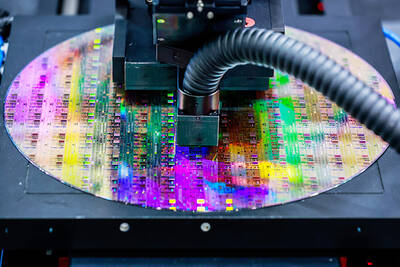
The artificial intelligence (AI) boom has triggered a seismic reshuffling of global equity markets, with Taiwan and South Korea muscling past European nations one by one. With its stock market now valued at nearly US$4.3 trillion, Taiwan surpassed the UK, Europe’s biggest market, earlier this month, data compiled by Bloomberg showed. South Korea is about US$140 billion away from doing the same. The tech-heavy Asian markets have shot past Germany and France in the past seven months. The shift is largely down to massive gains in shares of three companies that provide essential hardware for AI: Taiwan Semiconductor Manufacturing Co (TSMC, 台積電),


 RSS
RSS