


Singapore-based ride-hailing and delivery giant Grab Holdings’ planned acquisition of Foodpanda’s Taiwan operations has yet to enter the formal review stage, as regulators await supplementary documents, the Fair Trade Commission (FTC) said yesterday.
Acting FTC Chairman Chen Chih-min (陳志民) told the legislature’s Economics Committee that although Grab submitted its application on March 27, the case has not been officially accepted because required materials remain incomplete.
Once the filing is finalized, the FTC would launch a formal probe into the deal, focusing on issues such as cross-shareholding and potential restrictions on market competition, Chen told lawmakers.

Photo: CNA
Grab last month announced that it would acquire Foodpanda’s Taiwan business from Germany-based Delivery Hero for about US$600 million, subject to regulatory approval.
If cleared, Grab expects to close the deal in the second half of this year and complete platform integration by next year, migrating all Foodpanda users to its own app.
The deal has drawn scrutiny over ownership ties in the sector. Uber Technologies is Grab’s largest institutional shareholder, holding about a 13 percent stake, prompting concerns among lawmakers that the acquisition could serve as a “backdoor” for market consolidation.
Grab has previously clarified that Uber holds less than 4 percent of its voting rights and does not participate in daily operations.
Chen said that while cross-border shareholding is not illegal, the FTC would require concrete evidence to challenge the deal on those grounds, including proof that such ties have been used to limit market rivalry.
Lawmakers raised concerns about the deal’s potential impact on gig workers and consumers.
Chen said that while labor issues fall primarily under the Ministry of Labor, the FTC might assess labor supply and demand dynamics as part of its competition review, while maintaining a focus on market mechanisms.
He added that the commission would consult with other government agencies, given the platform economy’s wide-ranging implications for consumers, merchants and delivery workers.
Under Taiwan’s merger review rules, once a filing is formally accepted, the FTC is required to complete its review within 30 working days, which could be extended by up to 60 days if necessary, with a maximum review period of 90 working days.
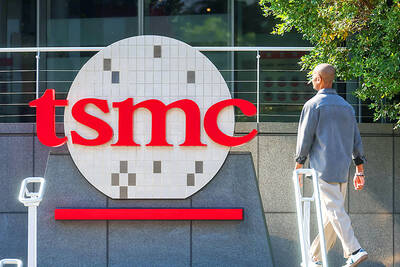
Shares of contract chipmaker Taiwan Semiconductor Manufacturing Co (TSMC, 台積電) came under pressure yesterday after a report that Apple Inc is looking to shift some orders from the Taiwanese company to Intel Corp. TSMC shares fell NT$55, or 2.4 percent, to close at NT$2,235 on the local main board, Taiwan Stock Exchange data showed. Despite the losses, TSMC is expected to continue to benefit from sound fundamentals, as it maintains a lead over its peers in high-end process development, analysts said. “The selling was a knee-jerk reaction to an Intel-Apple report over the weekend,” Mega International Investment Services Corp (兆豐國際投顧) analyst Alex Huang
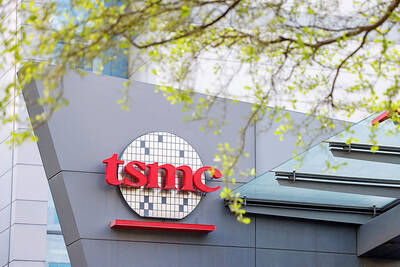
Taiwan Semiconductor Manufacturing Co (TSMC, 台積電) is expected to remain Apple Inc’s primary chip manufacturing partner despite reports that Apple could shift some orders to Intel Corp, industry experts said yesterday. The comments came after The Wall Street Journal reported on Friday that Apple and Intel had reached a preliminary agreement following more than a year of negotiations for Intel to manufacture some chips for Apple devices. Taiwan Institute of Economic Research (台灣經濟研究院) economist Arisa Liu (劉佩真) said TSMC’s advanced packaging technologies, including integrated fan-out and chip-on-wafer-on-substrate, remain critical to the performance of Apple’s A-series and M-series chips. She said Intel and Samsung
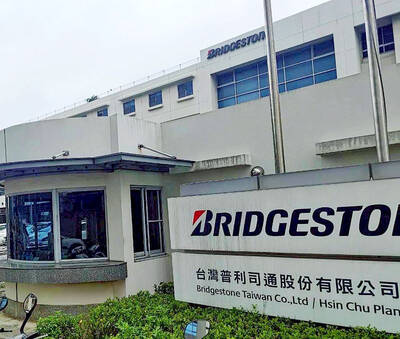
TRANSITION: With the closure, the company would reorganize its Taiwanese unit to a sales and service-focused model, Bridgestone said Bridgestone Corp yesterday announced it would cease manufacturing operations at its tire plant in Hsinchu County’s Hukou Township (湖口), affecting more than 500 workers. Bridgestone Taiwan Co (台灣普利司通) said in a statement that the decision was based on the Tokyo-based tire maker’s adjustments to its global operational strategy and long-term market development considerations. The Taiwanese unit would be reorganized as part of the closure, effective yesterday, and all related production activities would be concluded, the statement said. Under the plan, Bridgestone would continue to deepen its presence in the Taiwanese market, while transitioning to a sales and service-focused business model, it added. The Hsinchu

Taiwan Semiconductor Manufacturing Co (TSMC, 台積電) has approved a capital budget of US$31.28 billion for production expansion to meet long-term development needs during the artificial intelligence (AI) boom. The company’s board meeting yesterday approved the capital appropriation plan for purposes such as the installation of advanced technology capacity and fab construction, the world’s largest contract chipmaker said in a statement. At an earnings conference last month, TSMC forecast that its capital expenditure for this year would be at the higher end of the US$52 billion to US$56 billion range it forecast in January in response to robust demand for 5G, AI and


 RSS
RSS