


For weeks now, the global tech industry has been waiting for a major artificial intelligence (AI) launch from DeepSeek (深度求索), seen as a benchmark for China’s progress in the fast-moving field.
More than a year has passed since the start-up put Chinese AI on the map in early last year with a low-cost chatbot that performed at a similar level to US rivals.
However, despite reports and rumors about its imminent release, DeepSeek’s next-generation “V4” model is nowhere in sight.

Photo: AFP
Speculation is also swirling over the geopolitical implications of which computer chips were chosen to train and power the new system: world-leading US designs or made-in-China alternatives that the country is racing to develop.
“It’s important to know, because at one level, it is a signal of China’s AI self-sufficiency trajectory,” Counterpoint Research principal AI analyst Wei Sun said.
Tech news outlet The Information reported last week that V4 might be run on the latest chips made by China’s Huawei Technologies Co (華為).
Such a shift would mark a milestone for China in its bid to beat US restrictions on the export of top-of-the-range AI chips from Californian titan Nvidia Corp to the country.
The report cited five people with direct knowledge of large orders for Huawei chips, made in preparation for the DeepSeek launch by tech giants including Alibaba Group Holding Ltd (阿里巴巴), ByteDance Ltd (字節跳動) and Tencent Holdings Ltd (騰訊).
DeepSeek, Huawei, Alibaba, ByteDance and Tencent were contacted, but none were able to comment.
DeepSeek started life in 2023 as a side project of a hedge fund that had access to a cache of powerful Nvidia processors.
It shot to attention in January last year with its R1 deep-reasoning chatbot, which sent US tech shares tumbling with US President Donald Trump calling it a “wake-up call” for US firms.
R1 was based on DeepSeek’s last major AI model, V3, which was released in December 2024.
The company’s affordable, customizable AI tools have been widely adopted in China, and are also popular in emerging markets such as Southeast Asia and the Middle East.
V4 — said to be multimodal, meaning it can generate text, pictures and video — could again shock US tech valuations, Carthage Capital founder Stephen Wu said.
“I expect the upcoming DeepSeek V4 release will not just be a software update; it will be a highly capable, open-source model that handles massive context windows at a fraction of the cost,” he said.
However, DeepSeek’s reputation as a company at the frontier of AI technology is also at stake.
Its models previously relied on Nvidia chips, so a move to collaborate with domestic chipmakers would require “substantial re-engineering,” Wei said. “That transition can slow development cycles and introduce performance trade-offs, especially for V4, a model expected to be state-of-the-art.”
The US cites national security concerns as the reason for its export ban on Nvidia’s most powerful AI processors to China.
“The ongoing wait for DeepSeek V4 points to friction in scaling advanced models without unrestricted access to top-tier Nvidia hardware,” Wu said.
However, some reports allege that DeepSeek skirted the ban to train V4 using thousands of Nvidia’s top-end Blackwell chips, dismantled in third countries and smuggled to China.
Training AI models requires huge amounts of computing power — much more than for processing generative AI queries, which is known as inference.
Nvidia did not respond to a comment request, but told The Information it had not seen evidence of this and “such smuggling seems farfetched.”
Another Chinese AI start-up, Zhipu (智譜), in January unveiled an image generator that it said had been entirely trained on Huawei chips.
Alibaba this week said it would open a new data center for AI training and inference in southern China, powered by 10,000 of its own chips and operated by China Telecom Corp (中國電信).
As for DeepSeek, “if they have successfully trained V4 entirely on Huawei silicon, it signals a material shift in the geopolitical tech landscape,” Wu said.
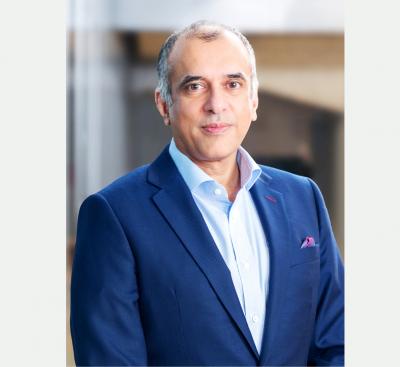
HSBC Holdings PLC is deepening its commitment to Taiwan as the economy emerges as one of the bank’s fastest-growing markets globally, driven by an artificial intelligence (AI) investment boom, expanding cross-border trade, and rising wealth creation. “The advantage that Taiwan has is a growth story linked to the semiconductor and broader AI industries, strong underlying corporate performance, and wealth creation,” said Surendra Rosha, HSBC’s co-chief executive for Asia and the Middle East, in an exclusive interview with the Taipei Times on June 2, during this year’s HSBC Taiwan Conference. That combination has helped HSBC cement its position as the most profitable international
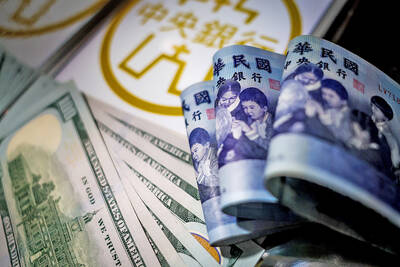
The New Taiwan dollar yesterday fell sharply against the US dollar to close at its lowest level since May 22 amid a massive outflow of funds from the country because of investors panicking over global equity markets. The NT dollar ended at NT$31.580 against the US dollar, slightly lower than its close of NT$31.568 on May 22, after moving between NT$31.5 and NT$31.648 on combined turnover of US$3.062 billion on the Taipei Foreign Exchange and the Cosmos Foreign Exchange. The NT dollar received a significant hit in the morning session, slumping as much as NT$0.173 at a time when other Asian currencies
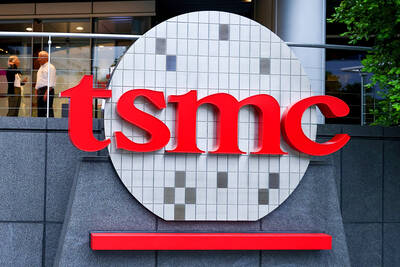
Taiwan Semiconductor Manufacturing Co (TSMC, 台積電) is now ranked ninth among the world’s 100 most valuable companies after its market capitalization more than doubled over the past year, PricewaterhouseCoopers (PwC) Taiwan said in a report last month. TSMC’s market capitalization surged 101 percent year-on-year to US$1.427 trillion as of March 31, the accounting and consulting firm’s 2026 Global Top 100 Companies by Market Capitalization report said. The gain catapulted the world’s largest contract chipmaker from 12th place to ninth in the rankings, and it was the fastest-growing among the global top 10, it said. TSMC was the only Taiwanese company among the top
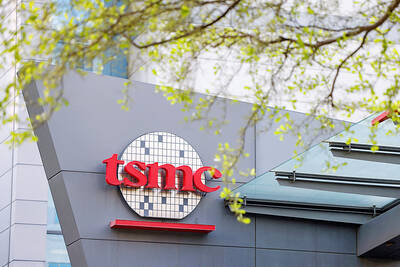
Taiwan Semiconductor Manufacturing Co (TSMC, 台積電) yesterday reported record revenue of NT$416.975 billion (US$13.17 billion) for last month, putting the world’s largest contract chipmaker on track to set a record for quarterly revenue. Last month’s figure surpassed March’s record NT$415.19 billion and represented increases of 1.5 percent from April and 30.1 percent from a year earlier. For the first five months of the year, TSMC generated NT$1.96 trillion in revenue, up 30 percent year-on-year, it said in a statement. TSMC has forecast second-quarter revenue of between US$39 billion and US$40.2 billion, representing sequential growth of about 10 percent and year-on-year growth of about


 RSS
RSS