


The US Department of Commerce last week ordered multiple chip equipment companies to halt shipments of certain tools to China’s second-largest chipmaker, Hua Hong Semiconductor Ltd (華虹半導體), its latest action to slow the country’s development of advanced chips, two people familiar with the matter said.
The department sent letters to at least a handful of companies informing them of restrictions on tools and other materials destined for two Hua Hong facilities US officials believe make China’s most sophisticated chips, the people said.
Top US chip equipment companies Lam Research Corp, Applied Materials Inc and KLA Corp, each of which has significant business supplying China, were among those believed to have received a letter, the sources added.
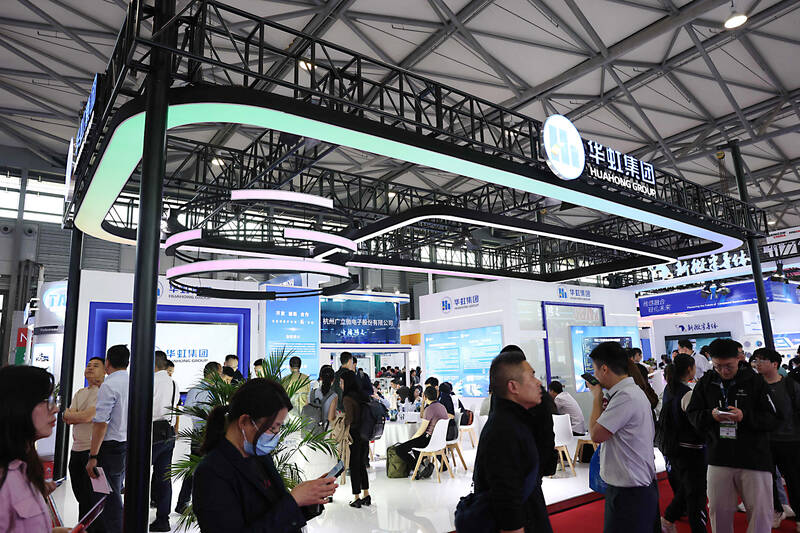
Photo: AFP
China hopes the US would take concrete actions to maintain the stability and smooth functioning of global industrial and supply chains, Chinese Ministry of Foreign Affairs spokesperson Lin Jian (林劍) said yesterday at a daily news conference.
Reuters exclusively reported last month that Hua Hong group had developed advanced chip manufacturing technologies that could be used to produce artificial intelligence (AI) chips, a milestone in Beijing’s efforts to boost tech self-sufficiency.
The group’s contract chipmaking business, Huali Microelectronics Corp (華力微電子), was preparing a 7-nanometer chipmaking process at its Shanghai plant, sources said.
Semiconductor Manufacturing International Corp (SMIC, 中芯), China’s largest contract chipmaker, is the only domestic company that can make chips with 7-nanometer technologies so far, the report said.
The letters from the department also aim to prevent shipments to Huali, sources said.
“This is an overdue and welcome first step from the [US President Donald] Trump administration,” Council on Foreign Relations senior fellow for China and emerging technologies Chris McGuire said.
“But to have any effect, it must capture all shipments from US toolmakers, including from their overseas subsidiaries,” McGuire said.
It can be hard to pinpoint which factories produce advanced chips.
The two Hua Hong facilities targeted by the US Department of Commerce are Fab 6, which the Huali Microelectronics’ Web site says has 28/22-nanometer technology and is in Shanghai; and 8a, which does not appear on its Web site. Sources said it is believed to be under construction.
China’s tech giant Huawei Technologies Co (華為), which is on a US trade blacklist, has been collaborating with Hua Hong and is planning to move part of its AI chip production from SMIC to Hua Hong, other sources said.
Huali’s research and development of 7-nanometer chips at its Hua Hong Fab 6 site began last year with support from Huawei-backed SiCarrier, Reuters reported last month.
Huali is planning an initial production capacity of a few thousand 7-nanometer wafers a month by the end of this year.
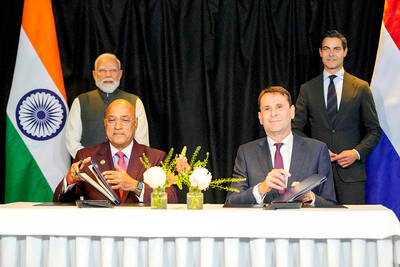
NEW MARKET: The partnership opens up India to the Dutch company, which already has a strong hold in the semiconductor market of South Korea, Taiwan and China ASML Holding NV entered into a partnership agreement with Tata Electronics Pvt Ltd aimed at ramping up India’s goal to develop domestic chip-manufacturing capabilities. The Dutch company’s technology would help power Tata Electronics’ planned 300 millimeter (mm) semiconductor foundry in Gujarat, according to a joint statement from the two companies on Saturday. The signing of a memorandum of understanding coincides with a visit by Indian Prime Minister Narendra Modi to the Netherlands, which is looking to deepen bilateral relations with New Delhi. ASML, whose top customers include Taiwan Semiconductor Manufacturing Co (台積電) and Samsung Electronics Co, makes lithography machines that can print
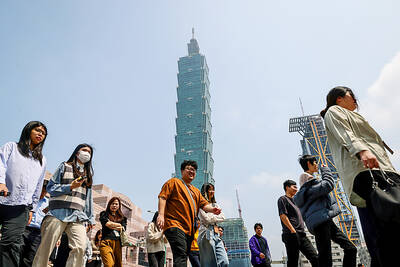
TECH RELIANCE: Growth is increasingly reflecting an unequal K-shaped distribution, where technology sectors outperform and other industries struggle, an expert said Standard Chartered Bank has significantly raised its forecast for Taiwan’s economic growth to 9.5 percent this year, up from 7.6 percent previously, citing surging artificial intelligence (AI) demand driving exports, semiconductor production and investment. The upgrade reflects a sustained AI supercycle that continues to fuel demand for advanced chips and technology infrastructure, which form the backbone of Taiwan’s exports, the bank said in a report this week. “We raise our 2026 growth forecast to reflect a much stronger-than-expected first-quarter GDP figure,” Standard Chartered senior economist for greater China and Asia Tommy Wu (胡東安) said in the report. Driven largely by a 35.3 percent
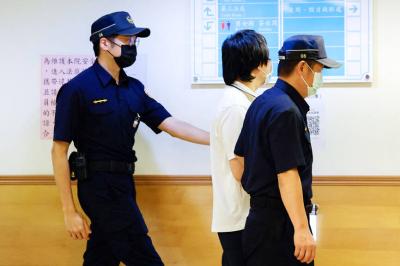
Tokyo Electron's Taiwan unit today said in a written response that it respects the judicial process, takes the court ruling seriously and would not appeal in the Taiwan Semiconductor Manufacturing Co (TSMC, 台積電) trade secrets case. Last month, a court fined the Taiwan unit of Japan's Tokyo Electron NT$150 million (US$4.74 million) in a case involving trade secrets related to TSMC's sensitive chip technology.
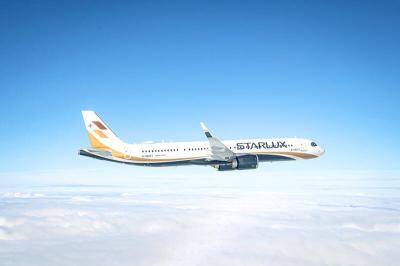
Two of Taiwan’s international carriers, Starlux Airlines Co (星宇航空) and EVA Airways Corp (長榮航空), have retained the five-star airline rating awarded by international airline review organization Skytrax. Starlux was awarded the distinction for a second consecutive year, while EVA Air received it for the 11th straight year, Skytrax said in statements released yesterday and on Thursday last week, respectively. The five-star rating is considered one of the airline industry's highest honors and is awarded following professional audits of airline product and frontline service standards, Skytrax said. The ratings are based on in-depth assessments using unified global quality standards rather than customer review scores


 RSS
RSS