


US artificial intelligence (AI) company Anthropic PBC said on Monday that it had uncovered campaigns by three Chinese AI firms to illicitly extract capabilities from its Claude chatbot, in what it described as industrial-scale intellectual property theft.
Anthropic said DeepSeek (深度求索), Moonshot AI Technology Co (月之暗面) and MiniMax Group Inc (稀宇科技) used a technique known as “distillation” — using outputs from a more powerful AI system to rapidly boost the performance of a less capable one.
“These campaigns are growing in intensity and sophistication,” the company said in a statement. “The window to act is narrow, and the threat extends beyond any single company or region.”
Photo: Bloomberg
Distillation is a common practice within AI development, often used by companies to create cheaper, smaller versions of their own models.
The practice grabbed headlines a year ago when the release of a low-cost generative AI model from DeepSeek performed at a similar level to ChatGPT and other top US chatbots, upending assumptions of US dominance in the sensitive sector.
Anthropic said the Chinese companies achieved their ends through approximately 16 million exchanges with its Claude model and 24,000 fake accounts. These allowed the three labs to siphon off capabilities they had not independently developed, at a fraction of the cost — and in so doing circumvented export controls on powerful US technology intended to preserve US dominance in AI.
The San Francisco-based company argued the practice posed national security risks, saying models built through illicit distillation are unlikely to retain safety guardrails designed to prevent misuse — such as restrictions on helping develop bioweapons or enabling cyberattacks.
Anthropic’s archrival, OpenAI, creator of ChatGPT, made similar accusations to US lawmakers earlier this month, saying Chinese companies were using the technique amid “ongoing efforts to free-ride on the capabilities developed by OpenAI and other US frontier labs.”
Other US officials, including White House AI adviser David Sacks, have also expressed concerns that DeepSeek used this method.
Anthropic said MiniMax ran the largest operation, generating more than 13 million exchanges.
Each campaign concentrated heavily on coding, agentic reasoning and tool use — areas in which Claude is considered a leader.
To circumvent Anthropic’s ban on commercial access from China, the labs allegedly routed traffic through proxy services that managed the vast networks of fraudulent accounts.
Anthropic called for coordinated industry and government responses to address what it said no single company could tackle alone.
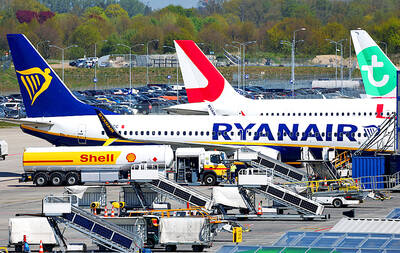
Ryanair, Transavia, Volotea and other low-cost airlines are feeling the financial pain from high jet fuel prices as a result of the Middle East war and are cutting flights. The closure of the Strait of Hormuz has taken a huge chunk of oil supplies off the market, sending the price of jet fuel soaring and triggering fears of shortages that could force airlines to cancel flights. Airlines are not waiting for a lack of supplies to react. “Travel alert: Airlines are cutting thousands of flights right now,” Travel Therapy host Karen Schaler said in an Instagram reel this past weekend.
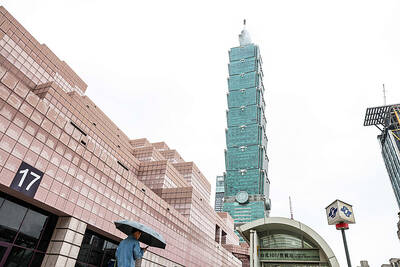
MANAGING RISKS: Taiwan has secured LNG sufficient to cover 95 percent of electricity demand for next month, UBS said, describing the government’s approach as proactive UBS Group AG has raised its forecast for Taiwan’s economic growth this year to 8 percent, up from 6.9 percent previously, and said expansion could reach as high as 8.6 percent if external energy shocks are avoided. The upgrade reflects a stronger-than-expected first-quarter performance and sustained momentum in artificial intelligence (AI)-driven exports, which UBS said are providing a firm foundation for growth despite geopolitical and energy risks. Taiwan’s GDP expanded 13.69 percent year-on-year in the first quarter, the fastest growth since the second quarter of 1987, the Directorate-General of Budget, Accounting and Statistics (DGBAS) reported on Thursday. On a seasonally
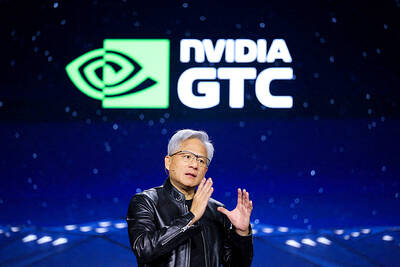
The list of Asian stocks that benefit from business partnership with Nvidia Corp is getting longer, as the region further integrates into the artificial intelligence (AI) chip giant’s business ecosystem. Just in the past week, South Korea’s LG Electronics Inc, Taiwan’s Nanya Technology Corp (南亞科技), as well as China’s Huizhou Desay SV Automotive Co (德賽西威) and Pateo Connect Technology Shanghai Corp (博泰車聯) have become the latest to rally on news of tie-ups, supply-chain participation or product collaboration with the US chip designer. Asian suppliers account for about 90 percent of Nvidia’s production costs, up from about 65 percent last year, data compiled

The Fair Trade Commission’s (FTC) ongoing review of Grab Holdings Ltd’s US$600 million acquisition of Foodpanda Taiwan’s operations, announced on March 23, has taken on fresh urgency as industry experts warn that the transaction could embed significant Chinese cybersecurity vulnerabilities into Taiwan’s digital infrastructure through Grab’s deep ties to autonomous-driving firm WeRide (文遠知行). Less than 16 months after the FTC blocked Uber Eats’ direct attempt to acquire Foodpanda Taiwan — citing potential combined market shares of 80 to 90 percent — the emergence of Grab as the buyer has prompted questions about whether the same competitive harm is simply being rerouted


 RSS
RSS