


UBS Group AG has raised its forecast for Taiwan’s economic growth this year to 8 percent, up from 6.9 percent previously, and said expansion could reach as high as 8.6 percent if external energy shocks are avoided.
The upgrade reflects a stronger-than-expected first-quarter performance and sustained momentum in artificial intelligence (AI)-driven exports, which UBS said are providing a firm foundation for growth despite geopolitical and energy risks.
Taiwan’s GDP expanded 13.69 percent year-on-year in the first quarter, the fastest growth since the second quarter of 1987, the Directorate-General of Budget, Accounting and Statistics (DGBAS) reported on Thursday.
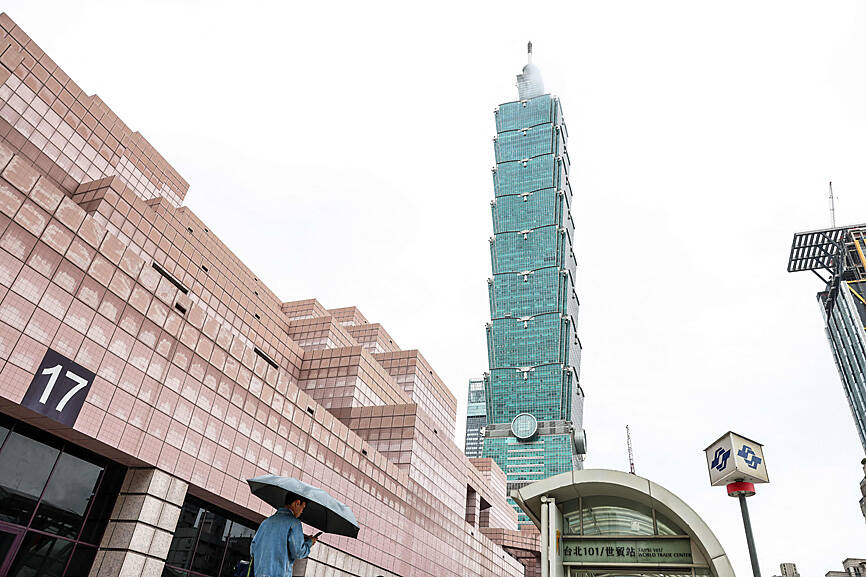
Photo: I-Hwa Cheng, AFP
On a seasonally adjusted basis, the economy grew 2.84 percent over the preceding quarter, maintaining strong momentum with uninterrupted expansion over the past 12 quarters, the DGBAS said.
While exports remained the main driver in the first quarter, domestic demand such as private consumption and government consumption also strengthened, while gross capital formation rebounded from a contraction in the previous quarter, the agency said.
Despite concerns about energy supplies linked to the Strait of Hormuz, a key route for global energy shipments, and Taiwan’s reliance on liquefied natural gas (LNG) as well as access to critical industrial inputs such as helium essential for semiconductor manufacturing, recent data suggest supply conditions remain stable, UBS senior economist William Deng (鄧維慎) said in a report on Thursday.
Taiwan has secured LNG sufficient to cover about 95 percent of its electricity demand for next month, with procurement for July already under way, highlighting what UBS described as a proactive approach by authorities to managing energy risk.
The inflation impact from higher oil prices has also been limited. Deng said Taiwan’s price transmission from energy shocks is weaker than in many regional peers, helped by government intervention, including price-smoothing mechanisms, and targeted subsidies for agriculture and fisheries to contain food-cost spillovers.
March inflation data indicated these measures have been effective, although some lagged effects could still emerge in coming months, he said.
Overall, UBS said it expects price pressures to remain contained.
However, domestic demand is showing early signs of fatigue. High-frequency indicators point to a decline in consumer confidence, raising questions over the durability of the consumption recovery, UBS said.
Manufacturing activity has also eased, with purchasing managers’ indexes softening, although UBS said underlying components remain more resilient than in many peer economies.
By contrast, exports have strengthened sharply. Shipments rose in March, driven by robust demand for AI-related products and a pickup in non-technology exports. UBS said the performance exceeded it expectations and prompted an upward revision to its growth estimate.
Under its base-case scenario of a two-month energy disruption, UBS expects a temporary drag on sequential growth in the second and third quarters, followed by a recovery toward the end of this year.
Even so, Taiwan’s strong start this year and its central role in the global AI supply chain should help cushion external shocks and keep overall growth on a solid trajectory, UBS said.
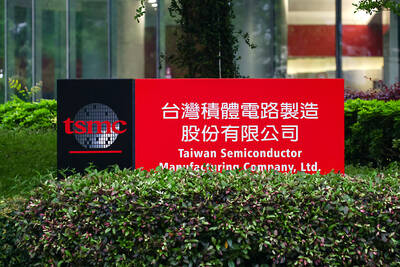
Shares of Taiwan Semiconductor Manufacturing Co (TSMC, 台積電) have repeatedly hit new highs, but an equity analyst said the stock’s valuation remains within a reasonable range and any pullback would likely be technical. The contract chipmaker’s historical price-to-earnings (P/E) ratio has ranged between 20 and 30, Cathay Futures Consultant Co (國泰證期) analyst Tsai Ming-han (蔡明翰) told Central News Agency. With market consensus projecting that TSMC would post earnings per share of about NT$100 (US$3.17) this year, supported by strong global demand for artificial intelligence (AI) applications, and the stock currently trading at a P/E ratio of below 25, Tsai said the valuation
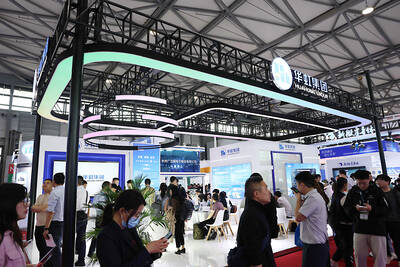
The US Department of Commerce last week ordered multiple chip equipment companies to halt shipments of certain tools to China’s second-largest chipmaker, Hua Hong Semiconductor Ltd (華虹半導體), its latest action to slow the country’s development of advanced chips, two people familiar with the matter said. The department sent letters to at least a handful of companies informing them of restrictions on tools and other materials destined for two Hua Hong facilities US officials believe make China’s most sophisticated chips, the people said. Top US chip equipment companies Lam Research Corp, Applied Materials Inc and KLA Corp, each of which has significant
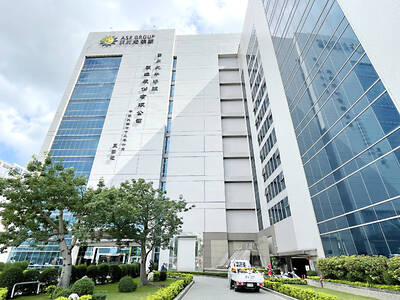
‘HEAVY SPENDING’: Net profit last quarter beat company predictions at 87 percent, with an extra US$1.5 billion to be spent on new facilities, the company said ASE Technology Holding Co (日月光投控) yesterday raised its capital expenditure for this year by 20 percent in response to stronger customer demand for leading-edge advanced packaging (LEAP) this year and next. The company, headquartered in Kaohsiung, plans to spend US$1.5 billion on new facilities and machinery equipment this year on top of an estimate of US$7 billion made in February, it said. ASE has not ruled out the possibility of hiking spending again this year, the company said, adding that it expects another “heavy spending” year next year. LEAP services revenue is expected to grow 10 percent to US$3.5 billion this year, ASE
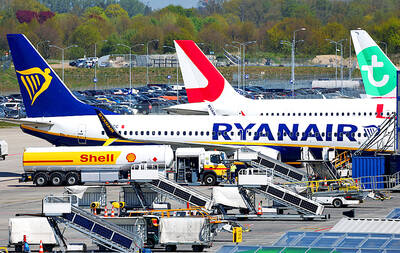
Ryanair, Transavia, Volotea and other low-cost airlines are feeling the financial pain from high jet fuel prices as a result of the Middle East war and are cutting flights. The closure of the Strait of Hormuz has taken a huge chunk of oil supplies off the market, sending the price of jet fuel soaring and triggering fears of shortages that could force airlines to cancel flights. Airlines are not waiting for a lack of supplies to react. “Travel alert: Airlines are cutting thousands of flights right now,” Travel Therapy host Karen Schaler said in an Instagram reel this past weekend.


 RSS
RSS