


Growth in the average monthly regular wage in the local industrial and service sectors rose 3.09 percent to NT$47,884 (US$1,512) last year, the highest in 26 years beating inflation, the Directorate-General of Budget, Accounting and Statistics (DGBAS) said yesterday.
After adjusting for inflation, the average real regular wage grew 1.40 percent to NT$43,690 last year, indicating that growth was above inflation, the DGBAS’ data showed. The 1.40 percent growth was the highest level in five years.
Last year, average annual aggregate earnings, comprised of regular wages and non-regular wages such as overtime pay and bonuses, stood at NT$760,632, up 3.91 percent from a year earlier, while average annual real aggregate earnings grew 2.21 percent to NT$694,008, also beating inflation, the data showed.
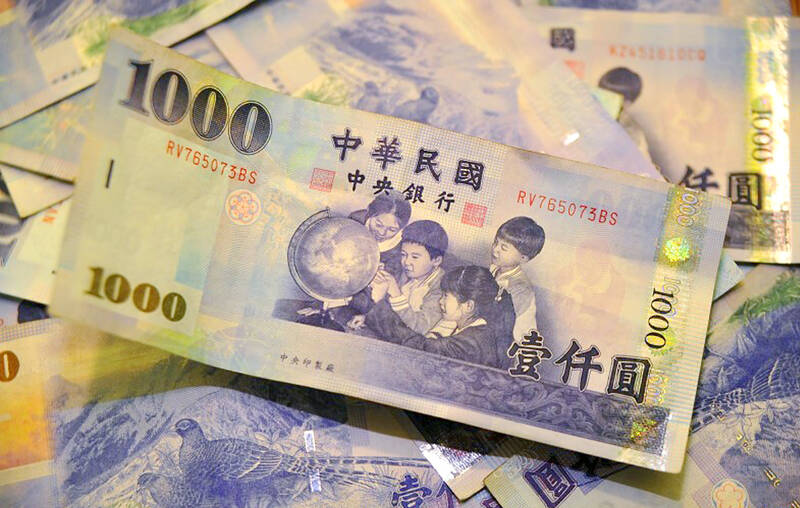
Photo: Wang Chieh, Taipei Times
The 2.21 percent growth was the highest in seven years, the DGBAS said.
DGBAS Census Department Deputy Director Tan Wen-ling (譚文玲) said the higher regular wage came after an increase in the minimum wage.
With the economy growing, employers gave bonuses and demanded overtime hours, boosting non-regular wages, Tan said, adding that Taiwan’s economy grew at a stunning pace of 8.63 percent last year with exports boosted by artificial intelligence (AI) applications.
The nation’s consumer price index growth eased to 1.66 percent last year, below the 2 percent alert level set by the central bank, ensuring both the average regular wage and earnings beat inflation, she added.
Last year, about 69.74 percent of local employees received a regular wage below the monthly average, marking the fourth consecutive year that share has increased, as highly paid employees skewed the average, Tan said.
The median monthly regular wage rose 3.03 percent to NT$38,406 last year, while after being adjusted for inflation, the real median monthly wage also rose 1.35 percent to NT$35,042, the DGBAS said.
Due to robust global demand for AI applications, the DGBAS said the number of average monthly overtime hours in the local electronics industry hit 27.9 hours last year, the highest for 46 years.
Demand for AI and high-performance computing devices was stronger than expected, which benefited the export-oriented electronic components industry, Tan said.
In addition to the growth in overtime hours, the electronic components industry also reported that average aggregate earnings rose 8.52 percent last year, the highest of any industry in the country, she said.
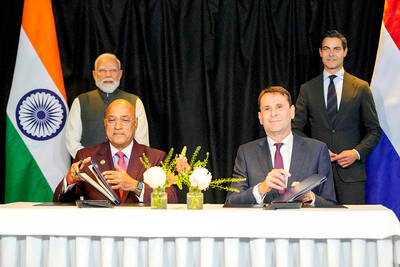
NEW MARKET: The partnership opens up India to the Dutch company, which already has a strong hold in the semiconductor market of South Korea, Taiwan and China ASML Holding NV entered into a partnership agreement with Tata Electronics Pvt Ltd aimed at ramping up India’s goal to develop domestic chip-manufacturing capabilities. The Dutch company’s technology would help power Tata Electronics’ planned 300 millimeter (mm) semiconductor foundry in Gujarat, according to a joint statement from the two companies on Saturday. The signing of a memorandum of understanding coincides with a visit by Indian Prime Minister Narendra Modi to the Netherlands, which is looking to deepen bilateral relations with New Delhi. ASML, whose top customers include Taiwan Semiconductor Manufacturing Co (台積電) and Samsung Electronics Co, makes lithography machines that can print
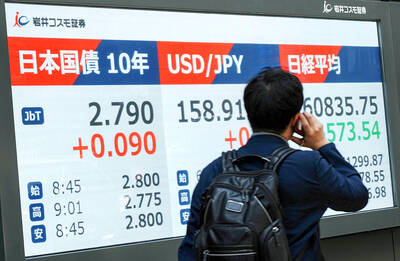
ROUGH RECORDS: Bonds in Japan, as well is in New Zealand, Australia and the US, are seeing the effects of a nervy market as stock exchanges across Asia edge down A deepening slump in Japanese government bonds added fuel to the selloff in global debt markets as rising oil prices stoked inflation fears and pushed yields to multi-decade highs. Japan’s 30-year yield yesterday surged as much as 20 basis points to the highest level since the tenor’s debut in 1999, before paring some of the move. Shorter-maturity Japanese debt was also under pressure, underscored by weak demand at a sale of five-year notes that offered a record-high coupon of 2 percent. Concerns over inflation and government spending rippling through markets including the US, Australia and New Zealand are being amplified in Japan,
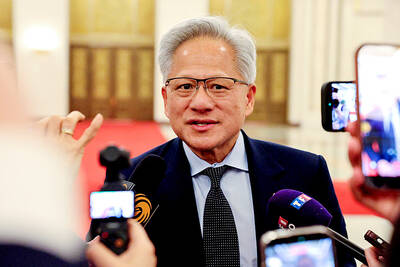
The US has cleared about 10 Chinese firms to buy Nvidia Corp’s second-most powerful artificial intelligence (AI) chip, the H200, but not a single delivery has been made so far, three people familiar with the matter said, leaving a major technology deal in limbo as chief executive officer Jensen Huang (黃仁勳) seeks a breakthrough in China this week. Huang, who was not initially listed in a White House delegation to Beijing, joined the trip after an invitation from US President Donald Trump, a source said. Trump picked him up in Alaska en route to a summit with Chinese President Xi Jinping

Wall Street is licking its chops over an unprecedented slate of massive initial public offerings (IPOs) set to arrive in the coming months, beginning with Elon Musk’s Space Exploration Technologies Corp (SpaceX) next month. That is expected to be followed by artificial intelligence (AI) rivals OpenAI and Anthropic PBC. The trio of mega listings, each eyeing valuations around US$1 trillion or more, constitutes a heady period of elevated risk and reward. SpaceX is targeting an IPO that would raise up to US$80 billion — about double the funds generated from all IPOs last year. OpenAI and Anthropic are eyeing IPOs raising US$60 billion. “We’re


 RSS
RSS