

US President Donald Trump on Monday formally announced plans to launch a US$12 billion critical minerals stockpile, in his latest effort to aid manufacturers while minimizing reliance on Chinese rare earths.
The so-called Project Vault is meant to “ensure that American businesses and workers are never harmed by any shortages,” Trump said at the White House.
“We don’t want to ever go through what we went through a year ago,” he said, alluding to trade spats between Washington and Beijing that saw restrictions on access to China’s dominant supply of rare earth supplies.
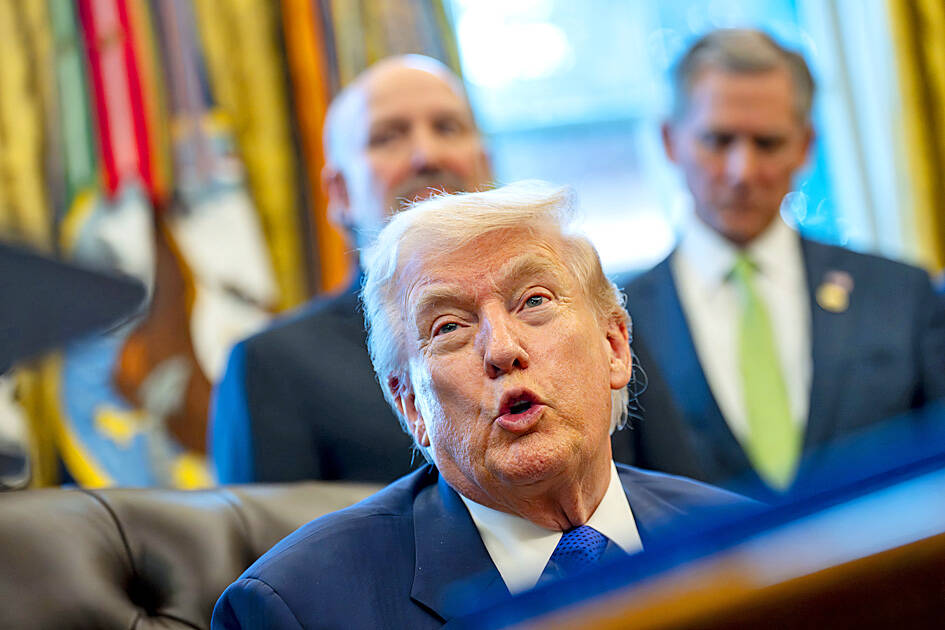
Photo: EPA
The initiative is set to combine about US$2 billion in private capital with a US$10 billion loan from the US Export-Import Bank (Ex-Im), in what senior administration officials earlier said would mark a first for the US private sector.
Ex-Im CEO John Jovanovic, standing behind Trump in the Oval Office, said the loan would mark the biggest Ex-Im deal in the history of the bank “by more than double.”
The effort is similar to the country’s current emergency stockpile for oil, but focuses on rare earths and critical minerals such as gallium and cobalt that are used in products such as jet engines and cellphones.
“Just as we have long had a strategic petroleum reserve and a stockpile of critical minerals for national defense, we’re now creating this reserve for American industry, so we don’t have any problems,” Trump said.
It is also seen helping buttress the economy from supply shocks, with China now the world’s dominant supplier of the materials.
Others present at the Oval Office event included General Motors Co CEO Mary Barra and mining billionaire Robert Friedland, representing both producers and users of critical minerals.
More than a dozen companies have agreed to participate so far, including GM, Stellantis NV, Boeing Co, Corning Inc, GE Vernova Inc and Alphabet Inc’s Google. Commodities trading houses Hartree Partners LP, Traxys North America LLC and Mercuria Energy Group Ltd are expected to handle purchases of the raw materials to fill the stockpile.
The new venture would offer participating manufacturers a way to insulate their businesses from swings in prices for key materials without having to maintain their own stockpiles.
Under the arrangement, companies that make an initial commitment to purchase materials at a specified inventory price later — and pay some up-front fees — would be able to present Project Vault with a shopping list of preferred materials they need.
The project, in turn, would seek to procure and store the materials, with the manufacturers allowed to draw down their material stash as long as the firms replenish them.
In the case of a major supply disruption, they would be able to access all of it, the officials said.
A key element is that manufacturers who commit to buy a specified amount of materials at a set price also commit to repurchase the same amount at that same cost in the future.
The US already has moved to invest directly in domestic minerals companies to boost the production and processing of rare earths at home. Abroad, the administration has announced agreements with Australia, Japan and Malaysia, and is expected to seek more agreements during a summit in Washington today.
FOUNDRY DATA: Demand pushed production on some TSMC lines to full utilization, while Samsung’s market share of 5.9 percent dropped, TrendForce said Taiwan Semiconductor Manufacturing Co’s (TSMC, 台積電) foundry market share edged up to 72.5 percent in the second quarter from 72.3 percent in the previous quarter, propelled by robust artificial intelligence (AI) and smartphone chip revenue, data compiled by market researcher TrendForce Corp (集邦科技) showed yesterday. TSMC’s revenue last quarter grew 12 percent sequentially to US$40.2 billion, outpacing the 11.5 percent average growth among the world’s top 10 foundry companies, the researcher said. Combined revenue of the top 10 is expected to grow further this quarter from US$53.49 billion last quarter, supported by strong demand and price hikes, it said. The increased demand has

Global notebook computer shipments are expected to fall 8 percent year-on-year to 167.9 million units this year, dragged by weak demand, high component prices and supply constraints, the Market Intelligence and Consulting Institute (MIC) said on Tuesday. Next year, shipments are expected to decline by a further 4.7 percent to 160 million units as higher retail prices weigh on consumption, MIC deputy director-general Edward Lin (林柏齊) told a news conference in Taipei. The downtrend is expected to extend into 2028, with replacement demand unlikely to recover before supplies of key components rebound and costs decline, Lin said. Surging demand for artificial intelligence (AI)
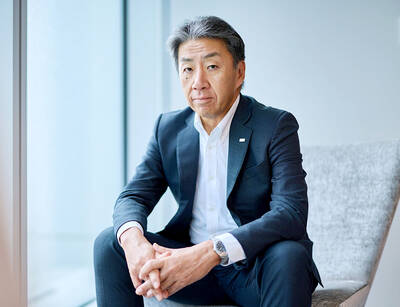
Kioxia Holdings Corp’s top executive brushed aside the likelihood of deeper ties with rival and stakeholder SK Hynix Inc, while pledging to keep surging memory prices at bay to avoid denting long-term artificial intelligence (AI) demand. Makers of memory chips are embarking on costly production capacity increases to meet soaring orders from AI service providers that are fueling double or even triple-digit price rises. Investors including the chairman of SK Hynix’s parent, SK Inc, have said manufacturing partnerships might help lower the risk of huge capital commitments needed. However, oft-floated closer ties with SK Hynix would run into antitrust hurdles and be

EQUAL SHARE: A row over Micron’s payouts coincides with a global debate about who deserves a cut of the sudden wealth generated by the artificial intelligence boom Micron Technology Inc is to provide its engineers in Taiwan a cash bonus of NT$1 million (US$31,600) plus equity rewards, as the company’s local unions are demanding an additional payout to reflect their contribution to the chipmaker’s blowout profits. The Idaho-based chipmaker said in a statement yesterday that its entry-level, Taiwan-based engineers’ average compensation would reach NT$3.4 million for the past fiscal year after the cash and equities awards. All employees in Taiwan would receive equities as part of the annual merit grants, the company added. Before the announcement, Micron’s unions asked for a one-time cash payout equal to about seven years


 RSS
RSS