


Taiwan’s economy might expand 3.1 percent next year, faster than the 1.1 percent growth estimated for this year, as inventory adjustments would end this quarter, allowing restocking demand to increase, Standard Chartered Bank Taiwan said yesterday.
Demand for consumer electronics might return to growth next year following several quarters of downcycles induced by sharp global inflation and monetary tightening, Standard Chartered senior economist Tony Phoo (符銘財) told a media briefing in Taipei.
That would benefit local firms in supply chains for such products, Phoo said.
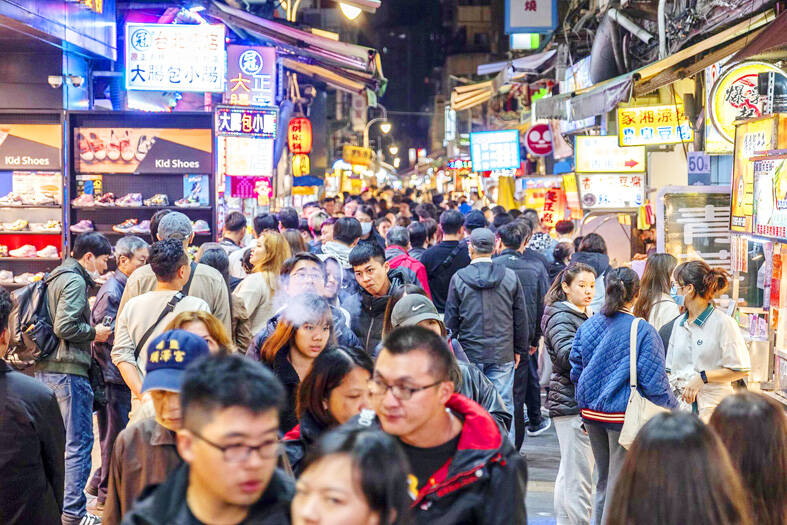
Photo, Lam Yik Fei, Bloomberg
Business in the US, Europe and Japan has showed signs of improving after global inflation eased and major central banks halted rate hikes, he said, adding that these factors would facilitate a resumption in growth for Taiwan’s exports next year, while private investment would stop being a drag.
Semiconductor shipments have accounted for 38.7 percent of Taiwan’s exports so far this year, thanks to fast-growing global demand for advanced chips, Ministry of Finance data showed.
China, Taiwan’s largest export destination, is expected to report a better economic performance next year, as Beijing is likely to roll out more measures to support its infrastructure and property sector, Phoo said.
Chinese tourists would contribute to Taiwan’s tourism sector if the two sides allow greater civilian exchanges after Taiwan’s presidential election next month, he said.
Taiwan’s consumer prices might increase 2.2 percent year-on-year this year, but grow 1.5 percent next year, which would give the central bank reason to leave policy rates intact at its quarterly board meeting tomorrow, he said.
The domestic property market would also come out of the woods next year after dodging a hard landing this year, Phoo said.
The property market’s resilience has much to do with relatively low borrowing costs and prudent financial planning by homebuyers, he said.
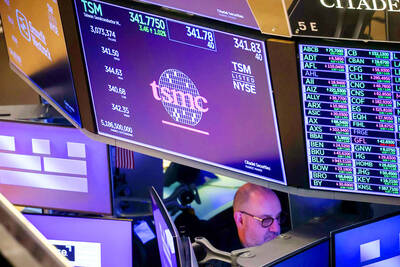
STRONG INTEREST: Analysts have pointed to optimism in TSMC’s growth prospects in the artificial intelligence era as the cause of the rising number of shareholders The number of people holding shares of chipmaker Taiwan Semiconductor Manufacturing Co (TSMC, 台積電) hit a new high last week despite a decline in its stock price, the Taiwan Depository and Clearing Corp (TDCC, 台灣集保) said. The number of TSMC shareholders rose to 2.46 million as of Friday, up 75,536 from a week earlier, TDCC data showed. The stock price fell 1.34 percent during the same week to close at NT$1,840 (US$57.55). The decline in TSMC’s share price resulted from volatility in global tech stocks, driven by rising international crude oil prices as the war against Iran continues. Dealers said
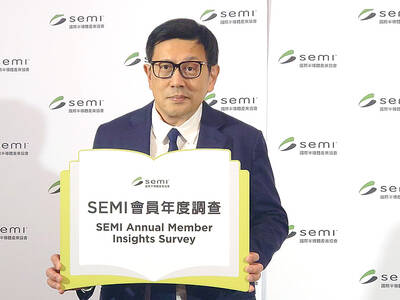
PRICE HIKES: The war in the Middle East would not significantly disrupt supply in the short term, but semiconductor companies are facing price surges for materials Taiwan’s semiconductor companies are not facing imminent supply disruptions of essential chemicals or raw materials due to the war in the Middle East, but surges in material costs loom large, industry association SEMI Taiwan said yesterday. The association’s comments came amid growing concerns that supplies of helium and other key raw materials used in semiconductor production could become a choke point after Qatar shut down its liquefied natural gas (LNG) production and helium output earlier this month due to the conflict. Qatar is the second-largest LNG supplier in the world and accounts for about 33 percent of global helium output. Helium is
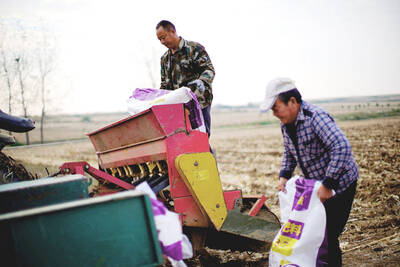
China is clamping down on fertilizer exports to protect its domestic market, industry sources said, putting an additional strain on global markets that were already grappling with shortages caused by the US-Israeli war on Iran. China is among the largest fertilizer exporters — shipping more than US$13 billion of it last year — and it has a history of controlling exports to keep prices low for farmers. Shipments through the war-blocked Strait of Hormuz account for about one-third of the sea-borne supply. This month, Beijing banned exports of nitrogen-potassium fertilizer blends and certain phosphate varieties, sources said. The ban, which has not

AMAZING ABUNDANCE: Elon Musk has announced plans for a new facility in Texas which would manufacture chips for Tesla and SpaceX to use in robotics and AI Elon Musk said his Terafab project — a grand plan to eventually manufacture his own chips for robotics, artificial intelligence (AI) and space data centers — would be built in Austin and jointly run by Tesla Inc and Space Exploration Technologies Corp (SpaceX). Musk, the chief executive officer of the two companies, said he would start off with an “advanced technology fab” in Austin that would have all of the equipment necessary to make chips of any kind. The project would call for one day supporting 1 terawatt (TW) of computing power per year, the amount Musk expects the companies to


 RSS
RSS