


Taiwan’s semiconductor companies are not facing imminent supply disruptions of essential chemicals or raw materials due to the war in the Middle East, but surges in material costs loom large, industry association SEMI Taiwan said yesterday.
The association’s comments came amid growing concerns that supplies of helium and other key raw materials used in semiconductor production could become a choke point after Qatar shut down its liquefied natural gas (LNG) production and helium output earlier this month due to the conflict.
Qatar is the second-largest LNG supplier in the world and accounts for about 33 percent of global helium output. Helium is a critical and high-value byproduct of natural gas processing, but the shutdown caused price hikes.
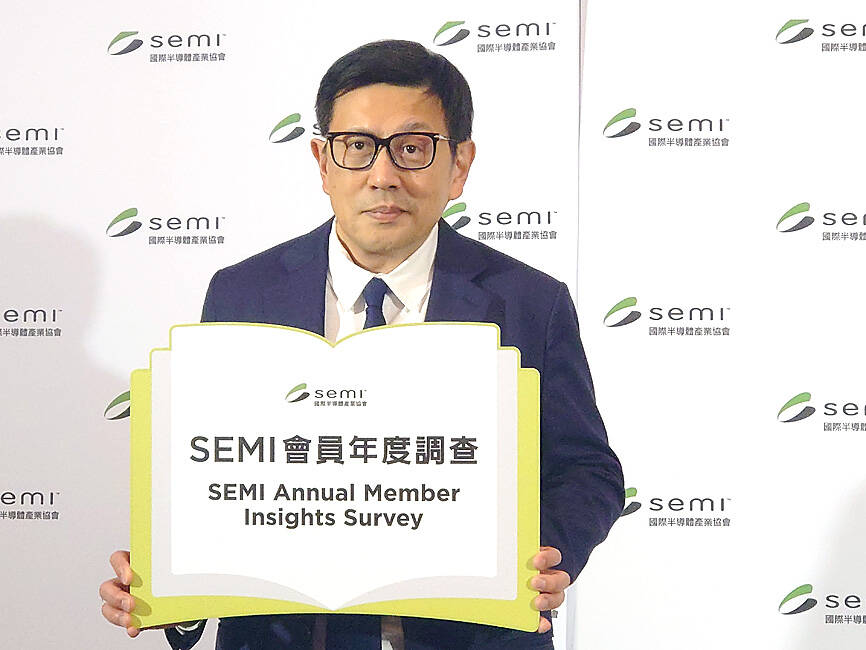
Photo: CNA
“In the short term, I think we are not seriously worried about supply,” SEMI Taiwan president Terry Tsao (曹世綸) said in Taipei.
However, companies need to enhance supply chain resilience through “diversifying procurement sources and increasing supply chain transparency,” he said
The supply of helium in Taiwan is sufficient and safe as the nation’s major LNG suppliers have diversified procurement sources to include Australia and the US, the ministry said on Saturday last week. Qatar used to be a major LNG and helium supplier to Taiwan, the ministry said.
Helium plays a critical role in semiconductor manufacturing, particularly for cooling and inert atmospheres during lithography, etching and deposition, affecting the quality of wafers, the ministry said.
The global supply fluctuations would not significantly impact local semiconductor manufacturers’ chip production as they have been recycling helium to reduce costs and dependence on new supply of helium, it said.
SEMI Taiwan did not expect any supply disruption in key materials, if the Iran war is resolved within four to six weeks, given that most chip companies are expanding safety inventories and have supply chain resilience strategies in place after the COVID-19 pandemic.
“The Middle East conflicts may be regarded as a black swan event for petrochemical producers, but not for semiconductor producers,” SEMI analyst Clark Tseng (曾瑞榆) said.
Other key chemical and raw materials such as hydrogen and sulfuric acid that are used massively in chip production can be obtained from multiple sources, Tseng said. However, mounting raw material costs would put chip companies under pressure, he said.
SEMI Taiwan said the world semiconductor revenue is expected to jump to US$1 trillion this year, four years ahead of 2030 as some analysts had projected, from US$775 billion last year.
The association attributed the artificial intelligence boom and surges in memory prices. Global semiconductor revenue would grow to about US$2 trillion in 2035, it said.
Despite the robust growth, Taiwan’s semiconductor companies are facing two major challenges — supply chain resilience and green energy supply, according to a survey among SEMI members.
Supply of green energy has become an issue for local semiconductor companies as most are committed to reach RE100 by 2030 by shifting to renewable electricity entirely. The time is ticking, but renewable energy development in Taiwan has lagged behind the government’s original plan due to scandals surrounding solar energy installations, SEMI Taiwan said.
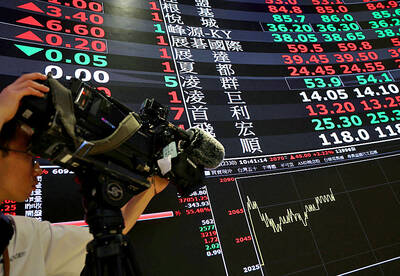
After several years flying high as Asia’s best Nvidia Corp proxy, Taiwan Semiconductor Manufacturing Co (TSMC, 台積電) is increasingly vying with other artificial intelligence (AI) stocks for investor attention. Stock traders are chasing a wider array of beneficiaries as mainstream usage of AI creates demand for hardware beyond the most-advanced chips TSMC makes for Nvidia. Subthemes from the deepening memory crunch to advances in robotics are also luring bids. At the same time, investment caps on single stocks are pushing funds to diversify, while retail investors long familiar with TSMC through its US depositary receipts are being offered a broader set of
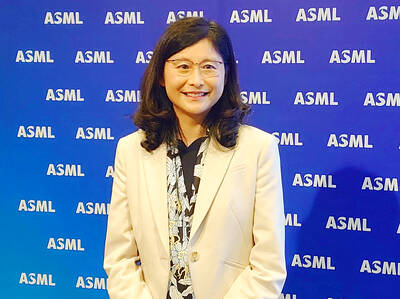
Netherlands-based semiconductor equipment supplier ASML Holding NV yesterday said that it is planning to hire an additional 1,000 people in Taiwan this year in response to growing demand from clients. ASML had previously planned to recruit 600 people this year, but that the plan has been adjusted upward, ASML vice president and ASML Taiwan general manager Grace Wang (汪佳慧) told reporters. ASML has a workforce of more than 4,500 in Taiwan, accounting for about 10 percent of its global total, Wang said. This year’s recruitment campaign would focus on adding people in the customer support, manufacturing and supply chain domains to assist ASML
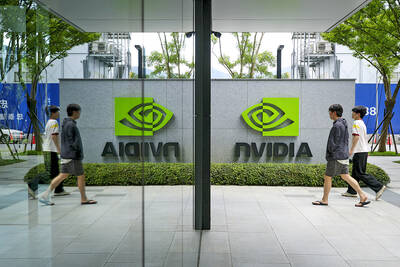
UNDER MICROSCOPE: Taiwan detained three people who allegedly conspired to buy servers in Taiwan and export them using fraudulent documentation, prosecutors said Nvidia Corp chief executive officer Jensen Huang (黃仁勳) on Saturday urged Super Micro Computer Inc to tighten up on compliance after Taiwan detained three people this week for allegedly making fraudulent declarations about artificial intelligence (AI) servers made by its US partner. The development marked the nation’s first crackdown on semiconductor smuggling, which grew after the US slapped restrictions on exports of high-end chips such as Nvidia AI accelerators to China. Nvidia is “rigorous” in explaining regulations to all of its partners, Huang told reporters after arriving in Taipei. “Ultimately Super Micro has to run their own company,” he said in response to

Nvidia Corp yesterday announced that CEO Jensen Huang (黃仁勳) would attend an employee meeting in Taipei tomorrow to celebrate the launch of the company’s Taiwan headquarters project. Huang would attend a gathering at the site of Nvidia’s planned headquarters in Beitou Shilin Technology Park (北投士林科技園區), the company said in a statement. After arriving in Taiwan on Saturday last week, Huang told reporters that he plans to meet with Quanta Computer Inc (廣達) chairman Barry Lam (林百里) and Taiwan Semiconductor Manufacturing Co (TSMC, 台積電) chairman C.C. Wei (魏哲家), and would attend the groundbreaking ceremony for Nvidia’s Taiwan headquarters tomorrow. Nvidia has not yet applied


 RSS
RSS