


China is clamping down on fertilizer exports to protect its domestic market, industry sources said, putting an additional strain on global markets that were already grappling with shortages caused by the US-Israeli war on Iran.
China is among the largest fertilizer exporters — shipping more than US$13 billion of it last year — and it has a history of controlling exports to keep prices low for farmers. Shipments through the war-blocked Strait of Hormuz account for about one-third of the sea-borne supply.
This month, Beijing banned exports of nitrogen-potassium fertilizer blends and certain phosphate varieties, sources said.
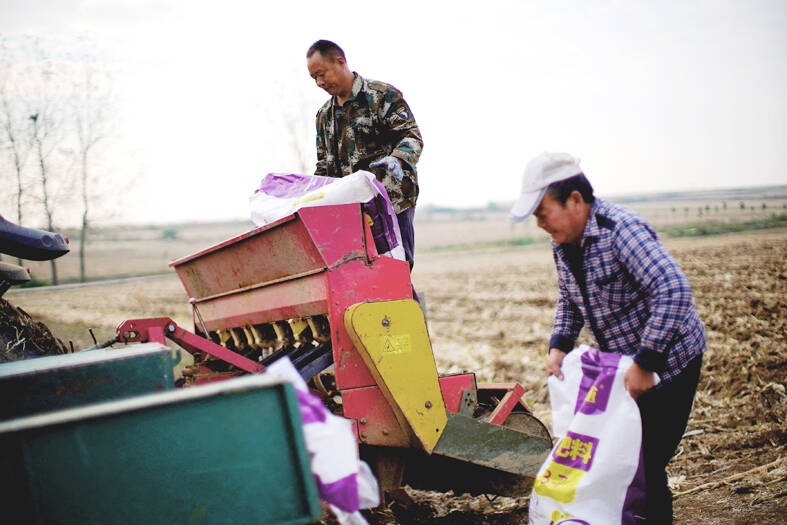
Photo: Reuters
The ban, which has not been formally unveiled, was reported earlier this week.
Added to existing bans and export quotas for urea, only a handful of fertilizers — notably ammonium sulfate — can be exported, five sources said.
That would mean between half and three-quarters of China’s exports last year are restricted, potentially up to 40 million tonnes, according to an estimate.
“This pattern is consistent: China restricts supplies rather than coming to the rescue during global tightness,” BMI senior commodities analyst Matthew Biggin said. “The export restrictions exist because of their tight domestic balance — they’re prioritizing food security and insulating their domestic market from price shocks.”
Beijing’s curbs, like its move last week to ban refined fuel exports, come as governments limit exports of products whose inputs have been threatened by disruption from the war, worsening shortages and higher prices around the world.
International urea prices have risen by about 40 percent from pre-war levels. In China, urea futures are near a 10-month high.
Fertilizers are essential for plant growth and crop yields. Higher prices could lead to reduced usage, or farmers could switch to crops that require less fertilizer. Last year, China sent Brazil, Indonesia and Thailand about one-fifth of their fertilizer imports and that figure stood at one-third for Malaysia and New Zealand, according to International Trade Centre data.
For India, it was about 16 percent, according to its trade data.
Between half and 80 percent of those exports are now restricted, according to analysis of Chinese customs data.
“Buyers were hoping China would step in and fill the supply gap, but this decision will only tighten supplies further,” a New Delhi-based fertilizer company official said in reference to the restrictions.
The company official declined to be named due to the sensitivity of the matter.
India, which imported more than 40 percent of its urea, a nitrogen-based fertilizer, and DAP, a blend, from the Middle East last year, has requested China issue export quotas for urea.
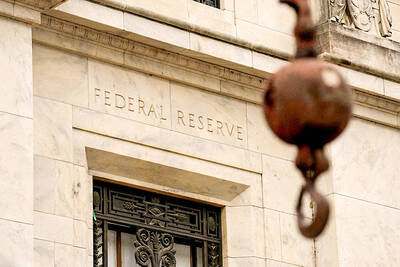
DAMAGE REPORT: Global central banks are assessing war-driven inflation risks as the law of unintended consequences careens around the world, spiking oil prices Central banks from Washington to London and from Jakarta to Taipei are about to make their first assessments of economic damage after more than two weeks of conflict between the US and Iran. Decisions this week encompassing every member of the G7 and eight of the world’s 10 most-traded currency jurisdictions are likely to confirm to investors that the specter of a new inflation shock is already worrying enough to prompt heightened caution. The US Federal Reserve is widely expected to do exactly what everyone anticipated weeks ahead of its March 17-18 policy gathering: hold rates steady. The narrative surrounding that
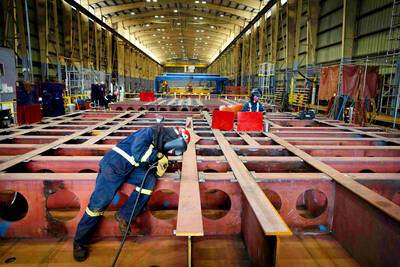
At a massive shipyard in North Vancouver, Canadian workers grind metal beams for a powerful new icebreaker crucial to cementing the country’s presence in the increasingly contested arctic. Icebreakers are specialized, expensive vessels able to navigate in the frozen far north. And “this is the crown jewel,” said Eddie Schehr, vice president of production at the Seaspan shipyard. For Canadian Prime Minister Mark Carney, who heads to Norway next Friday to observe arctic defense drills involving troops from 14 NATO states, Canada’s extreme north has emerged as a strategic priority. “Canada is and forever will be an Arctic nation,” he said ahead of

Chinese entrepreneur Frank Gao used to spend long hours running his social media accounts but now outsources the chore to artificial intelligence (AI) agent tool OpenClaw, which is taking China by storm despite official warnings over cybersecurity. OpenClaw, created in November by an Austrian coder, differs from bots such as ChatGPT because it can execute real-life tasks such as sending e-mails, organizing files or even booking flight tickets. “Since January, I’ve spent hours on the lobster every day,” Gao said in an interview, referring to OpenClaw’s red crustacean mascot. “We’re family.” After downloading OpenClaw, users connect it to artificial intelligence models of their
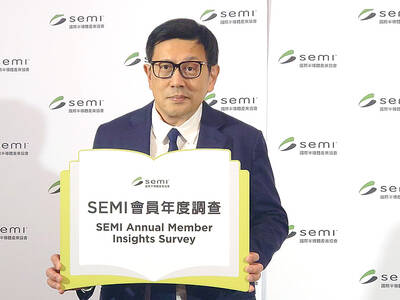
PRICE HIKES: The war in the Middle East would not significantly disrupt supply in the short term, but semiconductor companies are facing price surges for materials Taiwan’s semiconductor companies are not facing imminent supply disruptions of essential chemicals or raw materials due to the war in the Middle East, but surges in material costs loom large, industry association SEMI Taiwan said yesterday. The association’s comments came amid growing concerns that supplies of helium and other key raw materials used in semiconductor production could become a choke point after Qatar shut down its liquefied natural gas (LNG) production and helium output earlier this month due to the conflict. Qatar is the second-largest LNG supplier in the world and accounts for about 33 percent of global helium output. Helium is


 RSS
RSS