


Citi Commercial Bank Taiwan recently held a forum on “The Future of the Post-Pandemic Economy and New Supply Chain Insights”, attended by more than 100 clients in Taipei. With clients facing multiple complexities in the macro and operating environment, Citi economists discussed the three primary themes that are shaping the global economy with an impact on global supply chains - the extension of the U.S. interest rate hike cycle, China’s economic reboot, and geopolitics.
Helping clients navigate challenges and expand their businesses beyond borders, Citi Commercial Bank serves over 1,600 home-grown emerging corporate champions in Taiwan. Citi is also the largest foreign bank in the market, providing services to over 700 multinationals and more than 100 leading local corporations and financial institutions.
Michelle Yu, Head of Citi Commercial Bank Taiwan, said, “To effectively manage and mitigate risks from inflation and ongoing uncertainty in markets, mid-sized corporates need to prioritize diversifying their supply chains and leveraging digital platforms and processes to gain efficiencies. As demand and supply forces gradually re-adjust in the post-pandemic economy, companies need to reassess their operational and cash flow requirements to build in resilience and facilitate sustainable growth and development.”
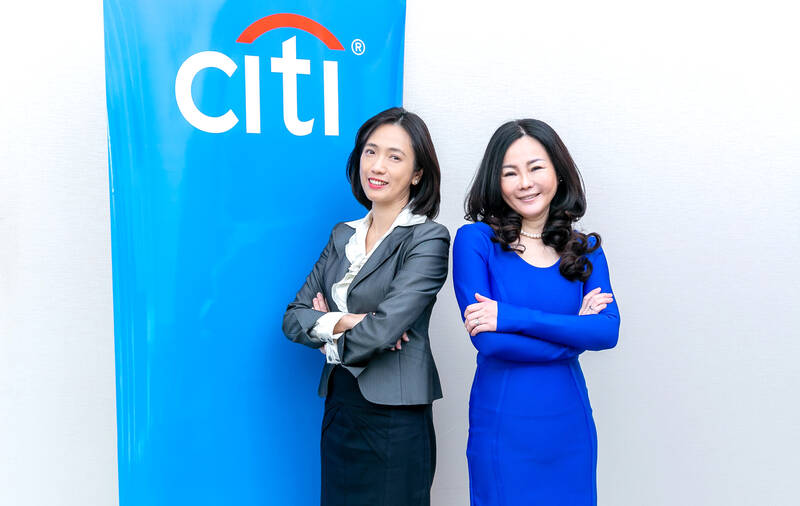
Speaking to clients, Citi economists noted inflation in the U.S. as a major concern. Separately, the impact of China’s reopening and its growth plans on the global economy remains to be seen, they added. Geopolitics, they said, continues to influence corporate investment as firms diversify their supply chains including manufacturing bases. For example, with the Russia-Ukraine war having led to rising energy prices and costs in Europe, firms are considering Asia, including ASEAN, as alternative manufacturing locations. Markets including Vietnam, India, Malaysia, Thailand and Indonesia are benefiting from this trend, they added.
As Taiwanese companies with operations overseas navigate these trends, including volatility in exchange rates, Citi has observed that an increasing number of businesses are considering the possibility of building a second or backup capital management center.
Vivian Cheng, Head of Treasury and Trade Solutions (TTS), Taiwan, emphasized, “Various factors have to be taken into account when establishing a capital management backup center including differences in tax, legal and accounting requirements across multiple markets and how to link funds across different geographies to meet operational needs. Digitizing processes and using digital financial services can also simplify operations for companies while creating flexibility.”
Citi’s Treasury and Trade Solutions business in Taiwan provides clients with services across cash management and working capital, liquidity management and trade financing. As mid-sized companies respond to the pressures and challenges of funding demands across their supply chain operations, the TTS business is helping clients by leveraging relevant products and services.
Virtual Card Accounts, for example, can be used for many payment needs while allowing companies to keep cash on hand when making payments, thereby deferring cash outflows. This includes payments for digital advertising, cloud services, domestic and international supply chains, online subscription services and events. In trade financing, Usance Letters of Credit provide companies with the flexibility to deploy their funds and extend payment periods as needed.
Citi also integrates trade financing services with digitalization and ESG trends so that companies can significantly reduce the time taken for manual verifications and processes. Sustainability-linked financing products and services further support clients who are advancing their sustainability journeys.

Elon Musk’s lieutenants have reached out to chip industry suppliers, including Applied Materials Inc, Tokyo Electron Ltd and Lam Research Corp, for his envisioned Terafab, early steps in an audacious and likely arduous attempt to break into the production of cutting-edge chips. Staff working for the joint venture between Tesla Inc and Space Exploration Technologies Corp (SpaceX) have sought price quotes and delivery times for an array of chipmaking gear, people familiar with the matter said. In past weeks, they’ve contacted makers of photomasks, substrates, etchers, depositors, cleaning devices, testers and other tools, according to the people, who asked not to

Taichung reported the steepest fall in completed home prices among the six special municipalities in the first quarter of this year, data compiled by Taiwan Realty Co (台灣房屋) showed yesterday. From January through last month, the average transaction price for completed homes in Taichung fell 8 percent from a year earlier to NT$299,000 (US$9,483) per ping (3.3m²), said Taiwan Realty, which compiled the data based on the government’s price registration platform. The decline could be attributed to many home buyers choosing relatively affordable used homes to live in themselves, instead of newly built homes in the city’s prime property market, Taiwan Realty

JET JUICE: The war on Iran’s secondary effects have seen fuel prices skyrocket, knocking flight schedules down to earth in return as airlines struggle with costs Airline passengers should brace for more irritation in the next few months as carriers worldwide cancel flights and ground planes to cope with stratospheric increases in jet-fuel prices. Dutch flag carrier KLM is the latest company to cut its schedule, saying on Thursday that it would scrap 80 return flights at Amsterdam’s Schiphol Airport in the coming month. That puts it in the same league as United Airlines Holdings Inc, Deutsche Lufthansa AG and Cathay Pacific Airways Ltd, which have all pruned itineraries to mitigate costs. Global capacity for next month has been reduced by about 3 percentage points, with all

Taiwan is attracting a growing number of foreign jobseekers as companies increasingly recruit overseas talent to ease labor shortages and expand global reach, recruitment platform 104 Job Bank (104人力銀行) said yesterday. More than 40,000 foreign nationals searched for jobs in Taiwan through the platform last year, a 28 percent increase from a year earlier, the company said. Malaysians accounted for the largest share of overseas jobseekers at 12.2 percent, followed by Indonesians at 11.9 percent and Vietnamese at 10.8 percent. Indonesian applicants surged more than 50 percent year-on-year, while Vietnamese jobseekers rose by more than 30 percent. Applicants from the


 RSS
RSS