


Taiwan Mobile Co (台灣大哥大) is exploring opportunities for collaboration with local crypto platforms, including potentially investing in one of the businesses.
The government-licensed wireless service provider is in early-stage talks with crypto firms about strategic partnerships, said three people familiar with the matter, who asked not to be identified as they were discussing private information.
Taipei-based XREX Inc (鏈科), which describes itself as a blockchain-enabled financial institution, is among the firms in the conversations, the people said.
Photo: CNA
No decisions have been made and a deal might not materialize, they added.
Taiwan Mobile said it is “open to any potential opportunities,” but did not comment further.
XREX cofounder Wayne Huang (黃耀文) declined to say whether his firm is in discussions with the nation’s second-largest telecom.
Huang said that he expects larger institutions to enter the Web3 sector as it matures and regulatory clarity emerges, adding that XREX looks forward to partnering with telecom enterprises to drive adoption.
“Synergies are high because such institutions own a sizeable, already-KYCed user base, while XREX offers domain expertise in blockchain and cybersecurity,” he said, using the acronym for know-your-customer rules.
The nebulous term “Web3” refers to a vision of a decentralized Internet built around blockchains, crypto’s underlying technology.
Taiwan Mobile might be “exploring the possibility of entering the fintech business, like what the Japanese telcos have been doing,” Bloomberg Intelligence senior industry analyst Marvin Lo (盧銘雄) said.
The digital-asset industry is trying to recover from a US$1.5 trillion market rout last year that sparked a series of high-profile bankruptcies, including the implosion of the FTX exchange. Crypto businesses shed thousands of jobs and venture capital funding dried up in the wake of the turmoil.
The US subsequently cracked down on crypto, but other jurisdictions such as Hong Kong and the United Arab Emirates are trying to create regulatory frameworks that can protect customers while attracting investment from digital-asset businesses.
Taiwan in March appointed the Financial Supervisory Commission as the chief regulator for virtual asset service providers. The commission is set to introduce detailed guidelines by the end of September.
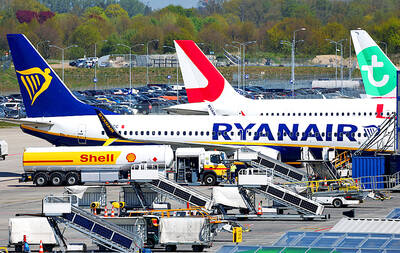
Ryanair, Transavia, Volotea and other low-cost airlines are feeling the financial pain from high jet fuel prices as a result of the Middle East war and are cutting flights. The closure of the Strait of Hormuz has taken a huge chunk of oil supplies off the market, sending the price of jet fuel soaring and triggering fears of shortages that could force airlines to cancel flights. Airlines are not waiting for a lack of supplies to react. “Travel alert: Airlines are cutting thousands of flights right now,” Travel Therapy host Karen Schaler said in an Instagram reel this past weekend.
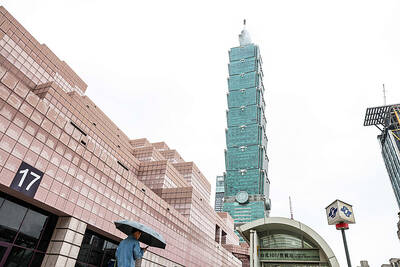
MANAGING RISKS: Taiwan has secured LNG sufficient to cover 95 percent of electricity demand for next month, UBS said, describing the government’s approach as proactive UBS Group AG has raised its forecast for Taiwan’s economic growth this year to 8 percent, up from 6.9 percent previously, and said expansion could reach as high as 8.6 percent if external energy shocks are avoided. The upgrade reflects a stronger-than-expected first-quarter performance and sustained momentum in artificial intelligence (AI)-driven exports, which UBS said are providing a firm foundation for growth despite geopolitical and energy risks. Taiwan’s GDP expanded 13.69 percent year-on-year in the first quarter, the fastest growth since the second quarter of 1987, the Directorate-General of Budget, Accounting and Statistics (DGBAS) reported on Thursday. On a seasonally
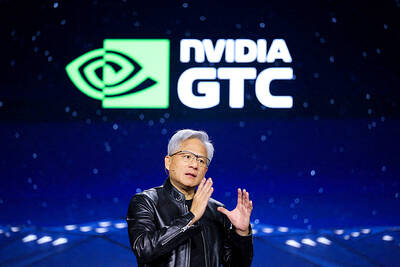
The list of Asian stocks that benefit from business partnership with Nvidia Corp is getting longer, as the region further integrates into the artificial intelligence (AI) chip giant’s business ecosystem. Just in the past week, South Korea’s LG Electronics Inc, Taiwan’s Nanya Technology Corp (南亞科技), as well as China’s Huizhou Desay SV Automotive Co (德賽西威) and Pateo Connect Technology Shanghai Corp (博泰車聯) have become the latest to rally on news of tie-ups, supply-chain participation or product collaboration with the US chip designer. Asian suppliers account for about 90 percent of Nvidia’s production costs, up from about 65 percent last year, data compiled
The Fair Trade Commission’s (FTC) ongoing review of Grab Holdings Ltd’s US$600 million acquisition of Foodpanda Taiwan’s operations, announced on March 23, has taken on fresh urgency as industry experts warn that the transaction could embed significant Chinese cybersecurity vulnerabilities into Taiwan’s digital infrastructure through Grab’s deep ties to autonomous-driving firm WeRide (文遠知行). Less than 16 months after the FTC blocked Uber Eats’ direct attempt to acquire Foodpanda Taiwan — citing potential combined market shares of 80 to 90 percent — the emergence of Grab as the buyer has prompted questions about whether the same competitive harm is simply being rerouted


 RSS
RSS