


In a two-hour presentation in Taiwan yesterday, Nvidia Corp CEO Jensen Huang (黃仁勳) unveiled a new batch of products and services tied to artificial intelligence (AI), looking to capitalize on a frenzy that has made his company the world’s most valuable chipmaker.
The wide-ranging lineup includes a new robotics system, gaming capabilities, advertising services and a networking technology.
Perhaps most central to his ambitions, Huang took the wraps off an AI supercomputer platform called DGX GH200 that would help tech companies create successors to ChatGPT. Microsoft Corp, Meta Platforms Inc and Alphabet Inc’s Google are expected to be among the first users.
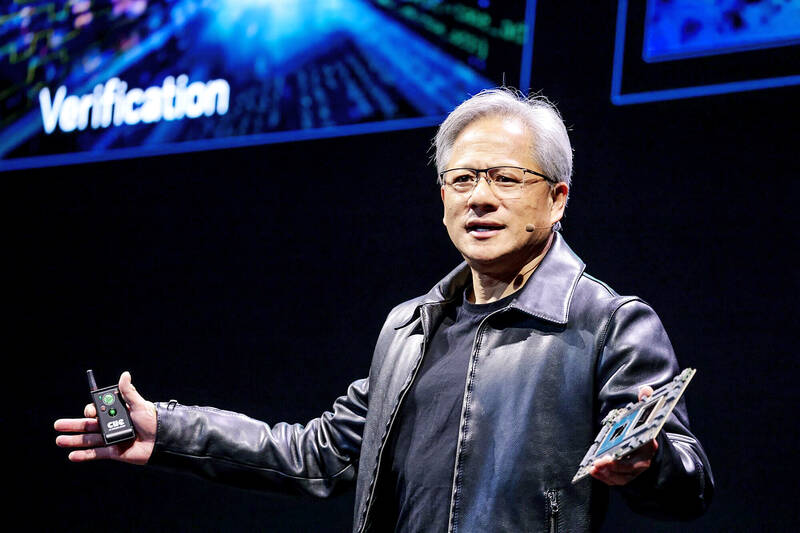
Photo: Cheng I-hwa, Bloomberg
“It’s too much,” Huang, 60, said near the end of his keynote at Computex Taipei. “I know it’s too much.”
The flurry of announcements underscores Nvidia’s shift from a maker of computer graphics chips to a company at the center of the AI boom.
Last week, Huang gave a stunning sales forecast for this quarter — almost US$4 billion above analysts’ estimates — fueled by demand for data center chips that handle AI tasks. That sent the stock to a record high and put Nvidia on the brink of a US$1 trillion valuation — a first for the chip industry.
In the presentation, Huang said that the traditional architecture of the tech industry is no longer improving fast enough to keep up with complex computing tasks.
To realize the full potential of AI, customers are increasingly turning to accelerated computing and graphics processing units, or GPUs, like those made by Nvidia, he said.
“We have reached the tipping point of a new computing era,” he said.
Huang also showed off the mind-bending capabilities of generative AI to take inputs in the form of words and then produce other media. In one case, he asked for music to match the mood of early morning. In another, he laid out a handful of lyrics and then used AI to transform the idea into a bouncy pop tune.
“Everyone is a creator now,” he said.
Huang showed how Nvidia is teaming up with WPP PLC to use AI and the metaverse to lower the cost of producing advertising. The company is releasing a networking offering that is designed to turbocharge the speed of information within data centers, and is even looking to change how people interact with video games. With its Nvidia ACE for Games service it aims to use AI to enliven background characters and give them more personality.
Huang also unveiled a new robotics platform that he said is aimed at helping Nvidia expand to industries beyond tech. In heavy industry, for example, he sees opportunities in using robots in factories and warehouses.
The DGX computer is another attempt to keep data center operators hooked on Nvidia’s products. Microsoft, Google and their peers are all racing to develop services similar to OpenAI Inc’s ChatGPT chatbot, and that requires plenty of computing power.
To satisfy this appetite, Nvidia is offering equipment for data centers and building its own supercomputers that customers can use.
That includes two new supercomputers in Taiwan, it added.
One of the biggest AI bottlenecks is the speed at which data moves within data centers. Nvidia’s Spectrum X, a networking system that uses technology acquired in the 2020 purchase of Mellanox Technologies, would address that issue, and the company is building a data center in Israel to demonstrate how effective it is.
Meanwhile, the WPP partnership aims to streamline the creation of advertising content.
The UK advertising titan is to use Nvidia’s Omniverse technology to create “virtual twins” of products that can be manipulated to customize ads and reduce the need for costly reshoots.
Nvidia’s original business was selling graphics cards to gamers, and it is returning to that world with the ACE offering. The service aims to address the problem of non-player characters (NPCs), the background figures that populate video games. NPCs typically give repetitive responses with scripted dialogue, and that limited range has made them the subject of ridicule in memes and even the Ryan Reynolds movie Free Guy.
Nvidia ACE listens to what a gamer says to a character, converts into text and then dumps that into a generative AI program to create a more natural, off-the-cuff response.
The Santa Clara, California-based company is testing the service and plans to add guardrails to ensure that responses are not inappropriate or offensive.
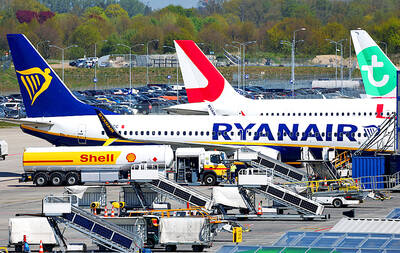
Ryanair, Transavia, Volotea and other low-cost airlines are feeling the financial pain from high jet fuel prices as a result of the Middle East war and are cutting flights. The closure of the Strait of Hormuz has taken a huge chunk of oil supplies off the market, sending the price of jet fuel soaring and triggering fears of shortages that could force airlines to cancel flights. Airlines are not waiting for a lack of supplies to react. “Travel alert: Airlines are cutting thousands of flights right now,” Travel Therapy host Karen Schaler said in an Instagram reel this past weekend.
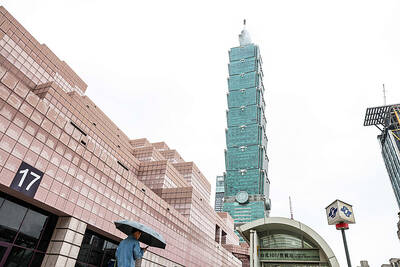
MANAGING RISKS: Taiwan has secured LNG sufficient to cover 95 percent of electricity demand for next month, UBS said, describing the government’s approach as proactive UBS Group AG has raised its forecast for Taiwan’s economic growth this year to 8 percent, up from 6.9 percent previously, and said expansion could reach as high as 8.6 percent if external energy shocks are avoided. The upgrade reflects a stronger-than-expected first-quarter performance and sustained momentum in artificial intelligence (AI)-driven exports, which UBS said are providing a firm foundation for growth despite geopolitical and energy risks. Taiwan’s GDP expanded 13.69 percent year-on-year in the first quarter, the fastest growth since the second quarter of 1987, the Directorate-General of Budget, Accounting and Statistics (DGBAS) reported on Thursday. On a seasonally
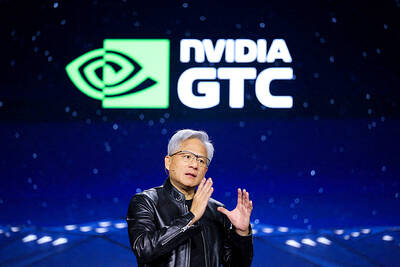
The list of Asian stocks that benefit from business partnership with Nvidia Corp is getting longer, as the region further integrates into the artificial intelligence (AI) chip giant’s business ecosystem. Just in the past week, South Korea’s LG Electronics Inc, Taiwan’s Nanya Technology Corp (南亞科技), as well as China’s Huizhou Desay SV Automotive Co (德賽西威) and Pateo Connect Technology Shanghai Corp (博泰車聯) have become the latest to rally on news of tie-ups, supply-chain participation or product collaboration with the US chip designer. Asian suppliers account for about 90 percent of Nvidia’s production costs, up from about 65 percent last year, data compiled

The Fair Trade Commission’s (FTC) ongoing review of Grab Holdings Ltd’s US$600 million acquisition of Foodpanda Taiwan’s operations, announced on March 23, has taken on fresh urgency as industry experts warn that the transaction could embed significant Chinese cybersecurity vulnerabilities into Taiwan’s digital infrastructure through Grab’s deep ties to autonomous-driving firm WeRide (文遠知行). Less than 16 months after the FTC blocked Uber Eats’ direct attempt to acquire Foodpanda Taiwan — citing potential combined market shares of 80 to 90 percent — the emergence of Grab as the buyer has prompted questions about whether the same competitive harm is simply being rerouted


 RSS
RSS