


Hon Hai Precision Industry Co (鴻海精密) and Vedanta Ltd are to invest US$19.5 billion under pacts signed yesterday to set up semiconductor and display production plants in Gujarat, the home state of Indian Prime Minister Narendra Modi.
Reuters was first to report on Monday that the joint venture obtained subsidies, including on capital expenditure and electricity, from Gujarat to set up units near the western state’s largest city, Ahmedabad.
The showpiece investment of 1.54 trillion rupees (US$19.5 billion), which Gujarat said was the largest ever by any group in an Indian state, comes ahead of key local elections in the state where Modi’s ruling group is facing a tough challenge from opposition parties.
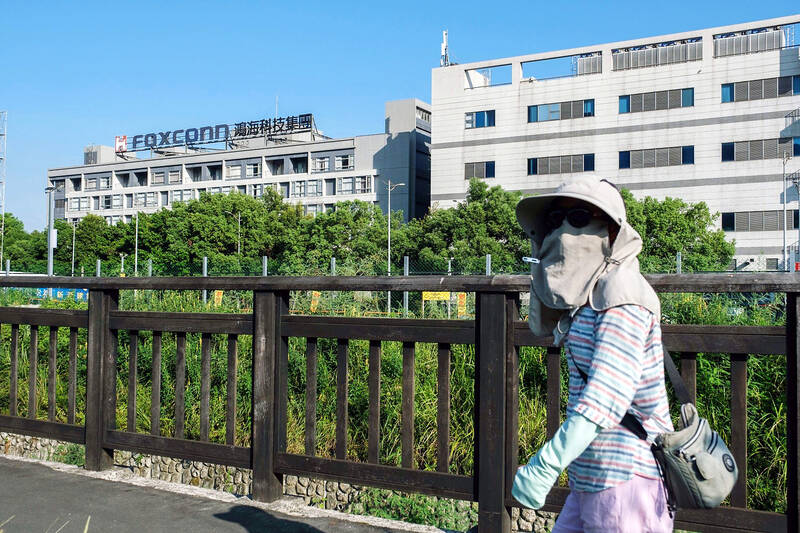
Photo: Lam Yik Fei, Bloomberg
The companies yesterday said the Vedanta-Hon Hai joint venture project would create more than 100,000 jobs in Gujarat.
Most of the world’s chip output is limited to a few countries like Taiwan and late entrant India is now luring companies to “usher in a new era in electronics manufacturing” as it seeks for ways to have seamless access to chips.
The Vedanta venture aims to start manufacturing display and chip products within two years, Vedanta chairman Anil Agarwal told a public event in Gujarat, where an agreement was signed with state officials.
“India’s own Silicon Valley is a step closer now,” Agarwal wrote on Twitter after the event.
Vedanta is to set up a display manufacturing unit with an investment of 945 billion rupees and separate chip-related production units by investing 600 billion rupees, the state government said in its statement.
Vedanta and Hon Hai would work closely with the state government to establish high-tech clusters with requisite infrastructure, including land, and semiconductor-grade water and power, the statement added.
Gujarat pipped India’s richest state, Maharashtra, in a close race to win the plant location.
TECHNICAL PARTNER
Hon Hai, known as Foxconn Technology Group (富士康科技集團) outside of Taiwan, is acting as the technical partner, while oil-to-metals conglomerate Vedanta is financing the project.
Hon Hai said in a statement that the state’s infrastructure and the Indian government’s support “increases confidence in setting up a semiconductor factory.”
The Indian government has said it would expand incentives beyond an initial US$10 billion plan for those investing in semiconductor manufacturing, as it aims to become a key player in the global supply chain for chips.
Vedanta is the third company to announce a chip plant location in India after India Semiconductor Manufacturing Co and Singapore-based IGSS Ventures Pte Ltd, which are setting up in the southern states Karnataka and Tamil Nadu respectively.
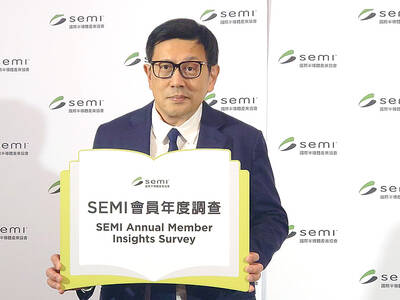
PRICE HIKES: The war in the Middle East would not significantly disrupt supply in the short term, but semiconductor companies are facing price surges for materials Taiwan’s semiconductor companies are not facing imminent supply disruptions of essential chemicals or raw materials due to the war in the Middle East, but surges in material costs loom large, industry association SEMI Taiwan said yesterday. The association’s comments came amid growing concerns that supplies of helium and other key raw materials used in semiconductor production could become a choke point after Qatar shut down its liquefied natural gas (LNG) production and helium output earlier this month due to the conflict. Qatar is the second-largest LNG supplier in the world and accounts for about 33 percent of global helium output. Helium is
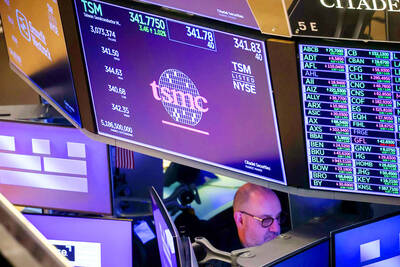
STRONG INTEREST: Analysts have pointed to optimism in TSMC’s growth prospects in the artificial intelligence era as the cause of the rising number of shareholders The number of people holding shares of chipmaker Taiwan Semiconductor Manufacturing Co (TSMC, 台積電) hit a new high last week despite a decline in its stock price, the Taiwan Depository and Clearing Corp (TDCC, 台灣集保) said. The number of TSMC shareholders rose to 2.46 million as of Friday, up 75,536 from a week earlier, TDCC data showed. The stock price fell 1.34 percent during the same week to close at NT$1,840 (US$57.55). The decline in TSMC’s share price resulted from volatility in global tech stocks, driven by rising international crude oil prices as the war against Iran continues. Dealers said
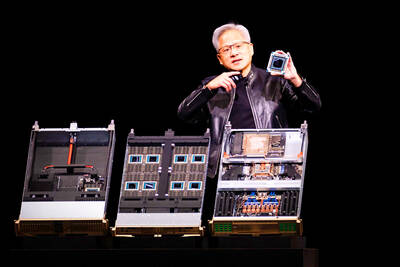
DOMESTIC COMPONENT: Huang identified several Taiwanese partners to be a key part of Nvidia’s Vera Rubin supply chain, including Asustek, Hon Hai and Wistron Nvidia Corp chief executive officer Jensen Huang (黃仁勳), addressing crowds at the company’s biggest annual event, unveiled a variety of new products while predicting that its flagship artificial intelligence (AI) processors would help generate US$1 trillion in sales through next year. During a two-and-a-half-hour keynote address, Huang announced plans to push deeper into central processing units (CPUs) — Intel Corp’s home turf — and introduced semiconductors made with technology acquired from start-up Groq Inc. The company even said it was developing chips for data centers in outer space. At the heart of Huang’s speech was the message that demand for computing power
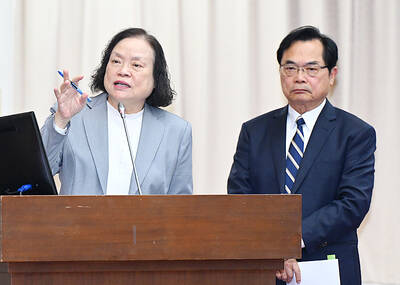
OPTIMISTIC: Inflation still has a chance of remaining below the central bank’s 2 percent alert level, as Taiwan’s economy is resilient with healthy exports, the NDC minister said Taiwan’s inflation could exceed 2 percent this year if oil prices continue to surge amid escalating tensions in the Middle East, prompting the government to reassess its economic outlook, the Directorate-General of Budget, Accounting and Statistics (DGBAS) said yesterday. DGBAS Minister Chen Shu-tzu (陳淑姿) told lawmakers at a meeting of the legislature’s Finance Committee that the agency’s earlier growth forecast of 1.68 percent in the consumer price index (CPI) and 7.71 percent for GDP this year did not account for the ongoing Middle East conflict and would need revision, if tensions persist. The previous forecast assumed an average international crude price of


 RSS
RSS