


Cathay Life Insurance Co (國泰人壽) expects interest payments from Russia to be late, as Moscow is planning a new payment method and negotiating with custodian banks and international entities such as Brussels-based Euroclear, the company said yesterday.
Many agencies have been involved in the negotiations, and some need to reconfirm the identities of the recipients, Cathay Life executive vice president Lin Chao-ting (林昭廷) said by telephone.
“We expect to receive the payment in rubles,” Lin said.
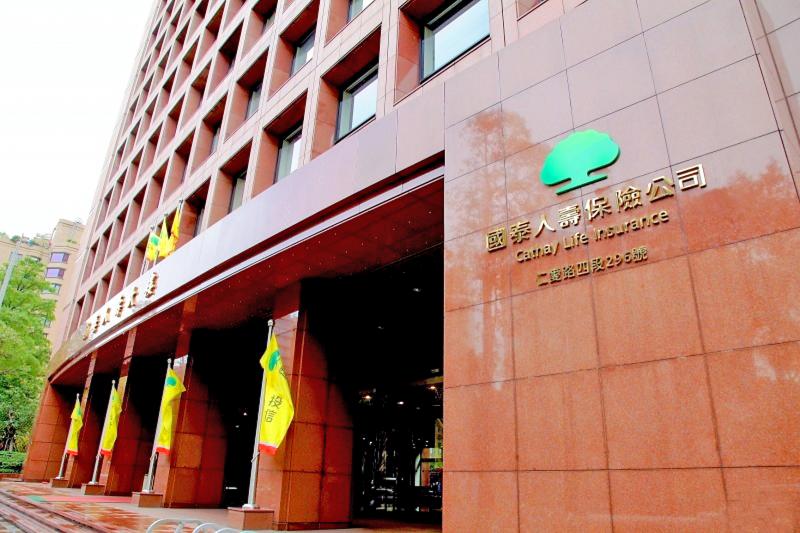
Photo: Allen Wu, Taipei Times
“We would not risk foreign-exchange losses, because the ruble has recently appreciated against the US dollar,” he added.
Russia is willing to make the payments, but cannot do so because of sanctions imposed by the West over its invasion of Ukraine, Lin said.
Taiwan’s largest life insurer has no plans to recognize more credit losses for its exposure to Russian bonds, after it booked credit losses of NT$2.6 billion (US$87.72 million) in March, as it expected to receive no interest payments from Russia within the next year, he said.
Seven local life insurance companies have not received any interest payments on their Russian bonds since the end of last month, the Financial Supervisory Commission told a news conference in Taipei yesterday.
Life insurers cannot receive interest payments in US dollars or rubles after an extension for Russia to pay bondholders through international banks was closed on May 25, Insurance Bureau Deputy Director Lin Chih-hsien (林志憲) said.
The commission did not disclose the combined amount of the overdue interest payments, saying only that, as of yesterday, no insurer had recognized more credit losses for their exposure to Russian bonds.
Life insurers’ combined exposure to Russia slid 30 percent to NT$103.5 billion as of the end of last month, from NT$147 billion at the end of last year, commission data showed.
In related news, Moody’s ratings agency has confirmed that Russia defaulted on its foreign debt for the first time in a century, after bondholders did not receive US$100 million in interest payments.
“On 27 June, holders of Russia’s sovereign debt had not received coupon payments on two eurobonds worth US$100 million by the time the 30-calendar-day grace period expired, which we consider an event of default under our definition,” Moody’s said.
Moody’s warned that more defaults “are likely.”
After the US closed the last payment loophole last month, Russia said it would pay debt in rubles that could be converted into foreign currency, using a Russian financial institution as a paying agent.
However, Moody’s said it “would likely treat payments in rubles as a default for bonds that do not allow for such redenomination in the contractual terms.”
Additional reporting by AFP


ENERGY ISSUES: The TSIA urged the government to increase natural gas and helium reserves to reduce the impact of the Middle East war on semiconductor supply stability Chip testing and packaging service provider ASE Technology Holding Co (日月光投控) yesterday said it planned to invest more than NT$100 billion (US$3.15 billion) in building a new advanced chip testing facility in Kaohsiung to keep up with customer demand driven by the artificial intelligence (AI) boom. That would be included in the company’s capital expenditure budget next year, ASE said. There is also room to raise this year’s capital spending budget from a record-high US$7 billion estimated three months ago, it added. ASE would have six factories under construction this year, another record-breaking number, ASE chief operating officer Tien Wu
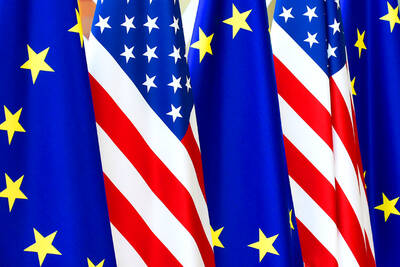
The EU and US are nearing an agreement to coordinate on producing and securing critical minerals, part of a push to break reliance on Chinese supplies. The potential deal would create incentives, such as minimum prices, that could advantage non-Chinese suppliers, according to a draft of an “action plan” seen by Bloomberg. The EU and US would also cooperate on standards, investments and joint projects, as well as coordinate on any supply disruptions by countries like China. The two sides are additionally seeking other “like-minded partners” to join a multicountry accord to help create these new critical mineral supply chains, which feed into

For weeks now, the global tech industry has been waiting for a major artificial intelligence (AI) launch from DeepSeek (深度求索), seen as a benchmark for China’s progress in the fast-moving field. More than a year has passed since the start-up put Chinese AI on the map in early last year with a low-cost chatbot that performed at a similar level to US rivals. However, despite reports and rumors about its imminent release, DeepSeek’s next-generation “V4” model is nowhere in sight. Speculation is also swirling over the geopolitical implications of which computer chips were chosen to train and power the new
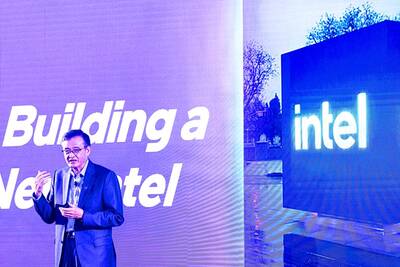
Intel Corp is joining Elon Musk’s long-shot effort to develop semiconductors for Tesla Inc, Space Exploration Technologies Corp and xAI, marking a surprising twist in the chipmaker’s comeback bid. Intel would help the Terafab project “refactor” the technology in a chip factory, the company said on Tuesday in a post on X, Musk’s social media platform. That is a stage in the development process that typically helps make chips more powerful or reliable. The chipmaker’s shares jumped 4.2 percent to US$52.91 in New York trading on Tuesday. The Terafab project is a grand plan by Musk to eventually manufacture his own chips for


 RSS
RSS