


The travel industry has been seeking new ways to generate sales in the hopes of surviving the COVID-19 pandemic, which has forced the suspension of most overseas tours, putting a great financial burden on tour operators.
Phoenix Tours International Inc (鳳凰國際旅行社) said that it would diversify its business by opening a gym next month.
Dubbed “Fitnexx,” the gym would make more flexible use of its space, with only four customers allowed to use its facilities per hour, at a price of NT$700 per person, the travel agency said.
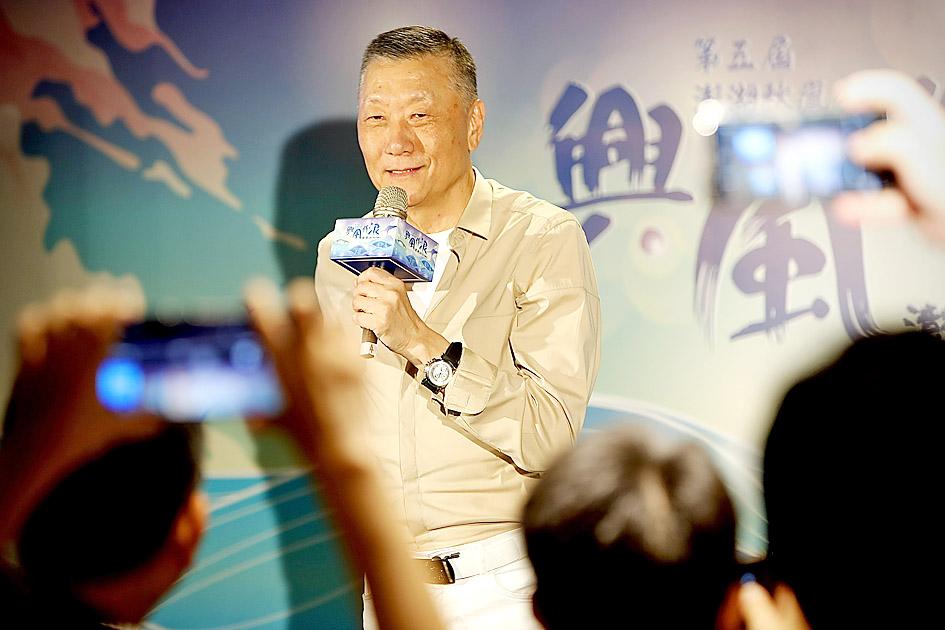
Photo: CNA
The financial gap left by the halt of international travel is unlikely to be solved quickly by operating domestic tours instead, Phoenix general manager Benjamin Pien (卞傑民) said.
The industry “will not see a full recovery as fast as it experienced after the SARS epidemic,” Pien said.
Phoenix has been tapping into the dining and accommodation markets in the past few years to diversify its investments and create more resources, he said.
Lion Travel Service Co (雄獅旅行社) is also making adjustments by exploring the lifestyle market, chairman Jason Wang (王文傑) said.
The company, which has closed 12 of its 80 retail stores so far this year, would continue downsizing to 50, while opening outlets that can be better tailored to customers’ needs, he said.
Lion Travel, which used to focus on tour packages, plans to work with local governments, restaurants and souvenir providers to cater more to the domestic travel service market, president Andy Yu (游國珍) said.
It plans to relocate some outlets in luxurious downtown districts to transportation hubs and scenic areas, which would reduce its rental payments by 80 percent, Yu said.
Lion Travel’s move is in line with the expectations of Tourism Bureau Director-General Chang Shi-chung (張錫聰), who said the industry is changing its operating style to remain competitive.
One of Lion Travel’s major initiatives would be round-the-nation trips with Dream Cruises (星夢郵輪) starting next month. It would provide four to six-day tours departing from Keelung and calling at Tainan, Penghu, Kaohsiung and Hualien.
The company would offer more in-depth and customized domestic tours, such as photography and biking tours, Yu said.
Lion Travel expects to take two years to complete the shift in operations, he said.
During that time, the travel market would depend on domestic demand and the company plans to expand its coach fleet from 60 to 100 by the end of this year, he added.
A transformation of the industry is necessary and travel agencies must have the ability to develop unique travel packages and provide knowledge-intensive input, said Chen Chia-yu (陳家瑜) an associate professor at Shih-Hsin University’s department of tourism.
Tourism Bureau data showed that in the first eight months of the year, 18 travel agencies applied to suspend services and 30 disbanded, which together accounted for 1.5 percent of the total number of travel agencies in the nation.
Comparative figures for the two categories for last year were 16 and 25 companies respectively, the data showed.

UNPRECEDENTED PACE: Micron Technology has announced plans to expand manufacturing capabilities with the acquisition of a new chip plant in Miaoli Micron Technology Inc unveiled a newly acquired chip plant in Miaoli County yesterday, as the company expands capacity to meet growing demand for advanced DRAM chips, including high-bandwidth memory chips amid the artificial intelligence boom. The plant in Miaoli County’s Tongluo Township (銅鑼), which Micron acquired from Powerchip Semiconductor Manufacturing Corp (力積電) for US$1.8 billion, is expected to make a sizeable capacity contribution to the company from fiscal 2028, the company said in a statement. It would be an extended production site of Micron’s large-scale manufacturing hub in Taichung, the company said. As the global semiconductor industry is racing to reach US$1 trillion

Singapore-based ride-hailing and delivery giant Grab Holdings Ltd has applied for regulatory approval to acquire the Taiwan operations of Germany-based Delivery Hero SE's Foodpanda in a deal valued at about US$600 million. Grab submitted the filing to the Fair Trade Commission on Friday last week, with the transaction subject to regulatory review and approval, the company said in a statement yesterday. Its independent governance structure would help foster a healthy and competitive market in Taiwan if the deal is approved, Grab said. Grab, which is listed on the NASDAQ, said in the filing that US-based Uber Technologies Inc holds about 13 percent of

Taiwan’s food delivery market could undergo a major shift if Singapore-based Grab Holdings Ltd completes its planned acquisition of Delivery Hero SE’s Foodpanda business in Taiwan, industry experts said. Grab on Monday last week announced it would acquire Foodpanda’s Taiwan operations for US$600 million. The deal is expected to be finalized in the second half of this year, with Grab aiming to complete user migration to its platform by the first half of next year. A duopoly between Uber Eats and Foodpanda dominates Taiwan’s delivery market, a structure that has remained intact since the Fair Trade Commission (FTC) blocked Uber Technologies Inc’s

Memory chip stocks extended their losses yesterday after Alphabet Inc’s Google publicized research that could allow more efficient use of the storage needed for artificial intelligence (AI) development. SK Hynix Inc and Samsung Electronics Co, South Korean leaders in the market, fell more than 6 percent and about 5 percent respectively in Seoul. In the US, Micron Technology Inc, Western Digital Corp and Sandisk Corp slid more than 2 percent in pre-market trading, after they all closed lower on Wednesday. Memory companies have been on a tear in recent months as the rapid development of AI infrastructure triggered a spike in chip


 RSS
RSS