


Taiwan’s food delivery market could undergo a major shift if Singapore-based Grab Holdings Ltd completes its planned acquisition of Delivery Hero SE’s Foodpanda business in Taiwan, industry experts said.
Grab on Monday last week announced it would acquire Foodpanda’s Taiwan operations for US$600 million. The deal is expected to be finalized in the second half of this year, with Grab aiming to complete user migration to its platform by the first half of next year.
A duopoly between Uber Eats and Foodpanda dominates Taiwan’s delivery market, a structure that has remained intact since the Fair Trade Commission (FTC) blocked Uber Technologies Inc’s proposed acquisition of Foodpanda in December 2024, citing concerns that the combined entity would control about 90 percent of the market.

Photo: CNA
Grab’s entry would significantly alter competition, experts said.
Grab’s strength in Southeast Asia lies in its integrated ecosystem, which combines food delivery, ride-hailing and digital payments, along with partnerships in telecommunications and financial services, Taiwan Mobile Co (台灣大哥大) president Jamie Lin (林之晨) said.
If replicated in Taiwan, its model could shift competition beyond delivery speed and pricing to broader platform ecosystems, including service integration, user engagement and data accumulation, Lin said.
However, analysts cautioned that Taiwan presents structural challenges.
The relatively small market size and dense concentration of food and beverage outlets make delivery services highly substitutable, market analyst Lee Shi-chen (李世珍) said.
In addition, a new law passed in January to bolster protections for delivery workers is expected to increase operating costs.
These factors leave little room for new entrants, Lee said, adding that Grab’s decision to enter through acquisition reflects these constraints.
Building a full-service ecosystem in Taiwan would be difficult, given strong local competition in ride-hailing and other sectors, he said.
Grab might need to rely on price incentives to gain market share, while also investing heavily to attract both consumers and merchants, he added.
Delivery platforms must balance three key factors: consumer prices, merchant commission fees and delivery worker pay, Lee said.
In the short term, increased competition could lead to discounts and promotions that benefit consumers, experts said.
However, long-term sustainability would depend on user experience, pricing strategies, and the effectiveness of customer service and dispute-resolution mechanisms.
Analysts highlighted several factors to watch, including the potential for price competition, the pace of Grab’s service expansion and risks related to platform integration. Any disruption during the transition — such as unstable ordering systems or poor user experience — could give rivals an opportunity to gain market share.
Meanwhile, Grab yesterday responded to concerns over its shareholder structure following the acquisition announcement.
Questions have been raised about Uber Technologies’ “indirect investment” in Taiwan’s delivery market through Grab, as the US company is its largest institutional shareholder with a roughly 13.1 percent stake.
China-based ride-hailing firm Didi Chuxing (滴滴出行) is among Grab’s investors, raising concerns about potential Chinese capital involvement.
However, Grab said that the voting rights of Uber and Didi Chuxing are limited to less than 4 percent and 1.4 percent respectively.
It added that Uber does not participate in Grab’s operations, and that its nominated board members have recused themselves from decisions related to the Taiwanese market.
FTC Acting Chairman Andy Chen (陳志民) on Thursday said that regulators would assess the deal based on actual control, including the influence associated with Uber’s equity stake.
The commission would also look into concerns of “indirect investment” and remain alert to potential market concentration or abuse, Chen said.

Cairo’s new monorail slices across the city skyline, running above the familiar chaos of blaring horns and aging buses’ exhaust fumes that mark rush hour below. The US$4.5 billion monorail, opened this month, is among Egypt’s most prominent new transport projects, part of a debt-funded infrastructure drive criticized for sapping state finances while bringing limited benefits to most of the country’s 109 million people. “It feels like you’re in a different country,” said Ramy Sayed, a restaurant manager, aboard a driverless Innovia 300 train. “No noise, no traffic, we’re not used to this.” The eastern line runs 56km from the bustling middle-class
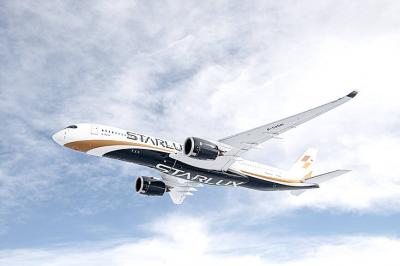
Starlux Airlines Co (星宇航空) today unveiled a long-haul network expansion plan at a shareholders’ meeting in Taipei, including direct flights to Barcelona, Spain, and Zurich, Switzerland, as well as a service connecting Taipei, Sydney and New Zealand. Starlux is to become the first Taiwanese carrier to offer non-stop services to the two European cities, while the inaugural oceanic route is expected to expand transit opportunities within the Australia-New Zealand market, Starlux said. Flight services to Chicago, Dallas, Washington and New York are under evaluation, the airline added. Prior to the shareholders’ meeting, the airline earlier this year announced that it would be

Taiwanese prosecutors suspect that three people successfully smuggled at least one shipment of Nvidia Corp artificial intelligence (AI) chips to China after first exporting them to Japan, people familiar with the matter said. The trio was detained last week by the Keelung District Prosecutors’ Office for allegedly falsifying documents related to exports of Super Micro Computer Inc servers containing advanced Nvidia chips, which the US has barred from sale to China without a license from Washington. The move marked Taiwan’s first public crackdown on AI chip diversion after years of pressure from the US to take a more active role in curtailing
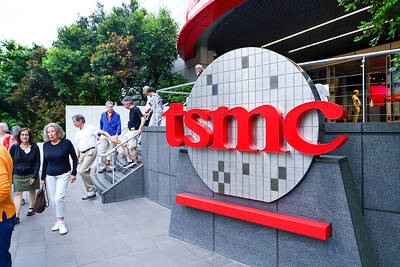
Taiwan Semiconductor Manufacturing Co (TSMC, 台積電) employee bonuses are likely to grow more than 30 percent this year, in line with the past few years as the company’s profits continue to set new records, an anonymous source cited TSMC chairman C.C. Wei (魏哲家) as saying yesterday. TSMC, the world’s largest contract chipmaker, is committed to taking care of its workers, the source said, citing Wei’s meeting with employees yesterday morning. Wei also expressed gratitude to employees for their contribution to the company’s improving bottom line, the source added. Since 2023, TSMC’s employee bonuses have grown at an annual rate of


 RSS
RSS