


Memory chip stocks extended their losses yesterday after Alphabet Inc’s Google publicized research that could allow more efficient use of the storage needed for artificial intelligence (AI) development.
SK Hynix Inc and Samsung Electronics Co, South Korean leaders in the market, fell more than 6 percent and about 5 percent respectively in Seoul. In the US, Micron Technology Inc, Western Digital Corp and Sandisk Corp slid more than 2 percent in pre-market trading, after they all closed lower on Wednesday.
Memory companies have been on a tear in recent months as the rapid development of AI infrastructure triggered a spike in chip prices, driving up profit and stocks. Four hyperscalers, led by Amazon.com Inc and Google, plan to spend about US$650 billion this year to build data centers, scooping up Nvidia Corp’s AI accelerators and related memory chips.

Photo: Bhawika Chhabra, Reuters
SK Group chairman Chey Tae- won recently said that the memory chip crunch will last until 2030.
But Google’s new technology could alleviate some of the shortages, potentially pushing down prices. The company publicized the research on X this week, although it had originally come out last year.
Google said the TurboQuant technology can cut the amount of memory required to run large language models by at least a factor of six, reducing the overall cost of training AI. Investors may harbor concerns that that could reduce hyperscalers’ need for memory, alleviating the shortages that have lifted prices of smartphones and consumer electronics.
Morgan Stanley analyst Shawn Kim wrote in a note the impact on the industry should be more positive because it affects a critical bottleneck. It improves the efficiency of what’s known as the key value cache used for inference, or running AI models.
“If models can run with materially lower memory requirements without losing performance, the cost of serving each query drops meaningfully, resulting in more profitable AI deployment,” he wrote.
Like many of the bulls in the AI industry and analyst community, he cited a theory known as the Jevons Paradox. It’s a concept from an English economist about coal production stating that the more efficient technology becomes, the more demand will rise.
The 19th century premise was also cited by JPMorgan Chase & Co and Citigroup Inc. JPMorgan analysts said that investors may take profits on the news, but there’s no near-term threat to memory consumption.
The tech community also brought up the Jevons Paradox last year when DeepSeek’s (深度求索) low-cost AI model sparked fears of a reduced need for more advanced technology.
TurboQuant is positive for hyperscalers given the return on investment opportunity, Morgan Stanley’s Kim wrote. It may be beneficial for memory makers in the longer term, as “a lower cost per token can also lead to higher product adoption demand.”
The Google development may make “little difference to demand given the extreme supply constraints,” Ortus Advisors Pte Ltd analyst Andrew Jackson wrote in a note on the Smartkarma platform.

NEW MARKET: The partnership opens up India to the Dutch company, which already has a strong hold in the semiconductor market of South Korea, Taiwan and China ASML Holding NV entered into a partnership agreement with Tata Electronics Pvt Ltd aimed at ramping up India’s goal to develop domestic chip-manufacturing capabilities. The Dutch company’s technology would help power Tata Electronics’ planned 300 millimeter (mm) semiconductor foundry in Gujarat, according to a joint statement from the two companies on Saturday. The signing of a memorandum of understanding coincides with a visit by Indian Prime Minister Narendra Modi to the Netherlands, which is looking to deepen bilateral relations with New Delhi. ASML, whose top customers include Taiwan Semiconductor Manufacturing Co (台積電) and Samsung Electronics Co, makes lithography machines that can print
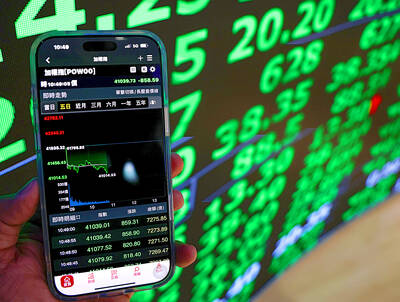
PORTFOLIO REBALANCING: The adjustments in three global equity indices reflect rising investor appetite for semiconductor and artificial intelligence-related stocks Taiwan’s weighting in major global equity indices compiled by MSCI Inc is to rise modestly following the latest quarterly review, underscoring the market’s expanding role in emerging-market portfolios, as global investors continue to favor the nation’s technology sector. Taiwan’s weighting in the MSCI Emerging Markets Index is to increase by 0.30 percentage points to 23.76 percent, after the changes take effect at the close of the May 29 session. Its weighting in the MSCI All-Country Asia ex-Japan Index is to rise 0.37 percentage points to 27.16 percent, while that in the MSCI All Country World Index is to edge up slightly to
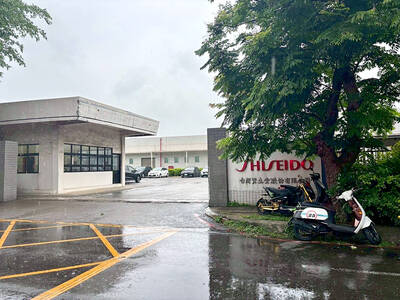
The Hsinchu County Government’s Labor Affairs Department yesterday said that it has received a plan from cosmetics brand Taiwan Shiseido Co (台灣資生堂) detailing mass layoffs at its plant in Hukou Township (湖口). While the labor authorities did not disclose the number of employees to be laid off, Japanese news media earlier in the day reported that the closure of the company’s factory in Hukou would result in 170 employees losing their jobs. Shiseido followed the law by reporting its layoff plan, the department said, adding that authorities would closely monitor negotiations between the management and affected employees and step in if any
Hon Hai Precision Industry Co (鴻海精密) on Tuesday confirmed a cyberattack targeting some of its North American facilities, but said the affected factories were gradually returning to normal. The company, known globally as Foxconn Technology Group (富士康科技集團), said that its cybersecurity team “activated the response mechanism and implemented operational measures to ensure the continuity of production and delivery.” “The affected factories are resuming normal production,” the company said in a statement. Hon Hai had previously described it as a “technical issue,” when news of the cyberattack first surfaced. The confirmation followed media reports of a large-scale information technology system incident that broke out at


 RSS
RSS