


In Mexico’s burgeoning start-up scene, publicity is the last thing many entrepreneurs want.
Unlike plenty of their PR-hungry counterparts in Silicon Valley, Mexican start-up founders often decline media interviews, avoid public announcements and suppress details of financial success.
One big reason: They do not want to attract criminals.
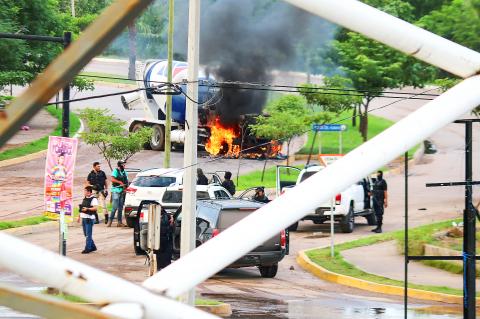
Photo: Reuters
“You are getting yourself in a position where you could be subject to ransom,” entrepreneur Ulises Vazquez said of the drug-fueled violence and kidnappings that have scarred society.
“You want to have a low profile to be able to continue with your freedom,” he added.
Vazquez twice kept quiet on major start-up milestones: when he sold a stake in his advertising agency Ergos in 2010, and when the acquiring firm, Matomy, went public in 2014.
Although understandable, the low-profile approach is holding back Mexico’s technology industry, investors and experts said, making it harder to attract talent and money, especially from abroad.
Mexico’s tech sector last year drew only US$175 million in venture capital, according to the Association for Private Capital Investment in Latin America.
That was dwarfed by Brazil, the region’s powerhouse, which received US$1.3 billion, but also trailed Colombia, which drew US$334 million in venture capital, although its economy is worth about a quarter of Mexico’s.
Reuters spoke with two dozen investors and start-up founders who acknowledged that security concerns were widespread in the tech community and had even pushed some entrepreneurs abroad.
Illustrating the concern, most declined to speak on the record.
Without publicity, entrepreneurs struggle to recruit the best, bring in money and inspire the next generation, said Daniel Green, a partner at Silicon Valley law firm Gunderson Dettmer LLP who advises start-ups across Latin America.
“It certainly stunts the growth,” he said.
To be sure, violence is rampant elsewhere in Latin America, from drug-torn Colombia to crime-ridden Brazil.
However, the issue is especially acute in Mexico due to an escalation of violence from more than a decade ago, when the government sent armed forces into the streets to crack down on the cartels. Around the same time, drug gangs began branching into extortion.
A string of high-profile kidnappings and murders, including the death of an executive at broadcaster Televisa S.A.B. killed on his bike during a shootout in 2017, rattled the elite.
That has generated business for executive protection firms, who provide bullet-proof vehicles, GPS trackers, armed bodyguards and real-time monitoring.
For start-ups, the fears might be more perception than reality: There are no known cases of tech entrepreneurs being attacked after sharing their company’s success.
Some do still announce their deals.
Bismarck Lepe, chief executive of software company Wizeline, said his peers are being over-cautious, despite the horrors Mexico has suffered.
“Communicating more about your success helps the community, helps the company, helps the investors,” said Lepe, who divides his time between Silicon Valley and Mexico.
“As long as you are not involved in the drug trade, nothing is going to happen to you,” he said.
Mexican entrepreneur Domingo Guerra, who founded cybersecurity start-up Appthority in California, said he is not generally worried about safety when he returns home.
However, he did feel uncomfortable after announcing a funding round.
“Folks were asking how I was going to spend the money, what I was going to buy first,” said Guerra, now a senior director at cybersecurity giant Symantec Corp after the acquisition of his company last year.
“I spent a lot of time explaining that really none of that money was for the founders,” he said.
One start-up founder, assigned a US Army veteran trained in anti-kidnapping maneuvers by a firm acquiring his company, became fed up with having to take a different route home every day and eventually relocated with his family to the US.
Another who founded his start-up in the San Francisco area said American colleagues were frustrated by his quiet approach due to fears for his relatives back in Mexico.
“There’s an unofficial tax for operating and living in Mexico — and that tax is living at risk,” he said.
Some entrepreneurs have simply faded from public view.
Adolfo Babatz, the chief executive of Mexican payments company PayClip Inc, was once a staple of the local business press. Last year, he gave at least five published interviews and graced the cover of business magazine Expansion beside the headline: “Think big.”
He took a different tack this year after Softbank Group pumped about US$20 million into his company, making him among the first Mexican entrepreneurs to win the Japanese conglomerate’s stamp of approval. Babatz did not announce the deal and appears to have given few interviews so far this year.
Softbank, which plans to pour US$5 billion into Latin America, declined to comment.
Some entrepreneurs advocate workarounds.
Gabriel Leon, who recently launched financial technology company Oyster Financial Inc in Mexico, plans to disclose company funding rounds on an online database, rather than via the media.
“We never talk about money,” he said. “We talk about the product we’re building, the opportunity in the market, our competitors. That’s how you get attention from investors.”
Some entrepreneurs said the political climate, with leftist Mexican President Andres Manuel Lopez Obrador frequently crusading against the elites, has made it an additionally awkward time to tout multimillion deals in a culture that frowns on bragging.
Sergio Romo, chief executive of Mexican scooter start-up Grin, followed a similar trajectory to Babatz after a US$45.7 million funding round last year.
Earlier this year, Romo, who was known for tooling around the capital in his company’s neon green scooters, left a meeting with Mexico City regulators in a large sports utility vehicle with tinted windows, according to someone who participated in the meeting.
Romo told Reuters that was unusual and he still uses scooters, but acknowledged keeping a low profile was advisable.
“People outside the start-up world tend to think that founders who raise a lot of money become rich themselves, but sometimes that’s not the case,” he said. “We are just founders trying to make it happen.”
Once active on Twitter, his posts have been deleted.
Additional reporting by Sam Nussey in Tokyo
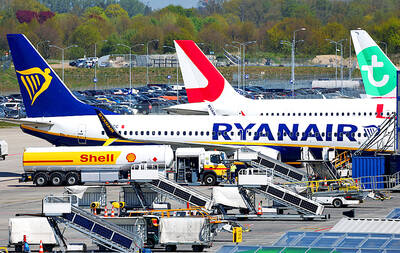
Ryanair, Transavia, Volotea and other low-cost airlines are feeling the financial pain from high jet fuel prices as a result of the Middle East war and are cutting flights. The closure of the Strait of Hormuz has taken a huge chunk of oil supplies off the market, sending the price of jet fuel soaring and triggering fears of shortages that could force airlines to cancel flights. Airlines are not waiting for a lack of supplies to react. “Travel alert: Airlines are cutting thousands of flights right now,” Travel Therapy host Karen Schaler said in an Instagram reel this past weekend.

MANAGING RISKS: Taiwan has secured LNG sufficient to cover 95 percent of electricity demand for next month, UBS said, describing the government’s approach as proactive UBS Group AG has raised its forecast for Taiwan’s economic growth this year to 8 percent, up from 6.9 percent previously, and said expansion could reach as high as 8.6 percent if external energy shocks are avoided. The upgrade reflects a stronger-than-expected first-quarter performance and sustained momentum in artificial intelligence (AI)-driven exports, which UBS said are providing a firm foundation for growth despite geopolitical and energy risks. Taiwan’s GDP expanded 13.69 percent year-on-year in the first quarter, the fastest growth since the second quarter of 1987, the Directorate-General of Budget, Accounting and Statistics (DGBAS) reported on Thursday. On a seasonally
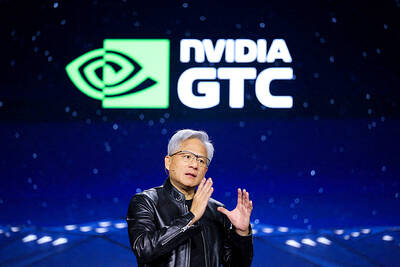
The list of Asian stocks that benefit from business partnership with Nvidia Corp is getting longer, as the region further integrates into the artificial intelligence (AI) chip giant’s business ecosystem. Just in the past week, South Korea’s LG Electronics Inc, Taiwan’s Nanya Technology Corp (南亞科技), as well as China’s Huizhou Desay SV Automotive Co (德賽西威) and Pateo Connect Technology Shanghai Corp (博泰車聯) have become the latest to rally on news of tie-ups, supply-chain participation or product collaboration with the US chip designer. Asian suppliers account for about 90 percent of Nvidia’s production costs, up from about 65 percent last year, data compiled
The Fair Trade Commission’s (FTC) ongoing review of Grab Holdings Ltd’s US$600 million acquisition of Foodpanda Taiwan’s operations, announced on March 23, has taken on fresh urgency as industry experts warn that the transaction could embed significant Chinese cybersecurity vulnerabilities into Taiwan’s digital infrastructure through Grab’s deep ties to autonomous-driving firm WeRide (文遠知行). Less than 16 months after the FTC blocked Uber Eats’ direct attempt to acquire Foodpanda Taiwan — citing potential combined market shares of 80 to 90 percent — the emergence of Grab as the buyer has prompted questions about whether the same competitive harm is simply being rerouted


 RSS
RSS