


EasyCard Corp (悠遊卡) yesterday said it would launch a new electronic payment service in the fourth quarter after the Financial Supervisory Commission approved its license application on Monday.
The approval makes the company the seventh to receive such a license, the commission said on Tuesday.
With the new license, EasyCard would be able to expand its services and process larger transactions, as well as transfer money between electronic payment accounts held by different users, the commission added.
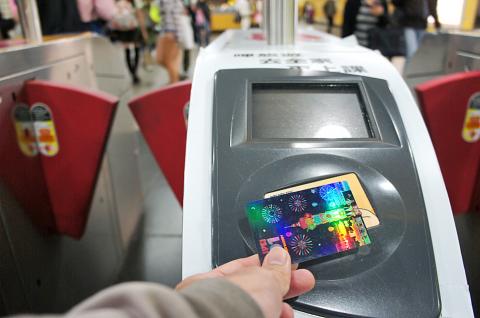
Photo: Huang Chien-hao, Taipei Times
EasyCard, the biggest electronic stored-value card in the nation, plans to launch the new service in the fourth quarter, Ting Chen (陳亭如), who was promoted to chairwoman last month, said in a statement.
The company plans to establish a virtual electronic payment platform to enable users to transfer funds and pay digitally with a few clicks, removing the restraint of time and place, she said.
EasyCard’s micropayment feature has been broadly rolled out in Taiwan’s public transit system and retail outlets, and the new service would strengthen its cooperation with these partners, the statement said.
Although the digital payment field is dominated by two major players — locally developed Jkopay Co (街口電子支付) and Line Pay, a wholly owned subsidiary of LINE Biz+ Taiwan Ltd (台灣連線) — EasyCard does not consider the two peers as its greatest rival, communication officer Chou Mei-li (周美里) told the Taipei Times by telephone yesterday.
“We think that cash is our biggest rival, and we have to provide a tool that is convenient enough for consumers to feel that they can only live with an electronic payment service,” Chou said.
Asked if the company would promote the new service by offering reward points, Chou said that EasyCard would release more details after setting up a preliminary mechanism.
Among the five electronic stored-value card firms, EasyCard accounts for 65 percent of the market in terms of the number of cards issued, with about 69.9 million cards in circulation as of December last year, commission data showed.
The company also accounted for 73 percent, or NT$5.61 billion (US$182 million), of total spending using electronic stored-value cards in December last year, the data showed.
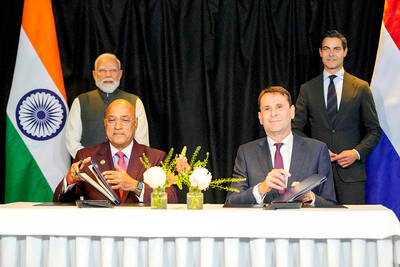
NEW MARKET: The partnership opens up India to the Dutch company, which already has a strong hold in the semiconductor market of South Korea, Taiwan and China ASML Holding NV entered into a partnership agreement with Tata Electronics Pvt Ltd aimed at ramping up India’s goal to develop domestic chip-manufacturing capabilities. The Dutch company’s technology would help power Tata Electronics’ planned 300 millimeter (mm) semiconductor foundry in Gujarat, according to a joint statement from the two companies on Saturday. The signing of a memorandum of understanding coincides with a visit by Indian Prime Minister Narendra Modi to the Netherlands, which is looking to deepen bilateral relations with New Delhi. ASML, whose top customers include Taiwan Semiconductor Manufacturing Co (台積電) and Samsung Electronics Co, makes lithography machines that can print

Tokyo Electron's Taiwan unit today said in a written response that it respects the judicial process, takes the court ruling seriously and would not appeal in the Taiwan Semiconductor Manufacturing Co (TSMC, 台積電) trade secrets case. Last month, a court fined the Taiwan unit of Japan's Tokyo Electron NT$150 million (US$4.74 million) in a case involving trade secrets related to TSMC's sensitive chip technology.
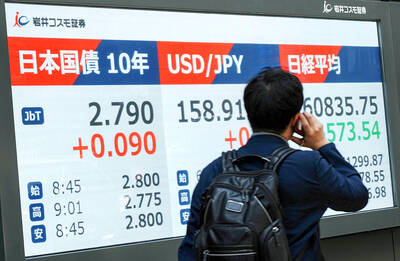
ROUGH RECORDS: Bonds in Japan, as well is in New Zealand, Australia and the US, are seeing the effects of a nervy market as stock exchanges across Asia edge down A deepening slump in Japanese government bonds added fuel to the selloff in global debt markets as rising oil prices stoked inflation fears and pushed yields to multi-decade highs. Japan’s 30-year yield yesterday surged as much as 20 basis points to the highest level since the tenor’s debut in 1999, before paring some of the move. Shorter-maturity Japanese debt was also under pressure, underscored by weak demand at a sale of five-year notes that offered a record-high coupon of 2 percent. Concerns over inflation and government spending rippling through markets including the US, Australia and New Zealand are being amplified in Japan,
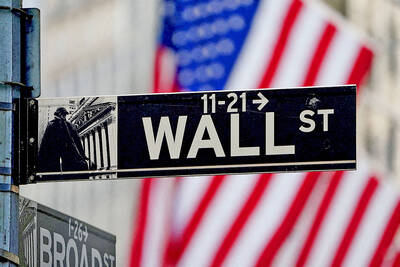
Wall Street is licking its chops over an unprecedented slate of massive initial public offerings (IPOs) set to arrive in the coming months, beginning with Elon Musk’s Space Exploration Technologies Corp (SpaceX) next month. That is expected to be followed by artificial intelligence (AI) rivals OpenAI and Anthropic PBC. The trio of mega listings, each eyeing valuations around US$1 trillion or more, constitutes a heady period of elevated risk and reward. SpaceX is targeting an IPO that would raise up to US$80 billion — about double the funds generated from all IPOs last year. OpenAI and Anthropic are eyeing IPOs raising US$60 billion. “We’re


 RSS
RSS