


CTBC Bank Co (中國信託銀行) has been recognized as the Best Bank in Asia in this year’s Financial Insights Innovation Awards (FIIA) and setting the precedent as the first local lender to receive the distinction.
Organized by the International Data Corp (IDC), the FIIA selected 16 winners out of 150 highly-qualified financial institutions across the Asia-Pacific region, the market institute said, adding that competition was especially fierce this year as the number of applicants has risen 30 percent annually.
The awardees were judged to have distinguished themselves as having not only effective solutions that meet the challenges of today’s dynamic market conditions, but also in establishing new standards in the use of information technology.
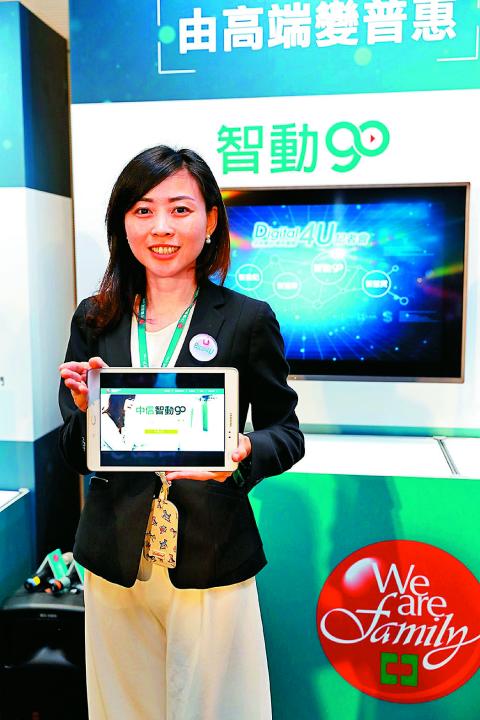
The evaluation process subjects each technology initiative to a rigorous set of scoring metrics that take into account its responsiveness to market needs, the effectiveness of deployment, impact and take up rate among customers and ability to yield business advantages.
CTBC Bank’s robot advisory, Home Bank+ digital banking service, online lending platform and Agent C, its chatbot-enhanced round-the-clock customer support channel have shown tremendous success in integrating the lender’s front, middle and backend systems for improved services, IDC said.
IDC said that in light of sweeping disruptions across the global financial sector, the lender is among those that have set precedents in validating and monetizing technologies rapidly while positioning themselves as gatekeepers of innovation in increasingly open markets as well as future-proofing their business models that would ensure their relevance.
CTBC Bank has exhibited tremendous potential, and the lender’s innovative efforts have brightened the outlook for Taiwan’s financial sector, IDC said, adding that its technological capabilities are approaching that of its rivals across the globe.
The lender’s innovative and digitally-delivered products and services have also begun changing the habits of Taiwanese customers through its ability to anticipate the market’s changing needs.
The winners this year were chosen not only because they have understood and acted on the disruptions in today’s economy, but have also taken viable first-steps in ensuring their relevance in the future, IDC said.
A year ago, CTBC Bank was also recognized as one of Asia Pacific’s Leader in Big Data Strategy by the IDC.
Concurrently, the lender also won Best ATM Innovation, Best Mortgage Offering in Retail Banker International’s RBI Trailblazers Awards, while receiving the Highly Commended distinction in the Excellence in Loan Origination, Excellence in Social Media and Customer Relations and Brand Engagement categories, the company said.
CTBC Bank added that the most recent awards mark the fourth consecutive year of recognition by RBI, the only globally editorially independent retail banking briefing service with a subscriber base made up of leading banks, consultancies, regulators and technology providers.
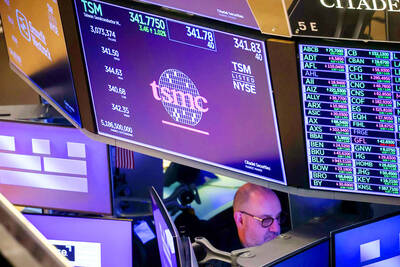
STRONG INTEREST: Analysts have pointed to optimism in TSMC’s growth prospects in the artificial intelligence era as the cause of the rising number of shareholders The number of people holding shares of chipmaker Taiwan Semiconductor Manufacturing Co (TSMC, 台積電) hit a new high last week despite a decline in its stock price, the Taiwan Depository and Clearing Corp (TDCC, 台灣集保) said. The number of TSMC shareholders rose to 2.46 million as of Friday, up 75,536 from a week earlier, TDCC data showed. The stock price fell 1.34 percent during the same week to close at NT$1,840 (US$57.55). The decline in TSMC’s share price resulted from volatility in global tech stocks, driven by rising international crude oil prices as the war against Iran continues. Dealers said
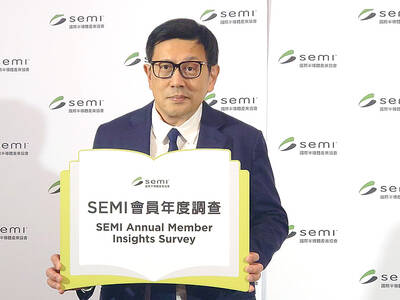
PRICE HIKES: The war in the Middle East would not significantly disrupt supply in the short term, but semiconductor companies are facing price surges for materials Taiwan’s semiconductor companies are not facing imminent supply disruptions of essential chemicals or raw materials due to the war in the Middle East, but surges in material costs loom large, industry association SEMI Taiwan said yesterday. The association’s comments came amid growing concerns that supplies of helium and other key raw materials used in semiconductor production could become a choke point after Qatar shut down its liquefied natural gas (LNG) production and helium output earlier this month due to the conflict. Qatar is the second-largest LNG supplier in the world and accounts for about 33 percent of global helium output. Helium is

China is clamping down on fertilizer exports to protect its domestic market, industry sources said, putting an additional strain on global markets that were already grappling with shortages caused by the US-Israeli war on Iran. China is among the largest fertilizer exporters — shipping more than US$13 billion of it last year — and it has a history of controlling exports to keep prices low for farmers. Shipments through the war-blocked Strait of Hormuz account for about one-third of the sea-borne supply. This month, Beijing banned exports of nitrogen-potassium fertilizer blends and certain phosphate varieties, sources said. The ban, which has not
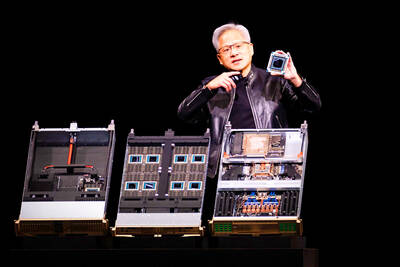
DOMESTIC COMPONENT: Huang identified several Taiwanese partners to be a key part of Nvidia’s Vera Rubin supply chain, including Asustek, Hon Hai and Wistron Nvidia Corp chief executive officer Jensen Huang (黃仁勳), addressing crowds at the company’s biggest annual event, unveiled a variety of new products while predicting that its flagship artificial intelligence (AI) processors would help generate US$1 trillion in sales through next year. During a two-and-a-half-hour keynote address, Huang announced plans to push deeper into central processing units (CPUs) — Intel Corp’s home turf — and introduced semiconductors made with technology acquired from start-up Groq Inc. The company even said it was developing chips for data centers in outer space. At the heart of Huang’s speech was the message that demand for computing power


 RSS
RSS