


Persian Gulf Arab investors, some of the biggest buyers of British real estate, are holding back from new deals, because they fear a property price slump if Britain leaves the EU, according to legal and investment sources.
Sovereign and private investors from Qatar, Saudi Arabia, Kuwait and the United Arab Emirates (UAE) have been prolific buyers of British assets in the past decade, snapping up billions of US dollars’ worth of property, mostly in London.
“Sovereign wealth funds are concerned that Brexit is taking its toll on the property market in London,” said a London-based lawyer who works with some of the largest Persian Gulf funds.
He declined to be named, citing the confidential nature of his work.
“The situation will further deteriorate if there’s a Brexit vote,” he added.
LONDON REAL ESTATE
The value of residential property in upmarket areas popular among Persian Gulf investors — including Chelsea, South Kensington and Knightsbridge — fell between 3.5 percent and 7.5 percent on the year last month, according to real-estate agent Knight Frank.
Persian Gulf family businesses and private investors are heavily involved in London real estate.
Investors from the UAE accounted for more than 20 percent of buy-to-let property sales in the UK last year, said Amit Seth, the Middle East and North Africa head of international residential developments at London-focused real-estate agency Chestertons.
“At the moment it seems clear people are little bit more skeptical on making an investment today because of Brexit,” said Seth, who is based in Dubai, referring to private Persian Gulf investors in residential real estate.
He said investors were still researching opportunities and discussing them with his company, but not finalizing deals.
SLOWING INVESTMENT
While the precise impact on Persian Gulf investments is unclear, overall flows of foreign capital into commercial real estate in Britain stopped in the first three months of this year, Bank of England Governor Mark Carney said in April.
Business investment in the country also fell early this year, statistics showed last week.
Persian Gulf investors also have broader worries about their investments in other sectors and how a possible Brexit in a June 23 referendum could affect the British economy, the sources said.
PORTFOLIO IMPACT
There is no suggestion long-term investors from the Persian Gulf would exit assets en masse if Britain votes out, but many are worried about the impact on portfolios and wider economic effects, a senior Persian Gulf government official said.
“Of course we are worried about what will come next if the British decide to leave the EU,” the official said.
“We think that there will be a negative impact on our investments in the UK, because the selling [prices] will go down and the banks in England will face some difficulties,” the official said.
Qatar is one of the most high-profile investors in London, owning landmarks such as the Shard skyscraper, Harrods Ltd department stores and Olympic Village, as well as luxury hotels. It also leads a consortium that bought the owner of the Canary Wharf financial district last year.
While the Qatar Investment Authority wealth fund has been diversifying its portfolio away from Europe toward more investments in the US and Asia in the last couple of years, it is still heavily invested in Britain and holds stakes in Barclays PLC, Royal Dutch Shell PLC and J Sainsbury PLC.
If Britain votes to leave, “then you are going to see a big hit to investments,” said a senior Qatari banker who does business with sovereign and private investors.
The fund has US$256 billion of assets under management globally, according to the Sovereign Wealth Fund Institute.
It has at least US$7 billion directly invested in equities traded on the London Stock Exchange, in which it also holds a 10.3 percent stake, according to Thomson Reuters data.
The Kuwait Investment Authority, which has US$592 billion in assets under management according to the institute, is also a major investor through its London-based Kuwait Investment Office.
In 2013 it said the fund had more than doubled its investment in Britain over the previous 10 years to more than US$24 billion.
Like Qatar, Kuwait owns London landmarks such as the More One riverside development, which houses the headquarters of the mayor, as well as buildings in Canary Wharf.
It has focused on infrastructure investments through its Wren House Infrastructure Management arm set up in 2013.
ADJUSTMENT PERIOD
Uncertainties about the legal and regulatory framework that would result from Brexit is a worry for any large investor in Britain, said Fabio Scacciavillani, chief economist at Oman Investment Fund, which the institute said has US$6 billion under management.
“If the region’s sovereign wealth funds have invested in UK assets, they would be rightfully concerned for their long-term returns outlook,” he said, adding that most would put their decisions on hold until after the vote.
“Brexit implies a long and potentially thorny period of adjustment, as the UK will need to negotiate trade relationships,” he added.
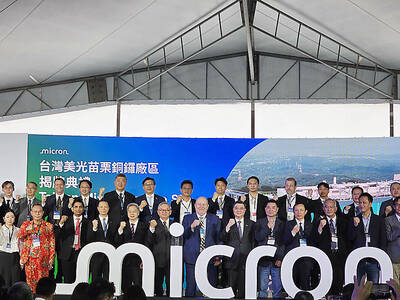
UNPRECEDENTED PACE: Micron Technology has announced plans to expand manufacturing capabilities with the acquisition of a new chip plant in Miaoli Micron Technology Inc unveiled a newly acquired chip plant in Miaoli County yesterday, as the company expands capacity to meet growing demand for advanced DRAM chips, including high-bandwidth memory chips amid the artificial intelligence boom. The plant in Miaoli County’s Tongluo Township (銅鑼), which Micron acquired from Powerchip Semiconductor Manufacturing Corp (力積電) for US$1.8 billion, is expected to make a sizeable capacity contribution to the company from fiscal 2028, the company said in a statement. It would be an extended production site of Micron’s large-scale manufacturing hub in Taichung, the company said. As the global semiconductor industry is racing to reach US$1 trillion

Singapore-based ride-hailing and delivery giant Grab Holdings Ltd has applied for regulatory approval to acquire the Taiwan operations of Germany-based Delivery Hero SE's Foodpanda in a deal valued at about US$600 million. Grab submitted the filing to the Fair Trade Commission on Friday last week, with the transaction subject to regulatory review and approval, the company said in a statement yesterday. Its independent governance structure would help foster a healthy and competitive market in Taiwan if the deal is approved, Grab said. Grab, which is listed on the NASDAQ, said in the filing that US-based Uber Technologies Inc holds about 13 percent of
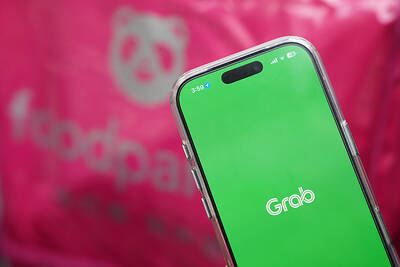
Taiwan’s food delivery market could undergo a major shift if Singapore-based Grab Holdings Ltd completes its planned acquisition of Delivery Hero SE’s Foodpanda business in Taiwan, industry experts said. Grab on Monday last week announced it would acquire Foodpanda’s Taiwan operations for US$600 million. The deal is expected to be finalized in the second half of this year, with Grab aiming to complete user migration to its platform by the first half of next year. A duopoly between Uber Eats and Foodpanda dominates Taiwan’s delivery market, a structure that has remained intact since the Fair Trade Commission (FTC) blocked Uber Technologies Inc’s

Memory chip stocks extended their losses yesterday after Alphabet Inc’s Google publicized research that could allow more efficient use of the storage needed for artificial intelligence (AI) development. SK Hynix Inc and Samsung Electronics Co, South Korean leaders in the market, fell more than 6 percent and about 5 percent respectively in Seoul. In the US, Micron Technology Inc, Western Digital Corp and Sandisk Corp slid more than 2 percent in pre-market trading, after they all closed lower on Wednesday. Memory companies have been on a tear in recent months as the rapid development of AI infrastructure triggered a spike in chip


 RSS
RSS